




‘Leases are not enough’: Trump says US must ‘own’ Greenland to block Russia and China
- In Reports
- 03:23 PM, Jan 10, 2026
- Myind Staff
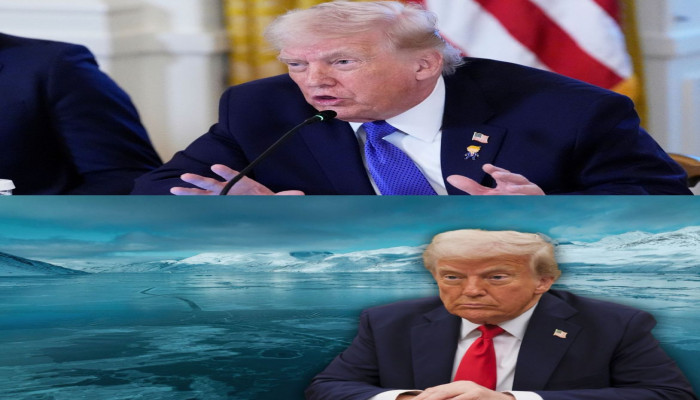
US President Donald Trump has said that the United States needs to “own” Greenland to stop Russia and China from gaining influence in the strategically important Arctic region. His remarks have drawn strong reactions from Denmark and renewed debate among NATO allies about sovereignty, security and international law.
Speaking to reporters in Washington on Friday, Trump said that ownership of territory was necessary for proper defence. “Countries have to have ownership and you defend ownership, you don’t defend leases,” he said. He added that the United States would have to defend Greenland and that lease agreements were not sufficient for that purpose.
Trump further stated that the US would act either “the easy way” or “the hard way” to secure its interests. His comments come after the White House said it was considering the option of buying Greenland, while also not ruling out other possible approaches.
Greenland is a semi-autonomous territory that belongs to Denmark. Both Denmark and Greenland have made it clear that the island is not for sale. Denmark has also warned that any military action by the United States would bring an end to the transatlantic defence alliance.
Greenland’s geographical position makes it highly significant from a security perspective. Situated between North America and the Arctic, the island plays a key role in early-warning systems against missile attacks and in monitoring ship movements in the region. As a result, Trump said Greenland was vital to US national security.
During his remarks, Trump claimed, without providing evidence, that Greenland was already facing a heavy foreign presence. He said it was “covered with Russian and Chinese ships all over the place”. Stressing his stance, he added, “I love the people of China. I love the people of Russia, but I don’t want them as a neighbour in Greenland.”
The United States already has a military presence in Greenland. More than 100 US military personnel are stationed at the Pituffik Space Base in north-west Greenland. The base has been operated by the United States since World War II. Under existing agreements with Denmark, the US is allowed to deploy additional troops there if needed.
However, Trump argued that such arrangements were not enough. “Countries can’t make nine-year deals or even 100-year deals,” he said. “They have to have ownership.” According to him, only full ownership would allow the United States to properly protect the territory.
Trump also said that NATO needed to understand the American position on Greenland. His comments have prompted responses from Denmark’s NATO allies, including major European countries and Canada. These allies have voiced their support for Copenhagen and have clearly stated that the future of Greenland can only be decided by Denmark and Greenland themselves.
They also emphasised that Arctic security should be managed collectively by allies, rather than through unilateral action. In addition, they called for respect for international law, including the principles of sovereignty and the protection of national borders.
Denmark’s warning that any military move could end the transatlantic defence alliance highlights the seriousness of the issue. The alliance has long been a cornerstone of Western security cooperation, and tensions over Greenland risk straining relationships within NATO.
Despite Trump’s strong statements, both Denmark and Greenland continue to reject the idea of a sale or forced ownership change. They maintain that Greenland’s status is a matter of self-determination and that decisions about its future must respect existing agreements and international norms.
The debate over Greenland underlines growing global interest in the Arctic, driven by security concerns and geopolitical competition. Trump’s comments have once again placed the region at the centre of international attention, while raising questions about how allies balance national security interests with respect for sovereignty and cooperation.



 Loading...please wait
Comments