




Leaked Pakistan ‘Cypher’ exposes US role in former PM Imran Khan’s ouster
- In Reports
- 06:03 PM, May 18, 2026
- Myind Staff
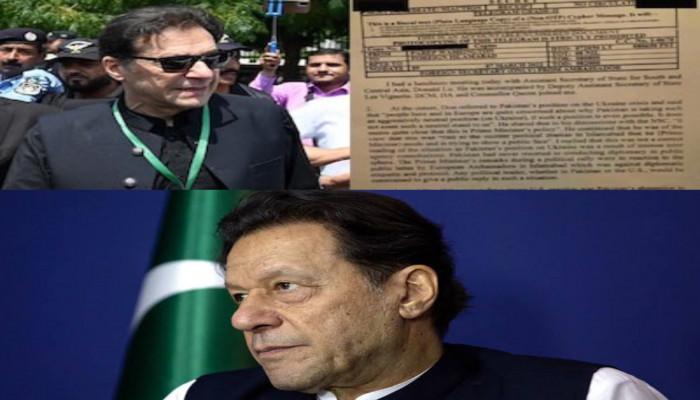
A leaked classified diplomatic document has once again brought attention to former Pakistan Prime Minister Imran Khan and his long-standing claims that a foreign conspiracy led to his removal from office in 2022. The document, referred to in Pakistan as a “cypher”, reportedly details a conversation between Pakistan’s then ambassador to the United States, Asad Majeed Khan, and senior US diplomat Donald Lu. The discussion allegedly took place on March 7, 2022, just weeks before Khan lost power through a no-confidence vote.
The document was published by a US-based investigative outlet, Drop Site. According to the report, the Biden administration was unhappy with Khan’s neutral stand on Russia’s invasion of Ukraine and his refusal to allow US military operations from Pakistani soil after the American withdrawal from Afghanistan. The leaked cable, identified as I-0678, allegedly suggested that Washington preferred a change in leadership in Islamabad.
Khan has repeatedly accused the United States of working with Pakistan’s major political parties, including the Pakistan Muslim League-N and the Pakistan People’s Party, to remove him because of his independent foreign policy. He had argued that Washington was uncomfortable with his refusal to fully align against Russia and China. In April 2022, Khan publicly said that America wants “me, personally, gone ... and everything would be forgiven”.
The former prime minister also claimed that the US was upset over his criticism of the American war on terror and his refusal to allow Pakistan to be used for “over-the-horizon” operations in Taliban-controlled Afghanistan. During political rallies after his removal, Khan repeatedly insisted that foreign pressure had influenced the events that led to his ouster.
According to the leaked report, Donald Lu told Pakistan’s ambassador that relations between Washington and Islamabad could improve if Khan were removed through a parliamentary no-confidence vote. Lu reportedly warned that Khan’s “isolation will become very strong from Europe and the United States”. The report further stated that Lu said, “I think if the no-confidence vote against the Prime Minister succeeds, all will be forgiven in Washington because the Russia visit is being looked at as a decision by the Prime Minister. Otherwise, it will be tough going ahead.”
The United States strongly denied these allegations at the time. State Department spokesperson Ned Price dismissed Khan’s claims and said there was “no truth” to the accusations. He added, “We are closely following developments in Pakistan. We respect (and) we support Pakistan's constitutional process and the rule of law.”
Imran Khan was removed from office on April 9, 2022, after losing the no-confidence vote in Pakistan’s Parliament. His removal came with support from Pakistan’s military establishment, which has historically played a major role in the country’s politics. Khan later accused the military of betraying his government and helping opposition parties remove him from power.
A year after his ouster, Khan and his wife, Bushra Bibi, were convicted in multiple cases involving corruption, contempt and national security charges. Both have remained in jail since then. His political party, Pakistan Tehreek-e-Insaf, also faced severe restrictions before Pakistan’s 2024 general election. The party was stripped of its electoral symbol, and candidates linked to PTI were forced to contest as independents. Many winning PTI-backed candidates reportedly faced difficulties in receiving official certification.
The leaked report also revisits the strained relationship between Pakistan and the United States over Afghanistan. For years, US officials accused Pakistan of sheltering the Taliban while receiving billions of dollars in American aid. Tensions worsened after Osama bin Laden was killed by US Navy SEALs in Abbottabad in 2011 without Pakistan being informed in advance. During his presidency, Donald Trump also cut military aid to Pakistan, claiming Islamabad was not doing enough against terrorism.
Relations reportedly became worse under Khan after he rejected a US request for military bases in Pakistan following America’s exit from Afghanistan. According to the Drop Site report, this decision frustrated Washington. At the same time, Pakistan’s leadership was also resisting pressure from Saudi Arabia regarding a mutual defence agreement with Gulf nations.
Another major issue was Khan’s visit to Moscow in February 2022, on the same day Russia launched its invasion of Ukraine. Reports claimed the US had advised Pakistan to cancel the visit beforehand. Pakistan later abstained from a United Nations vote condemning Russia’s actions, which further increased tensions with Washington.
The leaked cable suggested that Pakistan’s military believed Khan’s foreign policy decisions were isolating the country internationally. Donald Lu reportedly criticised Pakistan’s “aggressively neutral position” on Ukraine during his meeting with the Pakistani ambassador.
The report also claimed that Pakistan’s military had started acting independently of Khan’s government even before his removal. In July 2021, the military allegedly retained a former CIA Islamabad station chief as a lobbyist in Washington without informing the prime minister. The move was seen as an early sign of growing differences between Khan and the military establishment.
After Khan’s removal, Pakistan’s new government reportedly moved closer to US strategic interests. According to the report, Pakistan began supplying artillery ammunition linked to the Ukraine war through US contractors and third-party channels. It also claimed that financial assistance from the International Monetary Fund was quietly connected to the continuation of these military supplies. Pakistan later signed a Saudi defence pact that Khan’s government had earlier resisted.
The leaked “cypher” has once again intensified debate over whether foreign pressure and military involvement played a role in the downfall of Imran Khan’s government. While Khan’s supporters see the document as proof of external interference, both Washington and Pakistan’s former ruling establishment continue to deny any conspiracy behind his removal.



 Loading...please wait
Comments