



Kuwait, Bahrain, UAE report fresh attacks despite two-week Iran-US ceasefire
- In Reports
- 08:47 PM, Apr 08, 2026
- Myind Staff
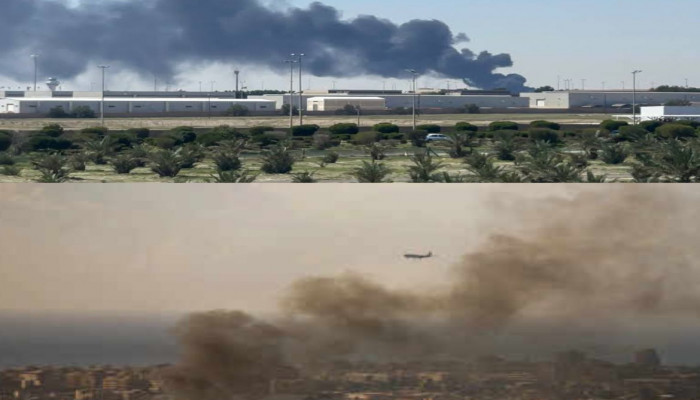
Tensions in West Asia escalated again on Wednesday as several Gulf countries reported missile and drone attacks from Iran, just hours after a two-week ceasefire was announced between Iran and the United States. The developments have raised serious concerns about the stability of the fragile truce and the security of critical infrastructure in the region.
According to officials, the United Arab Emirates confirmed that its air defence systems were actively intercepting incoming threats. The country’s Defence Ministry stated that multiple explosions heard across different areas were the result of defence systems engaging ballistic missiles, cruise missiles, and unmanned aerial vehicles. “The air defences are currently dealing with missiles and drones coming from Iran,” the ministry said.
Similar incidents were reported in Kuwait, where the army confirmed that a wave of Iranian drones had been launched early in the morning. The attacks reportedly began around 8 am local time. Kuwait’s Defence Ministry described the situation as an “intense hostile Iranian attacks,” adding that 28 drones were intercepted by its air defence systems. Despite these interceptions, some drones managed to target key infrastructure, including oil facilities, power stations, and water desalination plants. These strikes caused significant damage and disrupted essential services in parts of the country.
In Bahrain, authorities also reported Iranian attacks that led to minor injuries and property damage. The Ministry of Interior stated, “Two citizens sustained minor injuries and a number of houses were damaged in the Sitra area as a result of shrapnel falling from the interception of an Iranian drone.” Explosions were heard in the capital city, Manama, with visible smoke rising from Sitra Island, which hosts key energy facilities. Emergency services were able to control a fire that broke out at a site targeted during the attack, although officials did not provide further details about the exact location.
As of now, Iran has not responded to the allegations made by these Gulf nations. However, Iranian state television reported that the country’s Lavan Oil Refinery, located on Lavan Island, was struck on the same day. Firefighters were deployed to control the blaze, and authorities confirmed that no casualties were reported from the incident.
The timing of these attacks is significant. The ceasefire agreement between Iran and the United States had been reached barely an hour before a deadline set by former US President Donald Trump, who had warned of severe action against Tehran. The fresh strikes have now cast doubt on the effectiveness and sincerity of the ceasefire.
Over the past few weeks, Gulf countries have repeatedly faced missile and drone attacks from Iran. These attacks are seen as retaliation for earlier military actions carried out by the United States and Israel, which began on February 28. The ongoing conflict has increasingly targeted energy infrastructure, highlighting the strategic importance of oil resources in the region.
A major concern arising from this escalation is the disruption of global energy supplies. Iran has been targeting fossil fuel facilities in oil-rich Gulf nations while also tightening its control over the Strait of Hormuz. This narrow passage is one of the world’s most critical shipping routes, through which nearly one-fifth of global oil supply passes. Any instability in this region has immediate consequences for international energy markets.
The situation remains tense as countries in the Gulf continue to monitor and respond to incoming threats. Defence systems have played a crucial role in minimising damage, but the repeated nature of these attacks indicates a deeper and ongoing conflict. The lack of response from Iran has further added to the uncertainty surrounding the developments.
With infrastructure damage, civilian injuries, and rising geopolitical tensions, the latest incidents have underscored the fragile nature of the ceasefire. Observers now question whether the agreement will hold or if the region is heading towards further escalation in the coming days.



 Loading...please wait
Comments