




Kudankulam unit-5 takes major step forward as reactor vessel installation begins
- In Reports
- 07:17 PM, Jun 16, 2026
- Myind Staff
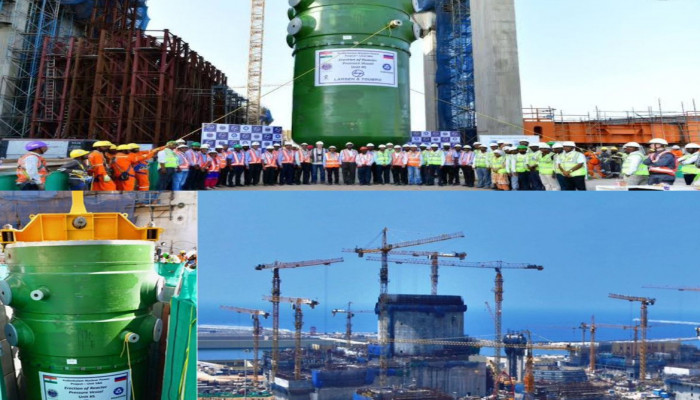
India achieved another important milestone in its nuclear energy expansion programme with the successful installation of the Reactor Pressure Vessel (RPV) at Unit-5 of the Kudankulam Nuclear Power Project (KKNPP). The project, operated by the Nuclear Power Corporation of India Limited (NPCIL), is one of the largest nuclear power facilities in the country.
The installation of the 320-tonne reactor pressure vessel inside the reactor building marks the beginning of the erection of major Nuclear Steam Supply System equipment. It is considered one of the most crucial stages in the construction of a nuclear power plant.
Once operational, the 1,000 MW Unit-5 reactor will contribute a significant amount of electricity to India's power grid. The project is expected to help meet the country's growing power demand from households, industries and infrastructure sectors. Unlike solar and wind energy, nuclear power can generate electricity continuously throughout the day, making it a dependable source of energy. This will strengthen India's energy security and reduce dependence on coal-based power generation.
The project will also support India's transition towards cleaner sources of energy. Producing low-carbon electricity, it will help reduce carbon emissions while contributing to economic growth, employment generation and long-term energy independence.
NPCIL stated that the installation work was carried out after obtaining Major Equipment Erection clearance from the Atomic Energy Regulatory Board (AERB). The heavy reactor vessel was lifted and placed in position using specialised cranes. The operation was completed while following all required safety and quality standards.
The reactor pressure vessel is often described as the heart of a nuclear power plant. It contains the reactor core where the process of nuclear fission takes place to generate electricity. Officials said the successful installation reflects the close coordination between NPCIL and Russia's Atomstroyexport, which is associated with the project.
The development comes at a time when India is actively expanding its non-fossil fuel energy capacity. The country is looking for reliable sources of electricity to meet rising demand while reducing greenhouse gas emissions. In this effort, nuclear power has become an important part of the government's long-term strategy for energy security and sustainable development.
Located in Tamil Nadu, the Kudankulam Nuclear Power Project consists of six reactors, each with a capacity of 1,000 MW. Units 1 and 2 are already operational and have together generated around 130 billion units of electricity since they were commissioned, according to NPCIL. The corporation said this generation has helped avoid an estimated 112 million tonnes of carbon dioxide-equivalent emissions.
Construction work on Units 3 and 4 has reached an advanced stage. Meanwhile, Units 5 and 6 are being developed in phases. After all six reactors become operational, the Kudankulam complex will have a total installed capacity of 6,000 MW. This will make it one of the largest nuclear power generation hubs in India.
The latest milestone is particularly significant as India pursues its long-term vision of becoming a developed nation by 2047. Policymakers have repeatedly highlighted the importance of nuclear energy in achieving this goal. Nuclear power is increasingly being viewed as a reliable source of round-the-clock, low-carbon electricity that can effectively complement renewable energy sources such as solar and wind.
NPCIL said it remained committed to maintaining the highest standards of nuclear safety, quality assurance and environmental protection while advancing the country's clean-energy goals. The successful installation of the reactor pressure vessel at Unit-5 marks another important step in strengthening India's nuclear power infrastructure and supporting its future energy needs.



 Loading...please wait
Comments