



Kerala’s LDF government reverses stand on Sabarimala women’s entry issue
- In Reports
- 06:45 PM, Mar 14, 2026
- Myind Staff
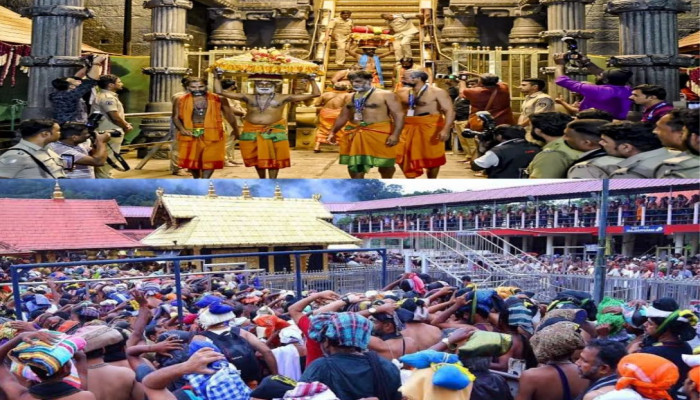
The government of Kerala, led by the Left Democratic Front (LDF), has changed its earlier position on the entry of women into the Sabarimala Temple. The state administration has now decided to inform the Supreme Court of India that women below the age of 50 should not be allowed to enter the shrine to maintain long-standing religious traditions.
This move marks a clear shift from the government’s earlier stance in 2018, when it supported the entry of women of all ages into the temple. The change is being seen by many observers as a response to the sentiments of devotees, especially as the state prepares for upcoming assembly elections.
The decision was taken during a special cabinet meeting held on Friday, March 13, under the leadership of Chief Minister Pinarayi Vijayan. During the meeting, the government approved a resolution earlier passed by the Travancore Devaswom Board (TDB), which manages the temple. The board had emphasised the importance of preserving the traditional customs of the shrine, including the practice of restricting entry for women of menstruating age, usually considered to be those below 50 years. The government has decided that its official response to the court will support the continuation of these traditions.
The state government is required to submit an affidavit to the Supreme Court by March 14. The court had asked the government to respond to seven questions related to constitutional and legal aspects of the issue. These questions do not directly instruct the state to permit or block the entry of women but instead seek clarity on broader legal principles involved in the case. The matter is expected to move forward when review petitions challenging the court’s 2018 ruling are heard beginning April 7. These hearings will take place before a three-judge bench headed by Chief Justice Surya Kant.
Meanwhile, leaders of the Bharatiya Janata Party (BJP) have criticised the Kerala government’s shift in position. Senior party leader Kummanam Rajasekharan suggested that the change may be politically motivated. According to him, the government seems to be adjusting its policy with elections in mind. He also raised concerns about people who had earlier protested against the court’s 2018 decision and were arrested or faced legal cases during the demonstrations.
Rajasekharan said that if the government has now moved closer to the stand taken by those protesters, it should consider withdrawing the cases filed against them during the earlier agitation.
Leaders of the Communist Party of India (Marxist) or CPI(M), which leads the LDF government, have denied that this development represents a complete reversal of their earlier position. Party state secretary MV Govindan explained that the party’s approach has been more balanced and practical rather than contradictory. He stated that the government has been asked to prepare a suitable response to the court after discussing the matter with legal experts, scholars, and those familiar with religious practices. According to him, the aim is to respect both constitutional values and the beliefs of devotees.
Govindan also pointed out that the Supreme Court’s questions are not limited to the Sabarimala issue alone but touch upon wider constitutional matters that may affect different religious traditions across the country. Because of this, the government believes it is important to carefully examine the legal and cultural dimensions of the case. He rejected the claim that the party had changed its ideology, saying that the CPI(M) has always tried to consider expert opinions and social realities while dealing with sensitive religious matters.
The Travancore Devaswom Board had already indicated its position earlier this month. On March 2, the board stated that it had never formally supported the entry of women below 50 years into the temple. It clarified that a statement made by a lawyer in 2020, which appeared to support such entry, reflected the lawyer’s personal opinion rather than the official stance of the board. The board reaffirmed that its main responsibility is to safeguard the customs and traditions that devotees have followed at the temple for centuries.
The Kerala government’s latest position has been approved by both the LDF and the CPI(M) leadership. Many political observers believe that the timing of this decision may also be linked to the upcoming assembly elections in the state. By supporting the continuation of traditional practices, the government may be trying to avoid criticism from conservative sections of society and prevent opposition parties such as the BJP and the Congress from using the issue as a campaign tool.
The controversy surrounding the temple began after a petition was filed in 2006 by the Indian Young Lawyers Association. In 2018, the Supreme Court delivered a landmark judgment allowing women of all ages to enter the shrine, overturning a 1991 ruling by the Kerala High Court that had banned the entry of women of menstruating age. The verdict triggered widespread protests across the state, with many devotees arguing that the decision interfered with long-standing religious customs. At that time, the LDF government had defended the ruling, saying it upheld constitutional values. The issue has remained sensitive ever since and continues to be debated both in courts and in the political arena.



 Loading...please wait
Comments