



Kashmir donation drive under scanner: Anti-national links surface in ₹17.91 crore Iran aid
- In Reports
- 01:32 PM, Mar 26, 2026
- Myind Staff
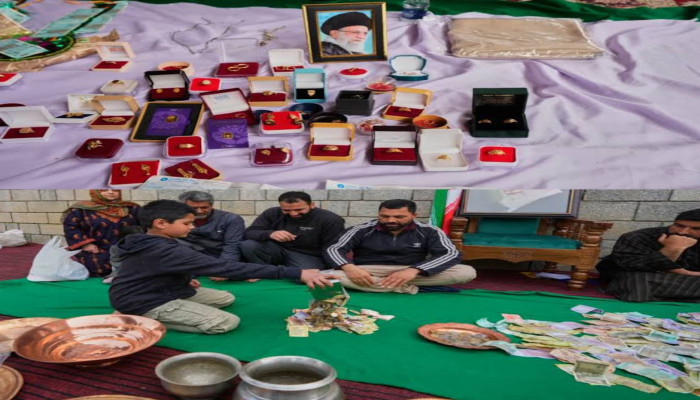
A large-scale donation campaign in Jammu and Kashmir, initially launched as a humanitarian effort to support Iran, has now come under serious scrutiny after reports of fraud and possible anti-national links surfaced. What began as a well-intentioned appeal has raised major concerns among intelligence agencies, as evidence points to the misuse of public trust and funds.
The donation drive reportedly started after an appeal from the Iranian Embassy on March 14. It quickly gained momentum across the Kashmir Valley, with many people contributing generously. However, a classified report prepared by the Jammu and Kashmir Police on March 24 has revealed that the campaign may have been taken over by an organised network of intermediaries. These individuals allegedly used emotional and religious sentiments to collect money and valuables, but a large portion of these contributions may not have reached the intended beneficiaries.
The scale of the collection has shocked investigators. According to official estimates, around ₹17.91 crore has been gathered, along with gold, jewellery, livestock, and other household items. The collection was widespread, covering several districts. Budgam alone reportedly contributed ₹9.5 crore, followed by ₹4 crore from Baramulla and ₹2 crore from Srinagar. Additional donations were recorded in Kulgam, Bandipora, Ganderbal, and Pulwama, showing how deeply the campaign had penetrated local communities.
What has raised further concern is the background of the donors. Many contributors reportedly belonged to economically weaker sections. Despite financial struggles, they donated life savings, wedding funds, and even essential belongings. Investigators found that people were driven by strong emotional and religious motivations. In some cases, children gave away their Eid savings, while families parted with livestock and inherited jewellery. For them, contributing to the cause was seen as a moral and religious responsibility.
Authorities believe that the organisers of the drive used targeted methods to maximise collections. Door-to-door campaigns were conducted, announcements were made in mosques, and local collection stalls were set up. These efforts created a sense of urgency and duty among people, which made it easier to mobilise large sums of money. Officials warn that such approaches blur the line between genuine charity and manipulation, making it difficult for ordinary citizens to distinguish between the two.
A major concern in the investigation is the existence of what agencies describe as a “conduit system.” According to intelligence inputs, the collection network may be linked to individuals with connections to the Islamic Revolutionary Guard Corps (IRGC) and separatist elements within Kashmir. Two individuals have been identified as key figures in this network. Hakeem Sajad, a resident of Bagwanpora in Srinagar, is believed to have played a major role in distributing funds locally. Syed Ruhollah Rizvi, originally from Ganderbal and currently based in Iran, has been identified as a link between foreign handlers and local operatives.
Investigators suspect that these individuals helped move funds between external sources and local networks. This has raised serious concerns about cross-border financial flows and their possible implications. One of the most alarming findings is that nearly half of the collected money may have been diverted to maintain a “payroll” system within Kashmir. Officials believe this system could be used to sustain influence networks and possibly support separatist activities.
The pattern of this case has reminded agencies of earlier incidents, including the controversial crowdfunding case linked to Maulavi Sarjan Barkati. In that case, funds collected in the name of public causes were allegedly diverted for organised purposes. This similarity has strengthened the suspicion that the current issue may not be an isolated fraud but part of a larger and structured system.
Given the seriousness of the situation, multiple national agencies have joined the investigation. The probe is being carried out by the State Investigation Agency, the National Investigation Agency, and the Enforcement Directorate. Their focus is on tracking the flow of money, identifying those involved, and determining whether the funds have been used in activities that could threaten national security. Financial records, communication channels, and cross-border transactions are being closely examined.
Authorities have also issued a warning against unauthorised donation drives. The police have made it clear that individuals or groups collecting funds without proper verification or misusing public money will face strict legal action. Citizens have been advised to verify the authenticity of any organisation before making donations. Officials stressed that even genuine intentions can lead to harm if contributions are made through unverified channels.
This case highlights how international events can influence local communities. It also exposes the weaknesses in grassroots fundraising systems, especially in regions where emotional and religious connections are strong. The lack of transparency in such drives makes them vulnerable to misuse and exploitation.
As the investigation continues, a deeper question has emerged within the community itself. The issue of “Fraud with Ummah” has become central to the discussion. There is growing concern about whether an appeal based on religious solidarity was misused for personal or organised gain. If the allegations are proven true, it would not only be a case of financial fraud but also a serious breach of trust.
For many who donated in good faith, the revelations have been deeply unsettling. What they believed was an act of compassion may have been exploited. The situation calls for greater accountability, transparency, and awareness within the community to prevent such incidents in the future.



 Loading...please wait
Comments