



Karnataka Assembly passes draconian hate speech bill amid BJP’s protests
- In Reports
- 06:31 PM, Dec 18, 2025
- Myind Staff
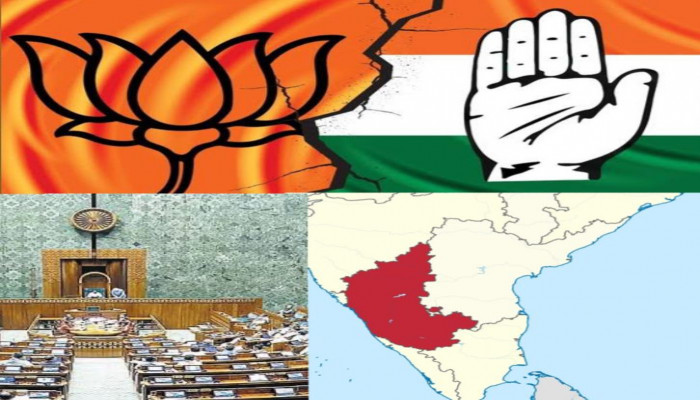
The Karnataka Legislative Assembly on Thursday passed the hate speech bill amid strong protests by Bharatiya Janata Party (BJP) legislators. The bill, which was cleared by the state cabinet on December 4, was presented in the Assembly on December 10 by Home Minister G Parameshwara. The bill has been brought by the Congress government led by Chief Minister Siddaramaiah. It aims to take strict action against hate speech and related offences that can create hatred, disharmony and social tension.
While introducing the bill, Home Minister G Parameshwara informed the Assembly that a key change had been made. Earlier, the bill proposed a 10-year jail term for repeat offences, but this has now been reduced to seven years. The minister said the government reviewed the provision and decided to lower the punishment period while still keeping the law strict enough to act against repeated hate speech violations.
According to the bill, hate speech includes any expression made in public with the intention of causing harm or hatred. This expression can be in many forms spoken words, written content, signs, visible representations, electronic communication or any other method. The bill clearly states that if such expression is meant to cause injury, disharmony, enmity, hatred or ill-will against a person (alive or dead), a group of people, a class or a community, it will be treated as hate speech. This applies when such acts are done to serve any prejudicial interest. By including both offline and online communication, the bill covers modern forms of speech, including messages and content shared digitally.
The legislation also includes a provision for compensating victims of hate speech. The amount of compensation will depend on the severity of the offence and the harm caused to the victim. The government has said this provision is meant to support people who suffer mental, emotional or social harm due to hate speech and related actions.
The bill states that definitions under the Bharatiya Nyaya Sanhita, 2023, and the Information Technology Act will apply to the new law. This means that existing legal definitions and rules related to criminal offences and digital communication will guide the implementation of this legislation.
The discussion on the bill led to tense moments in the House. During the debate, Urban Development Minister Byrathi Suresh said that coastal Karnataka is “burning” due to hate speech and hate crime, according to news agency PTI.
This statement drew sharp objections from BJP MLAs, especially those representing the coastal Karnataka region. They strongly protested the remark, saying it painted the region in a negative light. Following this, BJP legislators from the region entered the well of the House to register their protest. Soon after, other BJP MLAs joined them, leading to further disruption of Assembly proceedings. Despite the protests and interruptions, the Assembly went ahead with the passage of the bill.
The BJP opposed the bill and protested its passage, arguing that the law could be misused. Party legislators raised concerns over the broad definition of hate speech and expressed fear that it could be used to target political opponents or suppress dissent. However, the government maintained that the law is necessary to prevent the spread of hatred and protect social harmony in the state.
The Congress government has defended the bill, saying that hate speech can seriously damage peace and unity in society. By bringing this law, the government aims to discourage the use of inflammatory language that can lead to tension or violence between communities. Ministers supporting the bill said it is designed to act as a deterrent and ensure accountability for those who spread hatred through speech or communication.
With the Karnataka Assembly passing the hate speech bill, it will now move forward in the legislative process before becoming law. Once implemented, it is expected to play an important role in regulating public speech and addressing hate-related offences in the state. The bill’s passage marks a significant step in curtailing free speech by the Karnataka government and hence faces criticism and opposition from the BJP over its scope and implementation.



 Loading...please wait
Comments