



Kabul: Over 400 killed in deadliest Pakistan strikes on rehabilitation hospital
- In Reports
- 12:40 PM, Mar 17, 2026
- Myind Staff
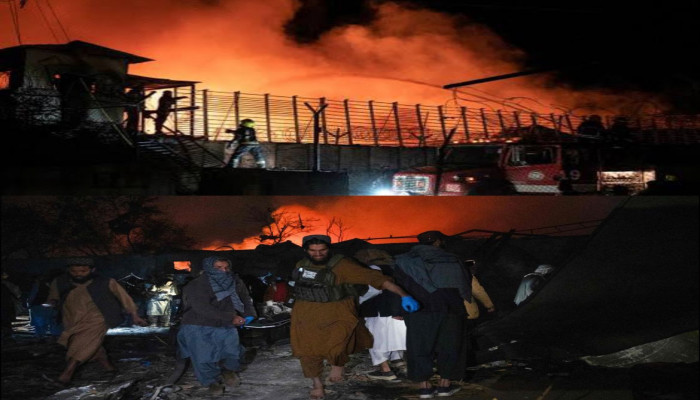
Tensions between Pakistan and Afghanistan have sharply escalated following serious allegations by Kabul that a Pakistani airstrike hit a major hospital in the Afghan capital, killing hundreds of people. According to Afghan authorities, the attack targeted a drug rehabilitation hospital in Kabul on Monday night, resulting in one of the deadliest incidents in the ongoing conflict between the two neighbouring countries. However, Pakistan has firmly denied these claims, stating that its military operations did not target any civilian locations and calling the accusations inaccurate and misleading.
Afghanistan’s deputy government spokesperson, Hamdullah Fitrat, stated on social media that the airstrike occurred around 9 pm local time and caused massive destruction to the 2,000-bed hospital facility. He reported that at least 400 people had lost their lives, while around 250 others were injured. He added that the number of casualties could rise as rescue operations continued. Visuals shared by local media showed emergency teams working in the dark, using flashlights to search through the debris while firefighters struggled to control the flames. Rescue workers were seen pulling out victims from the rubble, as parts of the building remained engulfed in fire.
Fitrat further explained that teams were still working at the site to recover bodies and manage the aftermath of the explosion. The scale of destruction, according to Afghan officials, points to a severe and devastating strike on what they insist was a civilian medical facility.
On the other hand, Pakistan has strongly rejected these allegations. Officials from Pakistan’s information ministry responded by saying that the claims made by Afghanistan were not true and were being used to create confusion and gain sympathy. A spokesperson for Prime Minister Shehbaz Sharif also dismissed the accusations, stating that Pakistan had not targeted any hospital or civilian infrastructure in Kabul.
Earlier statements from Pakistan maintained that its military operations were carefully planned and focused only on specific targets linked to militant activities. According to the ministry, the strikes were aimed at destroying military installations and facilities used by Afghan Taliban members and Pakistan-based militants operating from Afghan territory. These included locations where weapons and technical equipment were stored. Pakistani authorities stressed that the operations were carried out with precision to avoid harm to civilians and described Afghanistan’s claims as an attempt to divert attention from issues related to cross-border militancy.
The reported airstrike came shortly after both countries exchanged gunfire along their shared border, which resulted in the deaths of four individuals on the Afghan side. This incident is part of a broader and increasingly violent conflict that has intensified over the past three weeks. The current phase of fighting is considered one of the most severe in recent years between the two nations.
The latest escalation began in late February, when Afghanistan reportedly carried out cross-border attacks in response to earlier Pakistani airstrikes within Afghan territory. Kabul had accused Pakistan of targeting civilian areas during those operations. These developments disrupted a ceasefire agreement that had been brokered by Qatar in October, following earlier clashes that had already caused casualties among soldiers, civilians, and suspected militants.
Since then, the situation has worsened significantly. Pakistan has declared that it is now engaged in what it describes as an “open war” with Afghanistan. This statement reflects the seriousness of the ongoing conflict and the breakdown of diplomatic efforts to maintain peace along the border.
The conflict has also raised concerns at the international level. The region has long been a sensitive area due to the presence of militant groups such as al-Qaeda and the Islamic State, both of which have been attempting to regain influence. The renewed violence between Pakistan and Afghanistan could create conditions that allow such groups to strengthen their presence again.
Adding to the tension are conflicting claims about casualties from both sides. Pakistan’s Information Minister Attaullah Tarar recently stated that the country’s military had killed 684 Afghan Taliban fighters in recent operations. However, Afghan officials have rejected this figure, arguing that the actual number is much lower. In contrast, Afghanistan’s defence authorities claim that their forces have killed over 100 Pakistani soldiers during the clashes.
For many years, Pakistan has accused Afghanistan of allowing militant groups to operate from its territory. These include the Pakistani Taliban and Baloch separatist groups, which Pakistan considers responsible for attacks on its security forces and civilians. Afghanistan has consistently denied these allegations, insisting that it does not support or shelter such groups.
As both countries continue to exchange accusations and military actions, the situation remains tense and uncertain. The recent claims surrounding the hospital strike have further deepened mistrust between the two sides, making it more difficult to find a peaceful resolution. With rising casualties and growing international concern, the conflict risks spiralling into a larger crisis if efforts to control the situation are not urgently made.



 Loading...please wait
Comments