




Jharkhand CM Hemant Soren moves a resolution against Centre’s MMDR Act
- In Reports
- 07:22 PM, Nov 26, 2026
- Myind Staff
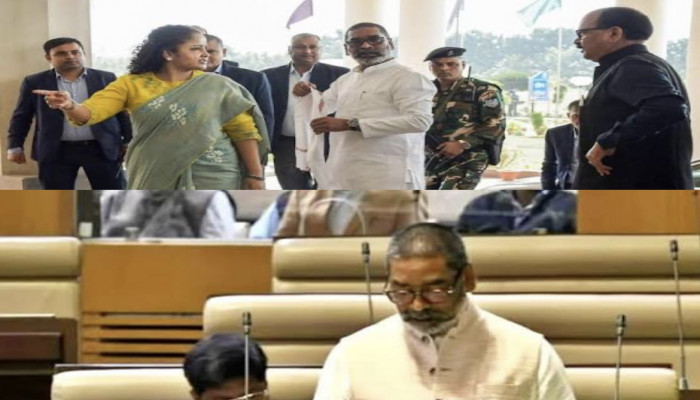
Jharkhand Chief Minister Hemant Soren on Thursday moved a resolution in the state Assembly opposing the Centre’s amendments to the Mines and Minerals (Development and Regulation) Act (MMDR Act). He demanded the withdrawal of the changes, warning that they could cost the state around Rs 13,000 crore in annual revenue.
Soren said Parliament passed the amendments in August and that they would weaken the state's financial position. He warned that the revenue loss could affect funding for welfare and development programmes.
"The implementation of this Act is expected to result in a substantial annual revenue loss of around Rs 13,000 crore for the state government, which will create difficulties in securing the necessary funding for the state's social security, women's empowerment, education, healthcare, rural development and other public welfare schemes,” he said.
The Chief Minister said Jharkhand currently collects around Rs 13,000 crore annually through cess on mineral rights and mineral-bearing land. The state uses this revenue for socio-economic development and welfare programmes, particularly for Adivasis, backward classes and Dalits living in mining-affected areas.
He added that restrictions on state revenue would affect development in these regions and the interests of their residents.
The resolution referred to a July 2024 judgment by a nine-judge Constitution Bench of the Supreme Court in the case of Mineral Area Development Authority vs. Steel Authority of India Limited. The court clarified that state governments have the power to impose a cess on mineral-bearing land under the Constitution's Seventh Schedule.
"It was in light of this ruling that the Jharkhand government had passed the ‘Jharkhand Mineral Bearing Land Cess Bill, 2024’ through the Legislative Assembly,” the resolution documents read.
Soren said the Centre's amendments had restricted this authority. "As a result of these amendments, state governments can no longer impose any form of cess on mineral rights or mineral-bearing land without adhering to the conditions stipulated by the central government," he said.
He urged the Assembly to pass the resolution and forward it to the Centre.
However, Leader of the Opposition Babulal Marandi questioned the JMM-led coalition's silence in Parliament when the Bill was passed. "Had Rahul Gandhi and the opposition played their role in Parliament, this drama would not have been required. The amendment to the Bill was made keeping the welfare of people in mind," he said.
Marandi disputed the projected revenue loss, citing state collections of Rs 1,379.29 crore in 2024-25, Rs 7,487.92 crore in 2025-26 and Rs 7,122 crore until October in 2026-27. "Where did the figure of Rs 13,000 crore come from?" he asked.
He said the amendment aimed to ensure "equitable development" across states. He also claimed that Jharkhand earned around Rs 18,000 crore annually from minerals, compared with Odisha's Rs 46,710 crore. He blamed the gap on the state's inactivity, alleging that only six of 49 iron ore mines and five of 13 mineral blocks were operational.
RJD MLA Suresh Paswan demanded the withdrawal of the amendment, warning, "Otherwise, we will stop the transportation of minerals from Jharkhand," he said. CPI(ML) Liberation MLA Arup Chatterjee also opposed the law.
The two-day special Assembly session, which concludes on Thursday, is expected to put the resolution to a vote. If adopted, it will be sent to the Centre, an official said.
Jharkhand holds around 40 per cent of India's mineral resources, according to official estimates. On Wednesday, the first day of the session, the state government also moved a resolution on the Special Intensive Revision (SIR) of electoral rolls. Soren urged the Election Commission to restart the exercise with a new Standard Operating Procedure (SOP).



 Loading...please wait
Comments