



Jet fuel price doubles, government steps in to cushion domestic airlines
- In Reports
- 05:57 PM, Apr 01, 2026
- Myind Staff
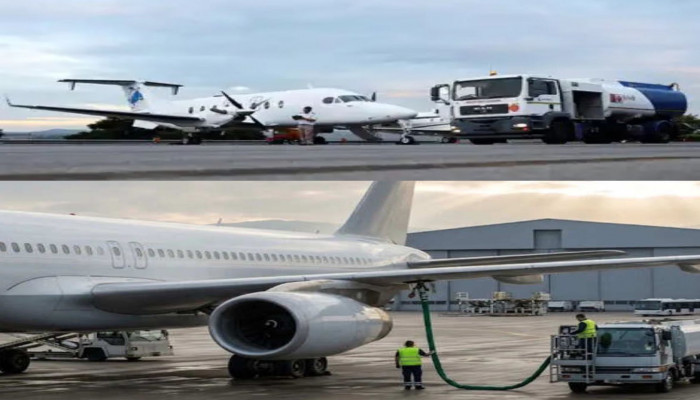
Jet fuel prices in India have reached an unprecedented level, crossing ₹2 lakh per kilolitre for the first time. The sharp rise, driven by global oil market disruptions, initially created concern about a massive spike in aviation costs. However, the government and oil companies later clarified that domestic airlines would not bear the full impact of this surge.
The confusion began when state-run fuel retailers released revised prices showing aviation turbine fuel (ATF) at ₹2,07,341.22 per kilolitre in Delhi. This reflected a dramatic increase of more than 100%, marking a record high. The spike was linked to rising global crude oil prices amid the ongoing conflict in West Asia, which has disrupted supply chains and pushed energy costs upward.
Soon after, Indian Oil Corporation (IOC) clarified that this steep rate is not applicable to domestic airlines. Instead, the ₹2.07 lakh per kilolitre price applies mainly to foreign carriers and non-scheduled operators refuelling in India. For domestic airlines, the effective price increase is significantly lower, with operational rates estimated at around ₹1.04 lakh per kilolitre.
According to the IOC, the actual increase for domestic carriers is limited. The rise is about 8.5% in pricing terms, while the operational impact is roughly 20–25%. This clarification came after widespread confusion over the earlier notification, which appeared to indicate a much sharper jump.
The government played a key role in reducing the burden on domestic airlines. The Ministry of Petroleum and Natural Gas, along with the Ministry of Civil Aviation and public sector oil companies, decided to implement only a partial and staggered increase. This move was aimed at protecting airlines and passengers from a sudden surge in costs.
The ministry further added, “ATF prices in India are deregulated and revised monthly in line with international benchmarks and exchange rates. The sharp spike in global oil prices, driven by disruptions linked to the ongoing West Asia conflict and closure of key routes such as the Strait of Hormuz, had initially indicated a potential increase of over 100%.”
Union Civil Aviation Minister Ram Mohan Naidu also addressed the situation and explained the government’s approach. He said, "With ATF prices in India, deregulated since 2001 and revised monthly based on international benchmarks, facing extraordinary pressure due to global energy disruptions and the closure of the Strait of Hormuz, a steep increase of over 100% was anticipated from 1 April. In this challenging context, the decision by PSU Oil Marketing Companies, under the Ministry of Petroleum in consultation with the Ministry of Civil Aviation, to implement only a partial and staggered increase of 25% (Rs. 15/litre) for domestic airlines is both pragmatic and forward-looking, while ensuring that foreign routes bear the full market-aligned price."
He added, "This calibrated approach will help shield passengers from sharp fare increases, ease the burden on domestic airlines, and support the continued stability of the aviation sector at this crucial juncture. It will also benefit the broader economy by ensuring the smooth movement of cargo and maintaining vital air connectivity for trade and logistics."
This development comes at a time when airlines are already dealing with rising operational challenges. Fuel alone accounts for nearly 40% of an airline’s operating costs. The increase in ATF prices is expected to add further pressure, especially as carriers are also facing higher expenses due to longer flight routes caused by airspace restrictions in conflict-affected regions.
The surge in fuel prices is closely linked to the geopolitical situation in West Asia. The conflict involving the US, Israel, and Iran has disrupted global oil supply chains. The closure of key routes like the Strait of Hormuz has further tightened supply, leading to a sharp increase in crude oil and refined product prices, including jet fuel.
This is also the second consecutive monthly increase in ATF prices, highlighting a continuing upward trend. While domestic airlines have been partially protected, international operations and non-scheduled services are expected to face the full impact of global market rates.
Alongside jet fuel, prices of commercial LPG have also been increased. In Delhi, the cost of a 19-kg commercial LPG cylinder has gone up by ₹195.50, reaching ₹2,078.50. However, there has been no change in domestic cooking gas prices, offering some relief to households.
Overall, while jet fuel prices have technically crossed record levels, the government’s intervention has ensured that domestic airlines and passengers are not immediately hit by the full extent of the global price surge. The situation, however, remains uncertain and depends heavily on how global energy markets respond to ongoing geopolitical tensions.



 Loading...please wait
Comments