




JD Vance says Iranian delegation lacked authority to finalise deal
- In Reports
- 01:24 PM, Apr 14, 2026
- Myind Staff
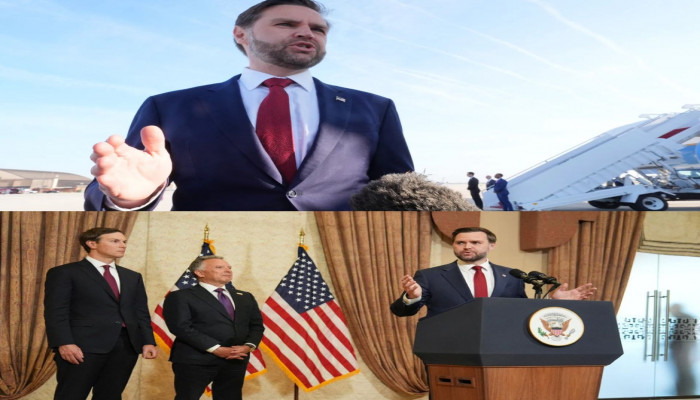
Talks between the United States and Iran in Islamabad ended without a formal agreement, with US Vice President JD Vance pointing to a key reason behind the deadlock. He suggested that the Iranian representatives present at the discussions did not have the authority required to approve a final deal. While the meeting showed some progress, it ultimately fell short of producing a concrete outcome.
Speaking in an interview with Fox News on Sunday, Vance shared insights into what happened during the recent round of talks held in Pakistan. He indicated that the negotiations were not entirely unsuccessful, as both sides made efforts to move forward. According to him, the discussions brought Iran closer to the US position, but the shift was not enough to seal an agreement.
“I wouldn’t just say that things went wrong. I also think things went right. We made a lot of progress,” Vance told Fox News. “They moved in our direction, which is why we saw some positive signs, but they didn’t move far enough,” he added.
Vance made it clear that the United States had already laid out its expectations and priorities during the talks. He stressed that the next move now depends on Iran. In his view, the responsibility lies with the Iranian leadership to decide how the situation will unfold going forward. He said that after the discussions in Islamabad, it became evident that the delegation present there could not take final decisions on behalf of their country.
He further explained that the US team gained a better understanding of how Iran approaches negotiations. This insight, he said, played a role in the decision to leave Pakistan without finalising a deal. “We acquired some knowledge about how the Iranians are negotiating, and this is ultimately why we left Pakistan,” he said.
Vance also hinted that the ultimate authority may rest with a higher power in Tehran, possibly the Supreme Leader or another senior figure. According to him, the Iranian delegation needed to return home to seek approval before agreeing to any terms proposed during the talks. “What we figured out is that they were unable, I think — the team that was there, was unable to cut a deal," he explained. "They had to go back to Tehran, either from the supreme leader or somebody else, and actually get approval for the terms that we had set.”
The Iranian side, however, presented a different version of events. Iran’s foreign minister Abbas Araghchi, stated that both sides were very close to reaching an agreement before the situation took a turn. He suggested that external developments, particularly actions taken by the United States, disrupted the progress made during negotiations.
Araghchi pointed to the US decision to impose a blockade on Iran in the Strait of Hormuz as a major factor behind the breakdown. According to him, this move changed the dynamics of the talks at a crucial moment. He maintained that Iran had entered the discussions with genuine intent and had been negotiating seriously to bring an end to the conflict.
“In intensive talks at the highest level in 47 years, Iran engaged with the US in good faith to end the war. But when we were just inches away from an ‘Islamabad MoU’, we encountered maximalism, shifting goalposts, and a blockade,” Araghchi posted on his X handle after the meeting on April 13.
The contrasting accounts from both sides highlight the complexity of the situation. These differing perspectives show that trust and coordination remain key challenges in the negotiation process.
Despite the failure to reach a deal, both sides acknowledged that some progress had been made. The discussions provided an opportunity to understand each other’s positions better. However, without clear authority and stable conditions, even positive momentum was not enough to achieve a breakthrough.
As the situation stands, the future of these negotiations depends on decisions taken in Tehran. The United States has made its stance clear and is waiting for Iran to respond. Whether the talks resume or lead to a formal agreement will depend on how both sides address the issues that led to this impasse.



 Loading...please wait
Comments