



Japan to set up new foreign office in India to strengthen economic partnership
- In Reports
- 01:33 PM, Mar 31, 2026
- Myind Staff
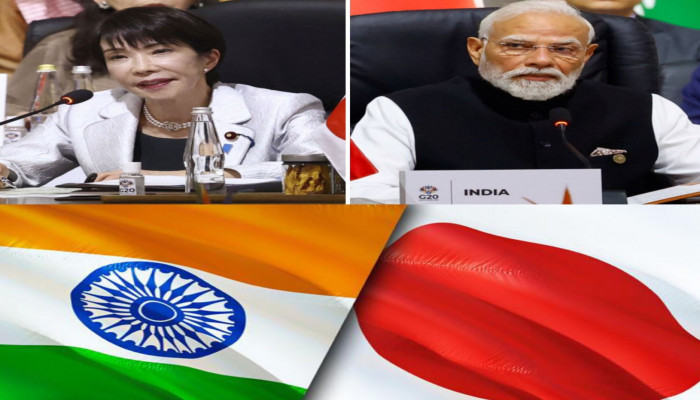
The Ministry of Foreign Affairs of Japan is set to establish a new office on Wednesday with the aim of deepening economic ties with India. This move reflects Japan’s growing focus on expanding cooperation with India and encouraging more Japanese companies to enter one of the world’s fastest-growing and most populous markets. The office will play a key role in supporting businesses and improving the overall investment climate.
One of the main responsibilities of this new office will be to push for reforms that address concerns faced by Japanese companies in India. Many firms have shown hesitation in expanding their presence due to several challenges. These include differences in regulations across Indian states, a lack of clarity in how laws are implemented, and a complicated tax structure. By raising these issues with the Indian government, Japan hopes to make the business environment more predictable and easier to navigate.
The initiative also follows commitments made during last August’s Japan-India summit. At the meeting, both countries agreed on an ambitious goal of reaching 10 trillion yen, or about $62.6 billion, in private-sector investment in India over the next ten years. The newly formed office will support efforts to achieve this target by promoting cooperation in key areas such as artificial intelligence, startup ecosystems, and critical minerals. These sectors are seen as essential for future economic growth and technological development.
Despite strong interest, Japanese companies have been slow to expand in India. According to data from the Japanese Embassy, there were 1,434 Japanese companies operating in India in 2024. This number has remained almost unchanged since 2018, showing limited growth over several years. In contrast, Japanese business presence is much higher in other Asian countries. Around 6,000 Japanese companies operate in Thailand, while about 4,500 are active in Singapore. This comparison highlights the gap between interest in India and actual business expansion.
Surveys conducted by the Japan Bank for International Cooperation reveal that Japanese manufacturers have considered India the most promising overseas market for four consecutive years. However, this positive outlook has not translated into a rise in the number of companies operating in the country. Many businesses continue to point out that the challenges in India’s business environment are difficult to handle on their own, which slows down expansion plans.
Japan’s decision to prioritise economic cooperation with India is based on two major reasons. The first is India’s strong economic potential. With the largest population in the world and a high growth rate, India offers a vast and expanding market. Some projections suggest that India’s nominal gross domestic product could overtake Japan’s by 2026, making it the fourth-largest economy globally. This potential makes India an important partner for long-term economic engagement.
India has also been attracting increasing levels of foreign investment. According to the Reserve Bank of India, the country received around $50 billion in foreign direct investment equity inflows in the fiscal year 2024. This marks a 13 per cent increase compared to the previous year. Among the top investors, Singapore led with $15 billion, followed by Mauritius and the United States. Japan ranked sixth, contributing about $2.5 billion. These figures show that while Japan is involved, there is still room for greater participation.
The second reason for Japan’s focus on India lies in its strategic importance. Both countries share common values such as democracy and the rule of law. Along with the United States and Australia, they are members of the Quadrilateral Security Dialogue, also known as the Quad. This grouping plays a significant role in shaping regional and global security and cooperation.
India also follows what is often described as “omnidirectional” diplomacy. This means it maintains relations with a wide range of countries rather than aligning closely with any one bloc. If Japan does not strengthen its ties with India, there is a possibility that India could deepen its engagement with other partners, such as Russia. By enhancing economic cooperation, Japan aims to maintain a strong and stable relationship with India.
Overall, the creation of this new office signals Japan’s clear intent to strengthen its economic and strategic partnership with India. By addressing business challenges and promoting investment in key sectors, Japan hopes to turn strong interest into real expansion on the ground.



 Loading...please wait
Comments