




Japan successfully launches and lands reusable rocket
- In Reports
- 02:02 PM, Jul 11, 2026
- Myind Staff
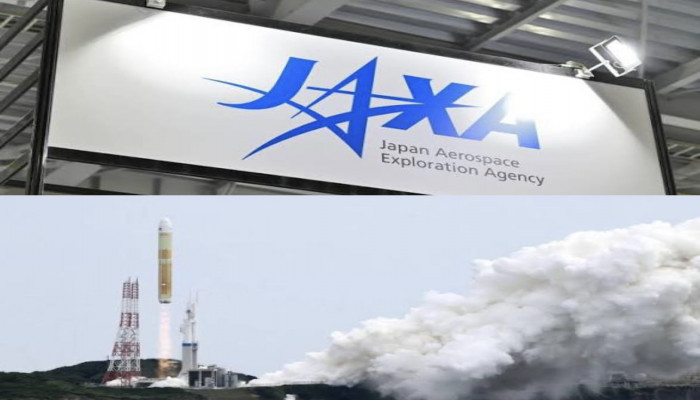
Japan moved a step closer to developing reusable rocket technology after its space agency successfully completed the first lift-off and landing test of a prototype reusable rocket on Saturday. The achievement marks an important stage in Japan's efforts to lower the cost of space launches and strengthen its position in the global space industry, where reusable launch systems have largely been led by SpaceX.
The Japan Aerospace Exploration Agency (JAXA) carried out the test at its facility in Noshiro in the Akita region. The prototype rocket lifted off as planned and climbed to a height of around 10 metres, or 33 feet. It then returned safely to the ground and landed at the designated site. According to JAXA, the entire flight lasted about 40 seconds.
The successful test showed that the prototype could complete both take-off and landing in a controlled manner. JAXA officials said the mission met its primary objective of gathering valuable data that will support the development of future reusable launch vehicles.
Speaking after the test, JAXA official Takashi Ito, who led the launch, expressed his satisfaction with the outcome. "I feel we have put a great deal of time and effort into this, and now that the prototype has taken off and landed without problem, I must say I feel a great sense of relief," Ito told reporters.
Ito added that the agency will continue to examine the information collected during the mission before making a final assessment. He said the review will help engineers understand the rocket's performance in greater detail. At the same time, he remained optimistic about the outcome of the test. He said he is "confident" that it "obtained very useful data."
Reusable rocket technology has become a major focus for space agencies and private companies around the world. Most rockets currently operate as single-use vehicles. After launch, many of their parts fall into the sea, burn up while re-entering Earth's atmosphere or remain in orbit as space debris. The first stage of a rocket is one of its most expensive parts, making its recovery and reuse an important way to reduce overall launch costs.
A reusable system allows the same rocket stage to fly on multiple missions after inspection and maintenance. This approach can make space launches more affordable and increase the number of missions that can take place within a shorter period.
SpaceX has led this field for several years. The company has operated its reusable Falcon 9 rocket since 2017. Its repeated landings and reuse of rocket boosters have changed the commercial space industry and encouraged other countries to invest in similar technology.
Japan is now working to improve its own capabilities in this area. The latest JAXA test reflects the country's broader effort to make its space industry more competitive at the international level. Reusable launch systems are expected to play an important role in future satellite launches and other space missions.
The race to develop reusable rockets has also gained momentum in Asia. China announced its first successful reusable rocket landing on Friday. The achievement marked a significant advance for the country's space programme and has the potential to challenge the United States' leadership in reusable launch technology.
Japan has already seen progress from the private sector as well. In June last year, a subsidiary of Honda became the first Japanese company to successfully launch and land a reusable rocket. The achievement showed that both government agencies and private companies in Japan are investing in reusable space technology.
Alongside these developments, Japan has continued to improve the performance of its main launch vehicles. The country's flagship H3 rocket completed a successful launch in June. The mission came months after an earlier attempt to place a satellite into orbit ended in failure. The latest success helped restore confidence in Japan's launch programme and highlighted continued progress in its space ambitions.
The successful lift-off and landing test by JAXA adds another important step to Japan's growing space programme. The data collected during the mission will support future research and development. The achievement also strengthens Japan's efforts to build cost-effective launch systems and expand its role in the rapidly evolving global space industry.



 Loading...please wait
Comments