



Japan, Philippines sign major defence pact to counter rising China pressure
- In Reports
- 05:36 PM, Jan 15, 2026
- Myind Staff
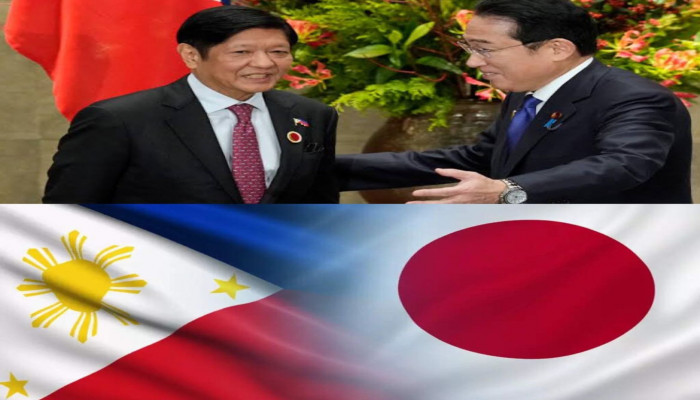
Japan and the Philippines have signed a new defence agreement aimed at strengthening their military cooperation amid increasing pressure from China in the region. The pact, officially known as the Acquisition and Cross-Servicing Agreement (ACSA), was signed on Thursday in Manila by Japanese Foreign Minister Toshimitsu Motegi and Philippine Foreign Secretary Theresa Lazaro.
Under this deal, the two countries’ armed forces will be able to provide each other with essential supplies—such as ammunition, fuel, food and other necessities tax-free—during joint military training exercises. This measure is seen as important to strengthen deterrence against China’s growing aggression, particularly in the East China Sea and the South China Sea, where both nations have ongoing territorial disputes with Beijing.
The agreement also includes cooperation in preparing for and responding to natural disasters, a shared concern for both Japan and the Philippines, which frequently face severe weather events. The pact will help the two countries coordinate disaster relief efforts and support United Nations peacekeeping operations when necessary.
However, the defence pact still needs approval from the Japanese legislature before it can come into force. Japanese officials said the agreement is “the latest key defence pact” forged to deepen the security alliance between Tokyo and Manila.
This pact builds on earlier agreements between the two countries. In mid-2024, Japan and the Philippines signed the Reciprocal Access Agreement (RAA), which allows the deployment of each other’s forces on their respective territories for joint larger combat exercises, including live-fire drills. The RAA took effect in September after ratification by the Philippines.
Officials from both nations are also negotiating another deal that would enhance the security of highly confidential defence and military information shared between them, though this has not yet been finalised.
When the negotiations for the Acquisition and Cross-Servicing Agreement began in April last year, then-Japanese Prime Minister Shigeru Ishiba and Philippine President Ferdinand Marcos Jr. jointly announced the start of talks in Manila. At that time, Ishiba emphasised their countries’ shared stance against what they see as attempts “to unilaterally change the status quo through force or coercion in the East and South China seas.”
Ishiba added, “I hope that our two countries will continue to work closely together to realise a free and open Indo-Pacific based on the rule of law,” underlining the importance of cooperation for regional stability.
The pact comes amid rising tensions between Japan and China, triggered in part by recent remarks from Japanese Prime Minister Sanae Takaichi, who said that Chinese action against Taiwan could lead to Japanese intervention. China reacted angrily to those comments, adding to existing political, trade and security strains between Tokyo and Beijing.
Japan has its own territorial disputes with China over islands in the East China Sea, where Chinese coast guard vessels and aircraft frequently enter waters and airspace that both nations claim. These activities have forced Japan to scramble fighter jets on several occasions.
At the same time, the Philippines has faced increasingly hostile encounters between its coast guard and Chinese vessels in the South China Sea, particularly under President Marcos Jr.’s administration. Beijing claims nearly the entire waterway and has built artificial islands and military facilities to reinforce its claims, a stance challenged by multiple Southeast Asian nations and rejected in a 2016 international tribunal ruling.
The United States, a treaty ally of both Japan and the Philippines, has also repeatedly criticised China for its assertive actions in these disputed waters.
Overall, this new defence pact marks another step in the deepening security cooperation between Japan and the Philippines as they seek to respond jointly to shared threats and maintain peace and stability in the Indo-Pacific region.



 Loading...please wait
Comments