




Japan issues strong warning on Yen, signals readiness to intervene
- In Reports
- 02:35 PM, Dec 23, 2025
- Myind Staff
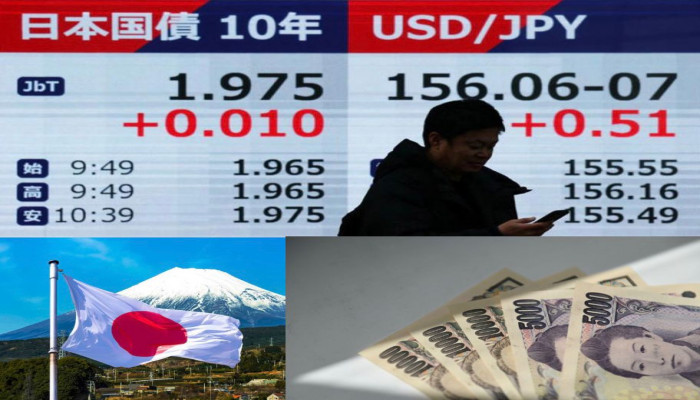
Japan has issued its sternest warning yet on the yen, signalling that it is ready to take action if the currency continues to move sharply away from its economic fundamentals. Finance Minister Satsuki Katayama said on Tuesday that the Japanese government has a “free hand” to address excessive moves in the yen and will not hesitate to intervene in the currency market if necessary.
“They absolutely do not reflect fundamentals,” Katayama said during a news conference, referring to the recent declines in the yen following Bank of Japan (BOJ) Governor Kazuo Ueda’s press conference last week.
Katayama’s comments come amid concerns that speculative moves are driving the yen lower, beyond what Japan's economic conditions would justify. “I don't believe they would have gone that far unless there were speculative moves. The government will take appropriate action against excessive moves,” she added. She also referred to Japan’s agreement with the United States in September regarding exchange-rate policy, which allows for intervention in cases of abnormal volatility.
Her remarks largely echoed an interview she gave to Bloomberg on Monday, but they were notably stronger in tone, signalling a more urgent stance from Tokyo on the weakening yen.
Following Katayama’s comments, the yen strengthened slightly to around 156 per U.S. dollar on Tuesday. However, it remained close to the 11-month low of 157.78 that it reached on Friday, reflecting continued market uncertainty.
In September, Japan and the U.S. jointly issued a statement reaffirming their commitment to letting currency rates be determined by the market. The statement also noted that foreign exchange interventions should be reserved for addressing “excess volatility.” Japanese officials have since referred to this agreement as giving them the right to step in when the yen deviates significantly from its economic fundamentals or experiences large, disruptive swings.
Japan last intervened in the foreign exchange market in July 2024, when the yen fell to a 38-year low of 161.96 per dollar. At that time, the government purchased yen to stabilise the currency and prevent further decline.
Hiroyuki Machida, director of Japan FX and commodities sales at ANZ, said that if the dollar rises past the highs seen after the BOJ’s recent press conference, into the 158 yen range or higher, “the government would conduct intervention at some point for sure.”
The weak yen has been a growing concern for Japanese policymakers. A depreciating yen increases import costs, which contributes to higher inflation and raises the cost of living for households. This has added pressure on the government to stabilise the currency while balancing other economic priorities.
Katayama’s statements on Tuesday were firmer than those she made on Monday, when she indicated that Japan would take appropriate action but did not specifically describe recent yen movements as inconsistent with economic fundamentals. Tuesday’s remarks, by contrast, left little doubt that Tokyo is prepared to act if necessary.
The Bank of Japan recently raised interest rates to 0.75% on Friday, marking the highest levels seen in 30 years. This move is part of the central bank’s effort to end decades of substantial monetary support and narrow the interest rate gap with the United States. However, despite the rate increase, the yen weakened because markets interpreted Governor Ueda’s comments after the meeting as suggesting that the BOJ is not in a hurry to raise rates further.
ANZ’s Machida noted that the yen’s recent weakness reflects both the Japanese government’s reflationary fiscal policies and the BOJ’s still-easy monetary stance. He emphasised that with Prime Minister Sanae Takaichi’s administration preparing an expansionary budget for the next fiscal year, investors and market participants will need to see further monetary tightening before the yen’s weakness can be corrected.
The yen’s movements have become a central concern for Japanese policymakers because of their broader economic implications. A weaker yen not only affects import prices but also has the potential to influence inflation expectations, consumer spending, and overall economic stability. As a result, the government and the BOJ are closely monitoring the currency market for signs of excessive volatility.
Katayama’s warning on Tuesday makes it clear that Japan is ready to take swift action if necessary. By signalling a willingness to intervene, officials hope to curb speculative pressures and stabilise the yen without causing disruption in global markets.



 Loading...please wait
Comments