




Japan eases arms export curbs in major policy shift to boost defence partnerships
- In Reports
- 08:03 PM, Apr 21, 2026
- Myind Staff
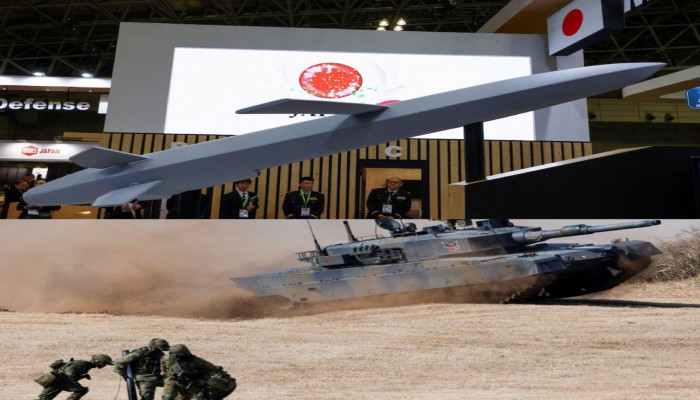
Japan has announced a significant change in its defence policy by easing long-standing restrictions on the export of military equipment. This marks one of the most notable shifts in decades, allowing the country to sell weapons such as warships and missiles to other nations. The move is aimed at strengthening Japan’s defence industry while also enhancing its strategic partnerships, especially in Asia, amid rising concerns over China’s growing influence in the region.
The decision reflects a gradual departure from the pacifist approach that has guided Japan’s security policies since World War II. By opening up its defence exports, Japan is seeking to build stronger ties with like-minded countries and play a more active role in regional security. The change comes at a time when global conflicts, particularly in Ukraine and the Middle East, are placing pressure on the United States’ weapons production capacity. This situation has created new opportunities for Japan to step in as an alternative supplier.
At the same time, many U.S. allies in Europe and Asia are looking to diversify their defence sources. This is partly due to uncertainty around Washington’s long-term security commitments under President Donald Trump. Japan’s new approach is expected to help meet this demand while also reinforcing its own defence capabilities.
Japanese Prime Minister Sanae Takaichi highlighted the importance of international defence cooperation. She said, "No single country can now protect its own peace and security alone, and partner countries that support each other in terms of defence equipment are necessary." Her statement underlines Japan’s intention to work more closely with other nations in maintaining stability and security.
The policy shift has received mixed reactions globally. Countries such as the Philippines have welcomed the move, seeing it as an opportunity to access high-quality defence equipment. In contrast, China has expressed strong concerns. Chinese foreign ministry spokesperson Guo Jiakun stated, "China is deeply concerned about this," and added that Beijing "will remain highly vigilant and resolutely resist any reckless actions by Japan towards a new form of militarism." These remarks reflect ongoing tensions between the two countries, which have been strained further by disagreements over Taiwan and regional security.
Under the revised rules, Japan has removed five specific categories that previously restricted most military exports. Earlier, exports were largely limited to non-combat equipment such as rescue, transport, surveillance, and mine-sweeping tools. Now, instead of fixed categories, each export proposal will be evaluated individually by ministers and officials. This allows greater flexibility in decision-making while still maintaining oversight.
Despite the relaxation, Japan will continue to follow three core principles. These include strict screening of exports, controls to prevent transfer to third countries, and a ban on sales to nations involved in active conflicts. However, the government has indicated that exceptions may be made if they are considered necessary for national security. This suggests a more practical and case-by-case approach going forward.
Several countries, including Poland and the Philippines, are already exploring potential defence deals with Japan. One of the early agreements could involve the export of used Japanese warships to the Philippines. Philippine Defence Secretary Gilberto Teodoro welcomed the policy change, stating that it would provide access to defence "articles of the highest quality" that would "strengthen domestic resilience" and "contribute to regional stability through deterrence."
The Philippines holds strategic importance as it forms part of the First Island Chain, a series of islands that play a key role in limiting China’s access to the Western Pacific. Japan and the Philippines have been strengthening their defence ties in recent months. They signed an agreement in September to allow easier military cooperation and further eased rules in January for sharing defence supplies.
Support for Japan’s decision has also come from Western allies. U.S. Ambassador to Japan, George Glass, described the move as a "historic step" that would strengthen collective defence. Similarly, Germany’s envoy to Tokyo, Petra Sigmund, noted that the change opens up new opportunities for cooperation with the goal of enhancing global stability.
Alongside boosting exports, Japan is also focusing on strengthening its own military capabilities. The government aims to use defence exports to support its industrial base by increasing production, reducing costs, and expanding manufacturing capacity. This would ensure that Japan is better prepared in case of a military crisis.
Japanese defence companies, including Mitsubishi Heavy Industries, have the ability to produce advanced systems such as submarines, fighter jets, and missiles. However, they have traditionally relied on limited domestic orders from Japan’s Self-Defense Forces. Expanding exports is expected to provide these companies with more consistent demand and help them grow.
Japan is also investing heavily in modernising its military. It is purchasing advanced equipment such as missiles, stealth aircraft, and drones to counter potential threats, particularly from China. Beijing, however, continues to maintain that its intentions in the region are peaceful.
In addition, Japan is working on developing a next-generation fighter jet in collaboration with Britain and Italy. This project, expected to be completed by the mid-2030s, aims to share development costs and access advanced technologies.
Defence spending in Japan has been steadily rising, reaching 2% of its GDP in recent years. The government is expected to announce further increases as part of a new security strategy later this year. This continued investment highlights Japan’s commitment to strengthening both its domestic defence and its role in global security.



 Loading...please wait
Comments