




Japan calls Putin’s visit to disputed Iturup Island ‘absolutely unacceptable’
- In Reports
- 06:24 PM, Aug 13, 2026
- Myind Staff
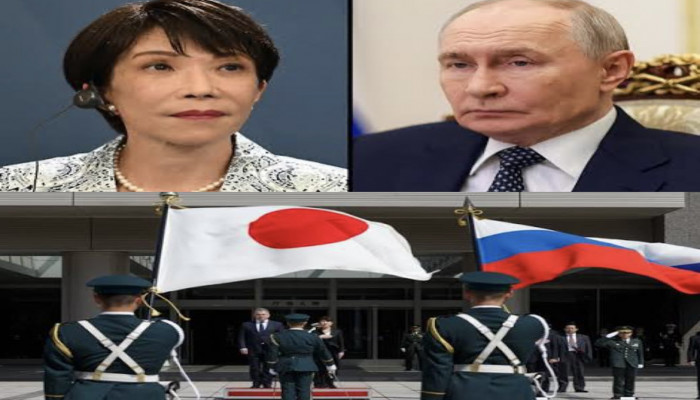
Japanese Prime Minister Sanae Takaichi on Thursday strongly criticised Russian President Vladimir Putin’s visit to Iturup Island, calling the move “absolutely unacceptable” and warning that it could further damage Japan-Russia relations. The island is part of the disputed Northern Territories, which Japan claims but Russia controls. Takaichi said the visit could also deepen anti-Russian sentiment among the Japanese public.
Putin visited Iturup, known as Etorofu Island in Japan, earlier on Thursday. It was his first visit to one of the four islands in the Russian-held, Japanese-claimed chain. Russia’s official TASS news agency reported the visit. According to footage released by the Kremlin press service, Putin visited the Yasny fish processing plant during his trip to the island.
Takaichi responded to the visit at an informal press conference held at the official residence. She said Japan had repeatedly asked Moscow not to send senior Russian leaders to the disputed region. Tokyo had maintained this position since Putin indicated in January 2024 that he intended to visit the islands.
“I strongly protest today's visit to Iturup Island by President Putin. The Northern Territories are inherently Japanese territory both historically and under international law, and this visit to Iturup Island by Russia's incumbent president is incompatible with Japan's consistent position on the Northern Territories,” Takaichi said in a post on X.
“Moreover, it wounds the feelings of the Japanese people and is absolutely unacceptable,” the Japanese Prime Minister said.
The dispute over the Kuril Islands, known in Japan as the Northern Territories conflict, has continued for decades. It involves four southernmost islands: Iturup or Etorofu, Kunashir or Kunashiri, Shikotan and the Habomai islets. The islands lie between Japan’s northern island of Hokkaido and Russia’s Kamchatka Peninsula.
Japan points to the 1855 Treaty of Shimoda, under which the islands were recognised as Japanese territory. Soviet forces occupied the islands in August 1945 during the final days of World War II. The occupation led to the expulsion of around 17,000 Japanese residents from the islands.
Russia maintains that its sovereignty over the islands was established through post-war Allied agreements, including the Yalta Conference. Japan rejects that position and says the four islands are an inherent part of Japanese territory. Tokyo also maintains that it never intended to give up its claim to the islands under the 1951 San Francisco Peace Treaty.
Japanese authorities continue to describe the Northern Territories as Etorofu, Kunashiri, Shikotan and the Habomai islet group. Japan says the Soviet Union illegally seized the islands soon after Japan surrendered on August 15, 1945. Russia refers to the territory as the Southern Kurils and argues that the seizure was legitimate.
Putin’s visit comes at a difficult time for relations between Moscow and Tokyo. Russia’s full-scale invasion of Ukraine has continued for nearly four-and-a-half years. Japan has joined the United States and other countries in imposing sanctions on Russia since the invasion began in 2022. The measures have targeted Moscow’s economy and war effort and have further strained bilateral ties.
The visit appears to send a clear message that Moscow has no intention of making territorial concessions, including to Japan. Tokyo has continued to call for the return of the disputed islands. The territorial disagreement has also prevented Japan and Russia from signing a peace treaty formally ending the state of war left over from World War II.
The chances of restarting negotiations on a peace treaty remain low. There has been little improvement in relations since Russia launched its invasion of Ukraine. Japan has continued to pursue its position on the Northern Territories despite the difficult diplomatic environment.
Takaichi said Japan had made every possible effort to maintain its position and manage relations with Moscow despite the strained circumstances. She warned that Putin’s visit could make future reconciliation even more difficult.
“Even amid the harsh state of Japan-Russia relations following Russia's invasion of Ukraine, Japan has made every possible effort, but this visit can only be said to have further hardened anti-Russia sentiment within Japan and made medium- to long-term recovery of relations more difficult. I hope that the Russian side will take the gravity of this matter very seriously,” Takaichi said.
Putin’s visit therefore adds another setback to already strained Japan-Russia relations. His appearance on one of the disputed islands reinforces Moscow’s control over the territory while Japan continues to insist that the Northern Territories belong to it. The latest development is likely to make efforts to improve bilateral relations and revive peace treaty discussions even more difficult.



 Loading...please wait
Comments