



Jammu & Kashmir: Over 8,000 mule accounts frozen for suspected anti-India links
- In Reports
- 08:28 PM, Feb 16, 2026
- Myind Staff
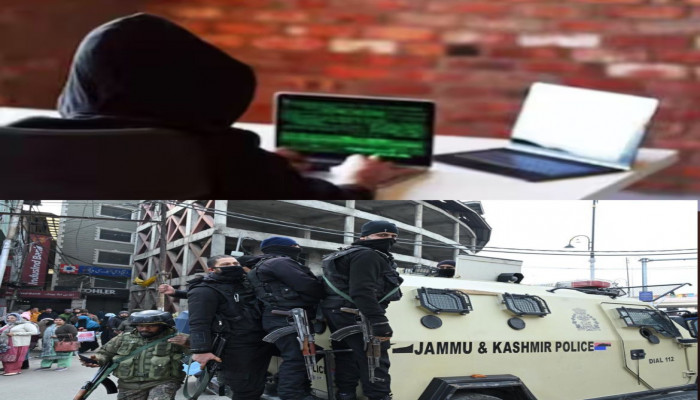
Security agencies have uncovered a major hawala-style money laundering network in Jammu and Kashmir, where thousands of bank accounts were allegedly being used to move illegal money linked to cybercrime and possible anti-national activities. According to a PTI report, authorities have frozen more than 8,000 mule accounts in the region over the last three years, calling it a serious and fast-growing threat.
Officials say these mule accounts are a key part of the cybercrime system. They are usually opened in the name of ordinary people, but are used by criminals to receive and transfer stolen money. Investigators believe that the money passing through these accounts may eventually be used to support separatist or anti-India activities.
A mule account is basically a bank account that is used by someone else to move illegal money. These accounts are described as the most vulnerable yet most important part of the cybercrime chain. Investigators say that without mule accounts, scammers would find it very difficult to convert stolen money into untraceable digital assets like cryptocurrency.
Because of the growing number of such accounts, central security agencies have directed the Jammu and Kashmir Police and other enforcement departments to work closely with banks. The goal is to stop more people from creating such accounts and to prevent criminals from misusing the banking system.
Authorities are also focusing on finding the intermediaries behind the network. These middlemen are commonly known as “mulers.” Their job is to arrange and manage mule accounts for scam operators. Investigators say mulers play a crucial role because they help criminals get access to many accounts without directly being involved in scamming victims.
Officials believe that after the National Investigation Agency (NIA) started cracking down on illegal money flows into the region in 2017, anti-national groups changed their methods. Instead of using traditional hawala routes, they allegedly started using a modern version called “digital hawala.” In this system, online banking and digital transfers are used to move funds secretly.
In this updated model, mule account holders and mulers earn commissions for providing access to accounts. Authorities suspect that part of this commission money could be used to support activities that threaten national security.
Investigators explained that mulers usually do not contact scam victims or send fake links. Their role remains hidden, but it is extremely important. They maintain a steady supply of mule accounts and provide them to scam operators. This allows criminals to move stolen money through several accounts quickly, making it harder for authorities to trace the original source.
The process often begins when ordinary individuals are tempted with offers of easy money. Many are told they can earn quick commissions by letting someone use their account for a short period. They are assured that there is no real risk and that the account will only be used as a “parking account.”
However, officials say this is not true. Once access is given, the account becomes a tool for money laundering. People are often asked to hand over full access, including internet banking details, passwords, and even OTP-linked services. After that, the account is controlled by cybercriminals.
Investigations show that one scam operator may control 10 to 30 mule accounts at the same time. This helps criminals spread stolen money across different accounts, making it difficult for banks or authorities to detect unusual activity immediately.
In several cases, accounts were also opened under the names of shell companies. These fake companies help criminals transfer large sums without raising suspicion. Officials said that in some cases, transactions of up to Rs 40 lakh in a single day were made through such accounts.
The movement of money is done in a very planned way. Funds are quickly transferred through multiple accounts and broken into smaller transactions. This is done to avoid detection by monitoring systems used by banks and law enforcement agencies.
Security officials have warned that even if mule account holders are not the main planners of scams, they are still involved in a serious crime. By giving away banking credentials and taking commissions, they are helping criminals run large-scale fraud operations.
A senior official reportedly said that mule accounts are the foundation of the entire scam system. Without these accounts, scammers would have no place to deposit stolen money. This means the fraud would fail at the first step. Authorities stressed that those renting out their accounts are not innocent because they knowingly provide the infrastructure needed for illegal operations.
A detailed study by central agencies also found that people based in countries like China, Malaysia, Myanmar, and Cambodia are allegedly directing recruits in Jammu and Kashmir. These recruits are reportedly asked to create private cryptocurrency wallets. These wallets are often made using VPNs to hide online identity and avoid being tracked.
Officials said many of these cryptocurrency wallets do not require strict KYC verification, which makes them even harder to trace. Once money is transferred into crypto form, it becomes difficult for agencies to recover or follow the trail.
Authorities also noted that police in the region have already restricted VPN usage in the valley. Officials believe VPNs are often used by terrorists and separatists to hide their digital activities, which is why controlling their use has become a security priority.
The investigation is ongoing, and agencies are continuing to track both mule account holders and mulers. They are also working with banks to strengthen monitoring systems so that suspicious transactions and unusual account activities can be identified early.
This crackdown is being seen as an important step in stopping cybercrime networks and cutting off illegal funding routes that may be connected to anti-national activities.



 Loading...please wait
Comments