




Italy moves to revive nuclear power after four decades to meet climate goals
- In Reports
- 03:17 PM, Jul 28, 2026
- Myind Staff
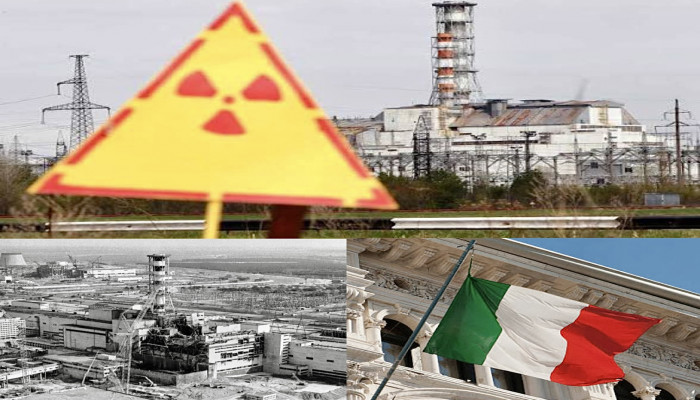
Nearly 40 years after the Chernobyl nuclear disaster changed public opinion across Europe, Italy is preparing to bring nuclear power back into its energy mix. Prime Minister Giorgia Meloni's government has started the process to revive nuclear energy as the country looks to strengthen energy security, meet climate goals and reduce dependence on other energy sources.
The government believes a younger generation of Italians views nuclear power differently from those who witnessed the 1986 Chernobyl disaster. Many younger people see it as a source of low-carbon electricity that can support climate action and provide a stable supply of energy during global crises such as the wars in Ukraine and Iran. Officials hope this shift in public opinion will help overcome decades of resistance toward nuclear energy.
Next week, Italy's Parliament is expected to approve government-backed legislation that will create a legal framework for next-generation nuclear technologies. Once the bill becomes law, the government will have 12 months to prepare detailed rules covering reactor licensing, safety standards, waste management and the selection of future nuclear sites.
"The duty of the government at this moment is to create the conditions so that those who will eventually decide on installations will be able to do so," Gilberto Pichetto Fratin, minister for the Environment and Energy Security, told The Associated Press in an interview ahead of the vote.
Italy's renewed debate comes at a time when several European countries, including France and Poland, are expanding or developing nuclear power to improve energy security and reduce carbon emissions. Italy, however, faces a different challenge. The country must rebuild an industry that voters dismantled decades ago through national referenda.
Italy was once one of Europe's early leaders in nuclear energy. Four nuclear reactors operated in the country until the 1987 referendum effectively ended the nuclear programme after the Chernobyl accident. A second effort to restart nuclear power also failed after Japan's Fukushima disaster in 2011. Around 94 per cent of voters opposed plans for new reactors in that referendum.
If the current plan succeeds, Italy will complete one of the biggest energy policy reversals in Europe. The government argues that rising electricity demand, climate targets and energy security concerns following Russia's invasion of Ukraine have changed the country's energy priorities.
Pichetto Fratin said electricity demand could rise by at least 30 per cent over the next decade. He said Italy will need a wider range of energy sources instead of depending only on renewable energy. The government plans to focus on small modular reactors, known as SMRs, along with other advanced nuclear technologies. Supporters believe these reactors offer greater safety, more flexibility and shorter construction periods than traditional nuclear plants.
Nuclear energy currently produces around 10 per cent of the world's electricity. It also accounts for nearly one-quarter of global low-carbon power generation. Italy's effort to revive nuclear energy reflects a wider international trend as countries return to nuclear power with improved technologies, stronger safety systems and more efficient reactor designs.
The country's changing approach is visible at the Latina nuclear power plant south of Rome. Workers wearing protective suits continue dismantling facilities from Italy's first nuclear era while politicians discuss plans for a new one. The contrast reflects how the country's nuclear story has changed over time.
Viviana Cruciani, who oversees nuclear decommissioning at the state-owned company Sogin, said public opinion differs sharply across generations.
A June 2026 survey by research firm Only Numbers found that around 55 per cent of Italians support next-generation nuclear plants. Michele Governatori, a senior energy adviser at climate and energy think tank ECCO, said younger Italians show greater acceptance of nuclear energy. He noted that many young people associate nuclear power with technological progress instead of the accidents that shaped public opinion in previous decades.
Cruciani also said younger Italians focus more on future energy needs and climate goals than on memories of Cold War-era nuclear disasters.
Despite growing support, critics continue to raise concerns about costs. Governatori questioned whether nuclear power would remain economically practical alongside renewable energy.
"If we use nuclear as a backup ... the average energy costs become devastating. So unfortunately it's not a good complement to renewables and it's not cheap," Governatori said.
Industry estimates suggest one 300-megawatt small modular reactor could cost between 3 billion and 6 billion euros before adding infrastructure and electricity grid expenses. The government expects private investors to provide much of the required funding.
Governatori believes the financial argument remains the weakest part of the government's proposal. He also questioned whether small modular reactors would significantly reduce costs, noting that the technology has not yet proven itself on a commercial scale. Even so, some critics support creating a legal framework so future projects can undergo proper evaluation.
The government also faces political challenges beyond financing. Italy still does not have a permanent national repository for existing nuclear waste. Much of the waste remains stored at temporary facilities across the country. Any proposal to build new reactors or waste storage sites is likely to face strong resistance from local communities.
Even if Parliament approves the legislation, environmental groups and left-wing parties could demand another national referendum after the government announces reactor locations and waste storage plans. Surveys also show public support falls sharply when people consider having a reactor close to where they live. Polls cited by experts indicate that around six in 10 Italians oppose building a reactor in their own province.
"When you have to seriously ask where a plant will be built and how much it will cost, it is likely that public opinion could become negative again," Governatori said.



 Loading...please wait
Comments