




ISRO achieves a major milestone with the successful launch of EOS-05
- In Reports
- 11:43 AM, Sep 04, 2026
- Myind Staff
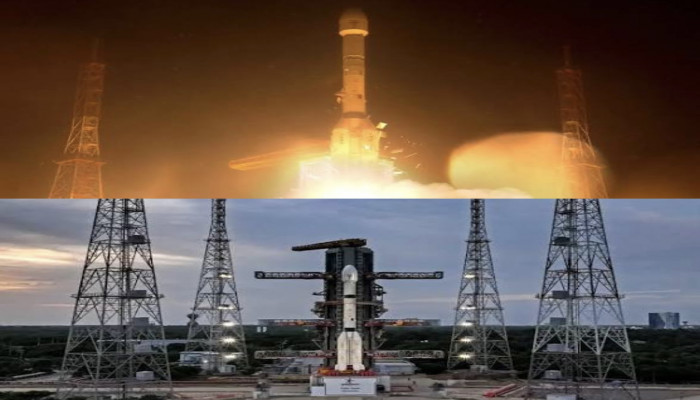
The Indian Space Research Organisation (ISRO) achieved a major milestone on Friday with the successful launch of EOS-05, an advanced Earth observation satellite designed to provide near-real-time images and strategic data. The satellite became India’s first dedicated Earth observation imaging satellite to be placed in a geosynchronous orbit. The mission also marked the first successful GSLV launch since 2021, giving a major boost to India’s space programme.
The 2,367-kg EOS-05 satellite lifted off aboard the 51.7-metre-tall GSLV-F17 from the second launch pad at the Satish Dhawan Space Centre in Sriharikota at 2.55 am. The launch followed a smooth 27.5-hour countdown. The rocket rose into the pre-dawn sky with bright orange flames as it carried the satellite inside its nose cone.
Around 18 minutes after liftoff, the launch vehicle successfully injected EOS-05 into its intended sub-geosynchronous transfer orbit. The satellite will now undergo a series of orbit-raising manoeuvres before reaching its final geosynchronous orbit at an altitude of around 36,000 km above Earth. At this altitude, the satellite will match the Earth’s rotation and remain over the same region.
A senior scientist involved in the mission described EOS-05 as the “eye in the sky”. The satellite will provide near real-time imagery and repeated observations of India and neighbouring regions. It will support agriculture, disaster management, cyclone monitoring and disaster warnings and also help monitor cloudbursts, thunderstorms and other rapidly developing events.
Once fully operational, EOS-05 will become India’s first dedicated imaging satellite to operate from a geosynchronous orbit. It will also provide strategic data for national activities, ISRO Chairman V Narayanan said. “I am very happy to announce that the GSLV-F17 vehicle has successfully and precisely injected the advanced EOS-05 geo-imaging satellite into the intended and required orbit,” Narayanan said after the launch at the Mission Control Centre.
“This is the 107th launch from Sriharikota and the 19th mission of GSLV,” he said. Narayanan also highlighted the progress made by the GSLV since its first flight. “The first launch of GSLV was done with a payload of 1,536 kg. From that, gradually, we have improved the performance of this vehicle by optimising the structural mass and improving the propulsion systems. Today, we have injected the heaviest satellite, a 2,367-kg satellite, using this launch vehicle,” he said.
The 420.5-tonne GSLV is a three-stage launch vehicle. Its third stage uses a cryogenic engine. The rocket also has a 4-metre-diameter ogive composite payload fairing. Mission Director Thomas Kurien said the mission carried a uniquely configured Earth observation satellite capable of near real-time imaging. “It is the heaviest satellite ever launched by GSLV into a GTO or sub-GTO orbit,” he said.
Project Director (Satellite) Imteyaz Ahamad called EOS-05 a unique satellite with multi-band operating capabilities. “It is a complex satellite in terms of configuration, content and capability,” he said. After separation, Narayanan confirmed that the satellite systems were functioning normally. He also said that its solar panel had been successfully deployed. “The health of the satellite is perfectly alright,” he said. “In the coming days, we will raise the orbit and take it to the required orbit and place the satellite in the geo platform,” he added.
The success holds added importance for ISRO after several recent setbacks in launch vehicles. The GSLV-F17 mission serves as a replacement for the GSLV-F10/EOS-03 mission, which failed shortly after launch on August 12, 2021. An onboard computer aborted that mission 307 seconds after liftoff. ISRO’s later analysis of post-flight data found that an anomaly in the cryogenic upper stage had caused the failure.
The latest achievement also follows the failure of the PSLV-C62 mission on January 12 this year. The rocket was carrying 16 satellites but failed to place them into their intended orbits after an anomaly affected its critical third stage. The successful GSLV-F17 launch therefore provides an important morale boost to the space agency.
Narayanan called the latest mission a significant achievement for India’s space programme. “This is a great achievement for our country’s space programme because this is the first Earth observation satellite which is going to be placed on the geo platform for national activities,” he said. He credited the success to the combined efforts of ISRO, industry and academia. “This success is a culmination of the teamwork of the entire ISRO, along with the industrial partners and academia, which have provided a lot of support. Also, this success is because of the work culture and vibrant review mechanism of ISRO,” he said.
EOS-05 will focus on imaging large areas at frequent intervals. This will help authorities monitor natural disasters and other sudden events quickly. The satellite will also collect spectral signatures for agriculture and forestry applications. It will support the monitoring of water bodies as well.
The previous GSLV mission was GSLV-F16/NISAR, which launched on July 30, 2025. NISAR is a joint ISRO-NASA mission designed to image global land and ice-covered surfaces. Its coverage includes islands, sea ice and selected ocean areas. The satellite is designed to observe these regions every 12 days.
Friday’s launch came after a gap of nearly eight months for the GSLV. Rain and the unusual pre-dawn launch did not stop members of the public from gathering at the space centre. Several people watched the rocket’s departure while standing with umbrellas. Narayanan said ISRO has six more missions planned during the current financial year. These include the launch of a navigation satellite from Sriharikota.



 Loading...please wait
Comments