



Israel’s decision to recognise Somaliland triggers a diplomatic backlash
- In Reports
- 04:43 PM, Dec 27, 2025
- Myind Staff
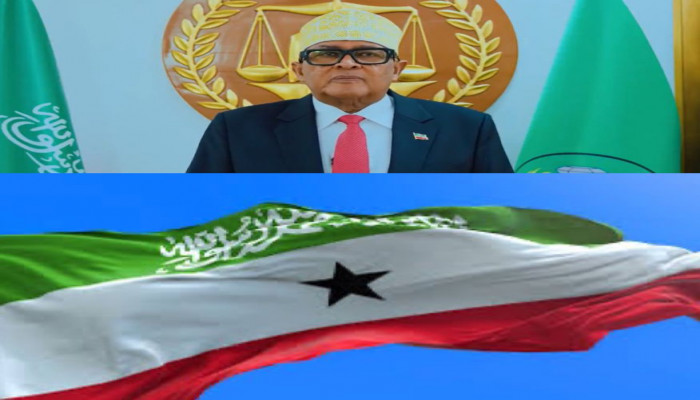
Israel’s decision to recognise Somaliland as an independent country has caused strong reactions around the world. This move has brought back old arguments over Somaliland’s status, and many countries have responded with concern or criticism.
Israel is the first country in the world to officially recognise Somaliland as a sovereign state. But the United States has openly rejected doing the same. At the same time, the African Union, Somalia, and several other nations have strongly criticised the decision, saying it could harm peace and stability in Africa and beyond.
Somaliland is a region in northern Somalia that declared itself independent in 1991 after the Somali government collapsed. Since then, it has run its own government, held elections, and issued its own currency and passports. But no major country, the United Nations, or the African Union had officially recognised it — until now.
Despite its self-rule, Somaliland is still officially considered part of Somalia by most of the world. This makes Israel’s recognition a major change in how the region is viewed internationally.
Somalia’s reaction, "A Deliberate Attack on Our Sovereignty” Somalia’s central government reacted very angrily to Israel’s decision. Somalia says Somaliland is part of its territory and therefore Israel’s move is a direct violation of its sovereignty. According to the article, Somalia’s government described Israel’s recognition as a “deliberate attack” on its sovereignty.
This means Somalia feels that Israel is violating international rules by recognising part of Somalia as a separate country. Somalia continues to insist that Somaliland should remain part of its nation and rejects any independent recognition.
The African Union (AU) also responded strongly. The AU said that Somaliland “remains an integral part” of Somalia. It warned that recognising Somaliland could encourage other regions in Africa to try to break away from their countries, which could harm peace and stability across the continent.
The AU’s reaction shows deep concern that recognition of borders without agreement from the country involved can cause instability.
Other countries also spoke out against Israel’s recognition of Somaliland. Turkey and Egypt criticised the decision. Egypt warned against the creation of “parallel entities” that might weaken regional unity and peace. The concern from Turkey and Egypt reflects wider unease in the region about changing long-established borders and recognising new states without widespread international support.
Israel defended its decision by linking it to broader diplomatic goals. Prime Minister Benjamin Netanyahu said that recognising Somaliland was done “in the spirit of the Abraham Accords.”
The Abraham Accords were agreements that helped normalise relations between Israel and several Arab states. By mentioning the Accords, Israel suggested that its recognition of Somaliland is part of a wider strategy to build relationships with more countries and expand cooperation.
Somaliland’s President, Abdirahman Mohamed Abdullahi, welcomed the recognition. He called the decision a “historic moment” for his region and told the world that Somaliland was ready to join the Abraham Accords and develop new relationships. In his view, having diplomatic recognition from Israel could help Somaliland build stronger partnerships with other countries and expand its role internationally.
While Israel took this new step, the United States has publicly chosen not to recognise Somaliland. Former US President Donald Trump was quoted in the article saying “no” when asked about US recognition. Trump was quoted as saying, “Does anyone know what Somaliland is, really?”
This blunt response shows that the United States is not ready to support Somaliland’s independence, at least for now. The US government has also expressed worry that supporting Somaliland could harm its military cooperation with Somalia.
Experts say the recognition is not just symbolic. Somaliland is located on the Gulf of Aden, a busy and important route for international trade. This area is close to the Red Sea and the Suez Canal, two of the world’s most important shipping corridors.
The Gulf of Aden’s location also makes it strategically valuable for military and security purposes. Because of its position near Yemen and other countries in the Middle East, Israel may see new advantages in having a partner there. For Somaliland, gaining recognition could help it get more trade, investment and global connections — things it has struggled to access because it has never been officially recognised before.
The roots of this conflict go back decades. In the late 1980s and early 1990s, Somalia’s central government broke down, and violent conflict overtook much of the country. In the north, the Somali National Movement established control and declared independence for Somaliland.
While the rest of Somalia fell into long-lasting instability, Somaliland built its own government and institutions. But because major powers and organisations have not recognised it, Somaliland has remained in a diplomatic limbo for more than thirty years.
Opponents of recognition argue that Israel’s move could encourage other separatist movements around Africa and elsewhere. If one region can gain independence without broad international approval, others might try to do the same. This could weaken the authority of existing governments and lead to conflict.
Supporters of unity — like Somalia and the African Union — say that keeping existing borders intact is essential for peace and security across Africa.



 Loading...please wait
Comments