



Israel removes Spain from Gaza ceasefire coordination hub over accusations of violations
- In Reports
- 12:34 PM, Apr 11, 2026
- Myind Staff
Israel has barred Spain from participating in the Civil-Military Coordination Centre (CMCC) in Kiryat Gat, a multinational hub that oversees the Gaza ceasefire. The decision was announced by Foreign Minister Gideon Sa’ar, who accused Spain of having an “anti-Israel obsession” and taking positions that undermine Israel during ongoing regional conflicts. The move reflects a sharp escalation in tensions between the two countries, whose relations have been deteriorating since the start of the Gaza war and worsened further during the conflict involving Iran.
According to Sa’ar, Spain can no longer play a constructive role in the coordination efforts tied to the ceasefire. “The Sánchez government has such a blatant anti-Israeli bias that it has lost any ability to serve as a useful actor in implementing President Trump’s peace plan and in the CMCC centre operating within the framework of the plan,” Sa’ar said. Israeli authorities confirmed that Spain was formally informed of the decision, and the United States was notified in advance.
The CMCC, located in Kiryat Gat, includes representatives from several European countries, many of which maintain a small military presence to support ceasefire monitoring and coordination. Spain had been part of this effort until the latest decision removed it from the framework. The move signals a broader shift in Israel’s approach toward countries it believes are taking hostile diplomatic positions.
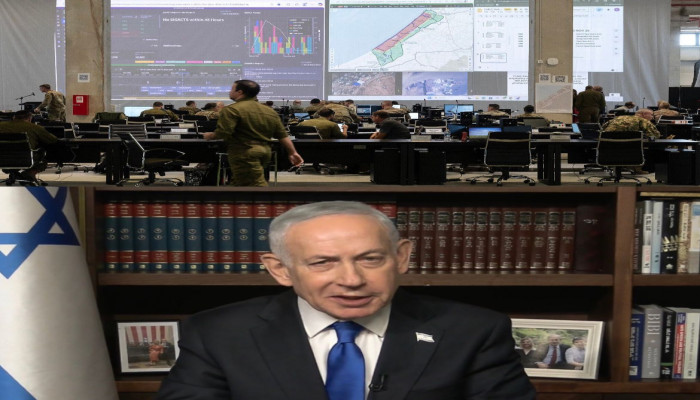
Prime Minister Benjamin Netanyahu also addressed the issue in a video statement, warning against what he described as diplomatic attacks on Israel. “Israel will not remain silent in the face of those who attack us,” he said. He further added that countries engaging in such actions would face consequences. “I do not intend to allow any country to wage a diplomatic war against us without paying an immediate price,” Netanyahu stated.
Continuing his criticism, Netanyahu said, “Spain has defamed our heroes, IDF soldiers — the soldiers of the most moral army in the world.” He emphasised that nations targeting Israel instead of extremist groups would not be considered partners in shaping the region’s future. “Those who attack Israel instead of terrorist regimes — whoever does so — will not be our partner regarding the future of the region,” he added. Concluding his remarks, Netanyahu said, “I am not prepared to tolerate this hypocrisy and this hostility.”
The tensions between Israel and Spain have been building over the past few years. Relations became especially strained after the Gaza war began, following the October 7, 2023, Hamas attack on Israel, which triggered a large-scale Israeli military response. Since then, Spain has increasingly criticised Israel’s actions in Gaza, leading to a series of diplomatic confrontations.
Spain’s government, led by Prime Minister Pedro Sánchez, has taken several steps that Israel views as hostile. Madrid had already halted the sale and purchase of military equipment with Israel at the start of the war. In September, Sánchez announced plans to make this ban a permanent law. This decision drew strong criticism from Israel, with Sa’ar accusing Spain of leading “a hostile, anti-Israel line.”
The diplomatic fallout continued after Spain recalled its ambassador from Israel. Last month, it made the move permanent by withdrawing its ambassador completely. At the same time, Spain signalled a shift in its regional approach by sending its ambassador back to Iran. These actions further widened the gap between the two countries and added to the growing mistrust.
During the conflict involving Iran, Spain took additional steps that raised concerns in Israel and the United States. It closed its airspace to US aircraft involved in strikes on Iran. This move went beyond earlier restrictions, where Spain had denied access to jointly operated military bases. Israel interpreted these decisions as part of a broader pattern of opposition to its policies and alliances.
The latest decision to remove Spain from the CMCC highlights how diplomatic disagreements are now directly affecting international coordination efforts related to the Gaza ceasefire. It also reflects Israel’s intention to take firm action against countries it believes are undermining its position on the global stage. As tensions continue, the rift between Jerusalem and Madrid appears unlikely to ease in the near future.



 Loading...please wait
Comments