




Israel plans to occupy Southern Lebanon up to Litani River: Defence Minister Katz
- In Reports
- 07:32 PM, Mar 24, 2026
- Myind Staff
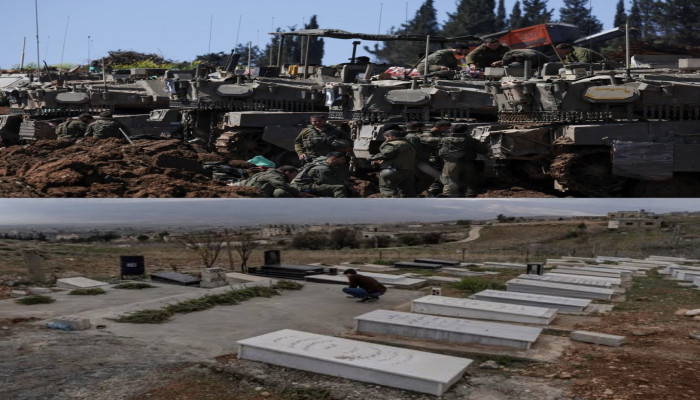
Israel has indicated a significant expansion of its military objectives in Lebanon, with Defence Minister Israel Katz stating that Israeli forces aim to occupy areas in the south of the country up to the Litani River. This marks the first time Israel has clearly outlined its intention to take control of a large stretch of Lebanese territory, which would account for nearly one-tenth of the country’s land.
Katz made these remarks during a meeting with the military’s chief of staff, where he explained that Israeli forces would "control the remaining bridges and the security zone up to “the Litani", and was creating a "defensive buffer". The Litani River is located about 30 kilometres north of the Israeli border and flows into the Mediterranean Sea, making it a strategically important location in the region.
The Israeli defence minister has previously warned the Lebanese government that it could lose territory if it failed to disarm Hezbollah, which is backed by Iran. The current escalation is linked to ongoing hostilities that began when Hezbollah launched attacks into Israel on March 2, drawing Lebanon into the wider conflict involving the United States and Iran.
As part of its military operations, Israel has intensified its activities in southern Lebanon. Since March 13, Israeli forces have destroyed five bridges over the Litani River and have also increased the demolition of homes in villages near the border. Israel maintains that these actions are directed at Hezbollah infrastructure and not at civilians. However, under international law, attacks on civilian infrastructure, including homes and bridges, are generally prohibited, raising concerns about the humanitarian impact of such operations.
The Israeli military has not officially commented on Katz’s latest statements. In previous remarks, it had described its ground operations in Lebanon as limited and targeted, focusing on areas close to the Israeli border. Despite this, the scale of destruction and the stated objectives suggest a broader and more sustained military campaign.
Katz further explained that Israel’s goal is to create a defensive buffer zone similar to the one it has established in Gaza. He stated that areas in southern Lebanon where "terror" exists—an apparent reference to Hezbollah—should not have any civilian presence or residential structures. According to him, Israeli troops are working to establish a "forward defensive line" by engaging with Hezbollah fighters and dismantling infrastructure used by the group, including homes that he described as "terrorist outposts".
Reinforcing this approach, Katz said that the military is following a strategy similar to its operations in Gaza, where buildings near the border were cleared and demolished to create a buffer zone. The aim, he said, is to push threats away from Israeli communities and ensure long-term security along the border.
Adding to the political debate, Finance Minister Bezalel Smotrich recently suggested that Israel should go a step further and annex southern Lebanon up to the Litani River. This statement reflects a more aggressive stance within parts of the Israeli leadership regarding the future of the region.
The conflict has already caused significant damage and loss of life in Lebanon. Israeli strikes have led to widespread destruction in southern parts of the country and even in sections of the capital, Beirut. According to reports, more than 1,000 people have been killed, and over a million residents have been forced to leave their homes due to the violence.
The humanitarian situation has drawn international concern. The United Nations human rights chief has criticised Israel’s actions, particularly the widespread evacuation orders issued to civilians. These orders, combined with ongoing military operations, have contributed to a severe displacement crisis.
Among those killed in the conflict are nearly 120 children, around 80 women, and approximately 40 medical personnel, according to Lebanon’s health ministry. The ministry does not differentiate between civilians and militants in its figures. On the Israeli side, two soldiers have been reported killed during fighting in southern Lebanon.
Meanwhile, diplomatic efforts to end the broader conflict are still uncertain. President Donald Trump stated on Monday that the United States and Iran could soon reach an agreement to end the war, referring to what he described as ongoing discussions between officials from both countries. However, Iran has denied that any such negotiations are taking place.
It remains unclear whether any potential agreement between the US and Iran would include a ceasefire in Lebanon. As the situation continues to evolve, uncertainty persists over both the military and diplomatic fronts, leaving the region facing an unpredictable future.



 Loading...please wait
Comments