




Israel not bound by any deal, says National Security Minister Ben-Gvir
- In Reports
- 06:13 PM, Jun 15, 2026
- Myind Staff
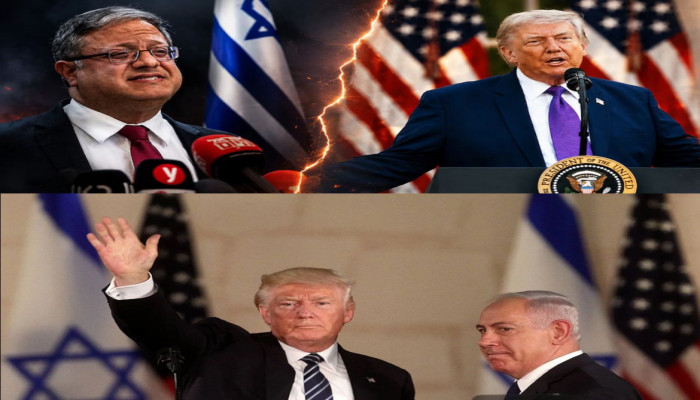
Israeli National Security Minister Itamar Ben-Gvir has strongly criticised a reported US-brokered agreement with Iran, stating that Israel will not be bound by any deal announced by US President Donald Trump. His remarks came shortly after Trump declared that an agreement with Iran had been completed, including the lifting of a US naval blockade and the reopening of the Strait of Hormuz, a key global energy shipping route.
Reacting to the announcement, Ben-Gvir stressed that Israel would continue making its own security decisions without outside influence. In a post on X, he wrote, "Trump's agreement does not bind us. Israel is not subject to the United States, and we are an independent and sovereign nation."
While acknowledging Israel's close ties with Washington, he added, "We love the USA and are grateful to President Trump. And yet, the State of Israel is not a banana republic."
Ben-Gvir said Israel's primary responsibility remains the safety of its citizens, military personnel and the Jewish people. He argued that national security concerns must take precedence over diplomatic pressure or international agreements.
"Our duty is to the citizens of Israel, to the soldiers of the IDF, and to the Jewish people, and our historical duty to the persecuted and murdered Jews over thousands of years of exile, to provide security to Jews in the Land of Israel," he said.
The minister warned that previous decisions made under international pressure had harmed Israel's security. He cited the Oslo Accords, the 2006 Lebanon agreement and earlier periods of military restraint in Gaza as examples.
"Every time we succumbed to international pressure at the expense of Israel's security, we paid a blood price with interest," he said.
Ben-Gvir also revealed that he had repeatedly shared these concerns with Prime Minister Benjamin Netanyahu during important discussions.
"I say these things to the Prime Minister all the time, and repeat them in closed rooms at every important historical juncture. In historical moments, a historical decision must be made," he said.
Making his position clear, Ben-Gvir stated that Israel would not support any arrangement that failed to guarantee its security.
"My position is clear: We are not partners to this agreement that does not ensure our security, and it does not bind us in any way," he said.
He further argued that Israel should not settle for anything less than the complete dismantling of Hezbollah. He opposed withdrawing from territories captured during military operations and said Israel must prevent any return to previous security threats along its northern border.
"We must not compromise on anything less than the dismantling of Hezbollah, we must not withdraw from any territory that our fighters have captured and cleared of terror infrastructure, and we must not return to a situation where thousands of terrorists sit on the fences of northern settlements," he said.
Ben-Gvir also called for a strong military response to any attack launched from Lebanon. According to him, every drone, UAV or missile attack directed at Israel should trigger an Israeli strike on Beirut's Dahiya district.
"Every launch of a drone, UAV, or missile toward Israel from Lebanon will lead to an Israeli strike in Dahiya," he said.
He maintained that Israel should preserve its current deterrence policy.
"That was the deterrence balance just a few months ago, and we must not give it up in any way."
The criticism of the reported agreement was not limited to members of the ruling coalition. Opposition leader and former Defence Minister Benny Gantz also expressed concerns over the diplomatic developments.
In a post on X, Gantz warned against any agreement that could limit Israel's military freedom of action in Lebanon or force a withdrawal that could threaten residents in northern Israel.
"Under no circumstances is it permissible to agree to restrict Israel's freedom of action in Lebanon or to a withdrawal that endangers the residents of the north," Gantz wrote.
Gantz described the emerging deal with Iran as a major strategic mistake. He argued that such an agreement could create long-term diplomatic, military and legal challenges for Israel.
"The emerging agreement with Iran appears to be a strategic failure that will require Israel to engage in diplomatic, military, and legal struggles in the coming years, which only a broad Zionist government can lead," he said.
The political criticism followed Trump's announcement that negotiations with Iran had successfully concluded. In a post on Truth Social, Trump declared: "The Deal with the Islamic Republic of Iran is now complete. Congratulations to all!"
Trump also announced the end of the US naval blockade and authorised the reopening of the Strait of Hormuz, one of the world's most important maritime routes for oil and energy shipments.
"I hereby fully authorise the toll-free opening of the Strait of Hormuz and, simultaneously herewith, authorise the immediate removal of the United States Naval blockade. Ships of the World, start your engines. Let the oil flow!" Trump wrote.
The announcement came just hours before a UFC event scheduled at the White House to celebrate the US President's 80th birthday.
Shortly before Trump's statement, Pakistan Prime Minister Shehbaz Sharif also announced that an agreement between the United States and Iran had been reached.
The reported deal has already exposed divisions within Israel's political leadership. Leaders from both the government and the opposition have voiced concerns that any agreement limiting Israel's ability to respond to regional threats could face strong resistance in Jerusalem. The debate has intensified pressure on Prime Minister Benjamin Netanyahu as questions grow over Israel's future approach towards Iran, Hezbollah and regional security challenges.



 Loading...please wait
Comments