



Israel- Lebanon ten-day ceasefire begins, igniting hopes for peaceful resolution of ongoing conflict
- In Reports
- 12:55 PM, Apr 17, 2026
- Myind Staff
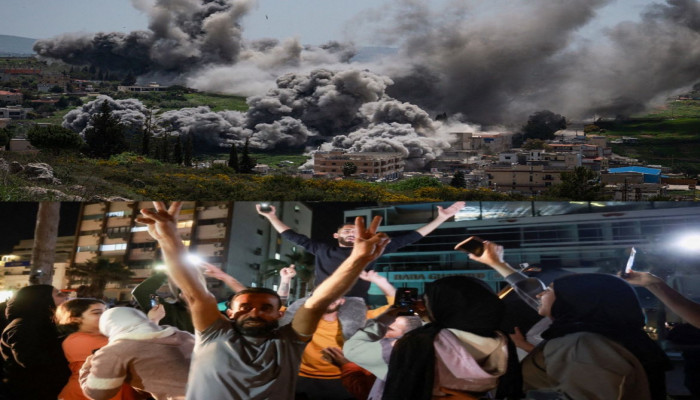
A 10-day ceasefire between Lebanon and Israel came into effect on Thursday, raising cautious optimism about a wider peace breakthrough in the region. Donald Trump said that the United States may hold fresh talks with Iran over the weekend, signalling progress toward ending the ongoing conflict.
Trump told reporters outside the White House that Iran had indicated a willingness to avoid possessing nuclear weapons for more than 20 years. This issue had been a major sticking point during recent talks held in Islamabad. "We're going to see what happens. But I think we're very close to making a deal with Iran," he said. Later, while speaking at an event in Las Vegas, he added that the war "should be ending pretty soon."
The conflict, which began on February 28 following a joint U.S.-Israeli strike on Iran, has caused widespread destruction and loss of life. Thousands have been killed, and the crisis has driven global oil prices sharply higher. This has created economic pressure and political challenges for the U.S. administration.
The ceasefire in Lebanon is seen as an important step that could lead to a broader agreement involving Iran. If successful, it would be a major diplomatic achievement for the Trump administration. Efforts have so far struggled to reopen the strategically critical Strait of Hormuz and to limit Iran’s nuclear ambitions.
In Beirut, the start of the ceasefire was marked by celebratory gunfire as midnight approached. Witnesses reported hearing bursts of gunshots and explosions from rockets fired in celebration for about half an hour after the truce began. However, the situation remained tense and uncertain.
The Lebanese Army reported that Israel violated the ceasefire shortly after it came into effect. It accused Israeli forces of intermittently shelling villages in southern Lebanon. There was no immediate response from the Israeli military. Earlier statements had indicated that Israeli troops would remain deployed in the region. Military spokesperson Avichay Adraee said this deployment was due to ongoing activities by Hezbollah militants.
Hezbollah released a detailed statement outlining its operations against Israel throughout Thursday. According to the statement, its last attack took place at 11:50 p.m. local time, just minutes before the ceasefire started. Trump later urged Hezbollah to respect the agreement. "I hope Hezbollah acts nicely and well during this important period of time. It will be a GREAT moment for them if they do. No more killing. Must finally have PEACE!" he said.
Trump also expressed confidence about reaching a deal with Iran. He said such an agreement could have major global economic benefits. "And if that happens, oil goes way down, prices go way down, inflation goes way down, and ... much more importantly than even that, you won't have a nuclear holocaust," he said. He added that he was unsure whether the current two-week ceasefire with Iran would need to be extended, suggesting that Tehran was keen to reach an agreement.
He further stated, "We have a very good relationship with Iran right now, as hard as it is to believe. And I think it's a combination of about four weeks of bombing, and a very powerful blockade." The recent escalation between Israel and Hezbollah began after Hezbollah launched attacks in support of Iran on March 2. This triggered a fresh Israeli offensive in Lebanon, just over a year after their previous major conflict.
Trump said he had "excellent conversations" with Israeli Prime Minister Benjamin Netanyahu and Lebanese President Joseph Aoun. He plans to invite both leaders to the White House for "meaningful talks" in the coming weeks. He also indicated that he might travel to Islamabad if a deal with Iran is finalised there. He has assigned key officials, including Vice President JD Vance, Secretary of State Marco Rubio, and military chief Dan Caine, to work on securing lasting peace.
Iran has welcomed the ceasefire in Lebanon, describing it as part of a broader understanding reached with the United States through mediation by Pakistan. Reports suggest that Pakistan’s Army chief Asim Munir played a key role in facilitating recent discussions and helping bridge differences between the parties.
The conflict has also had serious global economic consequences. The closure of the Strait of Hormuz, a vital route for nearly one-fifth of the world’s oil and gas supply, has caused a major shock to energy markets. The International Monetary Fund has warned that prolonged instability could push the global economy toward recession.
At the recent Islamabad talks, the U.S. proposed a 20-year halt to Iran’s nuclear activities, which marked a shift from its earlier demand for a permanent ban. Iran, however, suggested a shorter pause of three to five years. Negotiations have also focused on Iran’s stockpile of highly enriched uranium. The U.S. wants it removed entirely, while Iran is considering sending only part of it abroad.
Diplomatic sources indicate that some compromise may be emerging on this issue. However, key differences remain unresolved. A senior Iranian official said that while there is hope for further talks and possibly extending the ceasefire, major disagreements over the nuclear program still exist.
Meanwhile, U.S. Defence Secretary Pete Hegseth warned that military operations could resume if no agreement is reached. Reports also suggest that the U.S. is offering to lift sanctions and release frozen Iranian assets as part of the deal. However, Iran has made it clear that it will only reopen the Strait of Hormuz if a permanent ceasefire is secured and backed by guarantees from the United Nations to prevent future attacks.
The coming days are likely to be critical as diplomatic efforts continue. The fragile ceasefire in Lebanon and ongoing negotiations with Iran will determine whether the region moves toward lasting peace or returns to conflict.



 Loading...please wait
Comments