




Israel groomed Mahmoud Ahmadinejad as potential future leader under regime change plan: NYT Report
- In Reports
- 07:59 PM, Jul 14, 2026
- Myind Staff
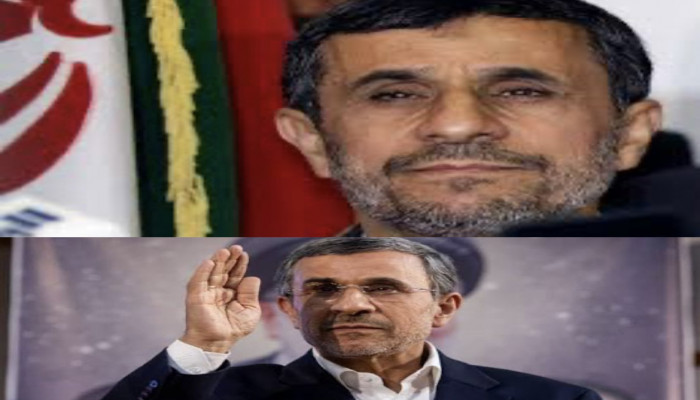
According to a report by The New York Times, Israel secretly spent years trying to cultivate former Iranian president Mahmoud Ahmadinejad as a potential intelligence asset and a future leader of Iran if the country's current regime collapsed. The report cited American, Israeli and Iranian officials who were familiar with the alleged operation. It claimed that Israeli intelligence believed Ahmadinejad could play an important role in a possible political transition in Iran.
The report described the alleged effort as a remarkable shift in Israel's approach toward Ahmadinejad. During his presidency from 2005 to 2013, Ahmadinejad strongly opposed Israel, accelerated Iran's nuclear programme, repeatedly called for Israel's destruction and denied the Holocaust. His public image made him one of Israel's strongest critics. Despite that history, Israeli intelligence reportedly reconsidered his value after he fell out with Iran's ruling establishment.
According to the report, Ahmadinejad's growing differences with Iran's top leadership attracted the attention of Israeli intelligence agencies. Officials reportedly believed his frustration with Supreme Leader Ayatollah Ali Khamenei and other senior figures could make him useful in a future regime-change scenario. The report said Israel viewed him as someone who could gain influence if the current political system weakened.
The report also revealed that then-Mossad chief David Barnea allegedly travelled to Budapest to meet Ahmadinejad in person. According to former American officials quoted by The New York Times, Mossad informed the CIA shortly after the meeting that contact had been established with the former Iranian president. The report did not provide further details about the discussions between the two sides.
Israeli intelligence reportedly became more interested in Ahmadinejad after observing significant changes in his public image and political behaviour following the end of his presidency. He openly criticised Iran's security agencies and spoke against corruption. He replaced his well-known khaki jacket with tailored suits. The report also claimed that he underwent Botox treatment, learned English and tried to present himself as a more moderate political figure. At the same time, he travelled across Iran to meet supporters while continuing to hope for a political comeback.
According to one associate quoted by the report, Ahmadinejad believed he would never return to power under Iran's existing political system. The associate said he thought he could emerge as a reformist leader if the current regime fell. Israeli officials reportedly monitored these developments closely and saw them as signs that Ahmadinejad's ambitions had changed.
At the same time, Iran's Revolutionary Guards reportedly became increasingly suspicious of Ahmadinejad's foreign contacts. The report said their concerns grew after he publicly wrote letters to former US President Donald Trump and Saudi Crown Prince Mohammed bin Salman. Iranian intelligence agencies reportedly viewed these actions with increasing concern.
The report claimed that Israel's plans reached their peak during the opening days of the US-Israeli war on Iran in late February. It further stated that Ahmadinejad is now under house arrest by the Revolutionary Guards' intelligence wing after Iranian authorities uncovered details of his alleged contacts with Israel. The report did not mention any official confirmation from Iranian authorities or Ahmadinejad regarding these claims.
Mahmoud Ahmadinejad served as Iran's sixth president from 2005 to 2013. His time in office remained highly controversial both inside Iran and internationally. Within Iran, many critics questioned his economic policies and accused his administration of ignoring human rights concerns. Outside the country, he faced widespread criticism for his hostile stance toward Israel, Saudi Arabia, the United Kingdom, the United States and several other Western and Arab nations.
His disputed re-election in 2009 triggered large-scale protests across Iran and drew strong criticism from Western governments. During his second presidential term, Ahmadinejad also entered into repeated disputes with Iran's Parliament, the Revolutionary Guard and Supreme Leader Ayatollah Ali Khamenei. The disagreements centred on his decision to dismiss intelligence minister Gholam-Hossein Mohseni-Eje'i and his continued support for his close aide Esfandiar Rahim Mashaei.
In 2012, Ahmadinejad became the first president of the Islamic Republic to appear before Parliament and answer questions about his administration. The Iranian Constitution prevented him from seeking a third consecutive term. He instead supported Mashaei's unsuccessful presidential campaign in 2013 before Hassan Rouhani won the election.
After leaving office, Ahmadinejad attempted to return to politics several times. He tried to contest the presidential elections in 2017, 2021 and 2024. Iran's Guardian Council rejected his nomination on all three occasions. During the nationwide protests in 2017 and 2018, he also publicly criticised Iran's government, further widening his distance from the country's ruling leadership.



 Loading...please wait
Comments