




Israel and Lebanon agree to US-mediated peace framework
- In Reports
- 07:37 PM, Jun 29, 2026
- Myind Staff
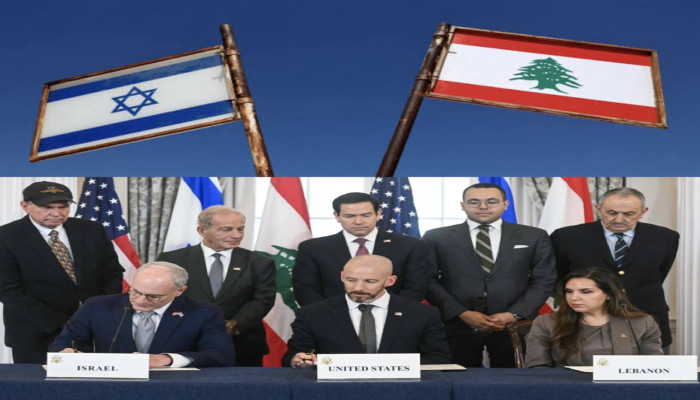
Israel and Lebanon have agreed to a new peace framework that the United States helped mediate. The agreement aims to formally end the long-running conflict between the two neighbouring countries. Under the proposed framework, Israeli troops will remain in occupied southern Lebanon until Hezbollah lays down its weapons and the Lebanese Armed Forces (LAF) take full control of the area. Hezbollah, the Iran-backed armed group, has rejected these terms and described them as a surrender.
The agreement begins with both countries recognising each other's right to exist in peace and security as independent neighbouring states. Israel and Lebanon have also expressed their intention to officially end the state of war between them. They will continue negotiations with support from the United States to reach a broader and more permanent peace agreement in the future.
A key part of the framework focuses on the disarmament of Hezbollah and other armed groups operating in Lebanon. Under the plan, the Lebanese Armed Forces will gradually restore government control across the country. The military will take responsibility for removing weapons from Hezbollah and any other militant groups.
The first phase of this process will begin in two pilot zones. Reconstruction work will start in these areas, and civilians who fled Israeli military attacks will return safely to their homes. The agreement aims to rebuild normal life in these locations while the security plan moves forward.
The framework also includes a future "Security Annex," which negotiators are still preparing. This document will set out the remaining security arrangements, implementation process, and verification mechanisms. A coordination group with participation from the United States will supervise the implementation of the agreement and monitor progress.
Israel has stated that it has no territorial ambitions in Lebanon. It says it will withdraw its forces from Lebanese territory only after Hezbollah has completely disarmed across the country and no longer poses a security threat. Until then, Israeli troops will continue to stay inside the occupied security zone in southern Lebanon. Although Israel plans to redeploy some of its forces, it will not leave the security zone in the near future.
The agreement also gives importance to Lebanon's reconstruction. The United States has committed to bringing together international partners to support the country's recovery. The assistance will include rebuilding damaged infrastructure, providing humanitarian aid, encouraging investment, and supporting economic recovery programs. The plan aims to help Lebanon recover from years of conflict and destruction.
Another section of the framework addresses legal and humanitarian issues. Israel and Lebanon have agreed to stop "all hostile or adverse actions in international political or legal fora." They also "pledge to work towards the search for and return of remains and the release of detainees." These measures seek to reduce tensions and address humanitarian concerns that have remained unresolved for years.
The latest framework follows the collapse of an earlier ceasefire agreement signed in November 2024. That agreement came after a year of fighting between Israel and Hezbollah. It aimed to stop hostilities, secure Israel's withdrawal from southern Lebanon, and lead to Hezbollah's disarmament. Following the ceasefire, Lebanon's government started confiscating Hezbollah's weapons in southern Lebanon. Israel, however, said those efforts did not meet the agreement's expectations. It gradually resumed military strikes against Hezbollah.
The conflict escalated again after Israel and the United States carried out attacks on Iran on February 28. The operation killed Iran's Supreme Leader Ayatollah Ali Khamenei. In response, Hezbollah launched attacks on northern Israel. Israel then expanded its ground operations inside Lebanon, occupied more territory, and increased its aerial bombardment. These developments pushed both countries back into a wider conflict and created the need for a new peace framework.
The new US-backed proposal now seeks to establish lasting security through Hezbollah's disarmament, the deployment of the Lebanese Armed Forces, and continued diplomatic negotiations between Israel and Lebanon. The success of the agreement will depend on its implementation and whether all parties agree to carry out the commitments outlined in the framework.



 Loading...please wait
Comments