



IRGC takes control as central authority weakens after Khamenei’s death
- In Reports
- 01:14 PM, Apr 29, 2026
- Myind Staff
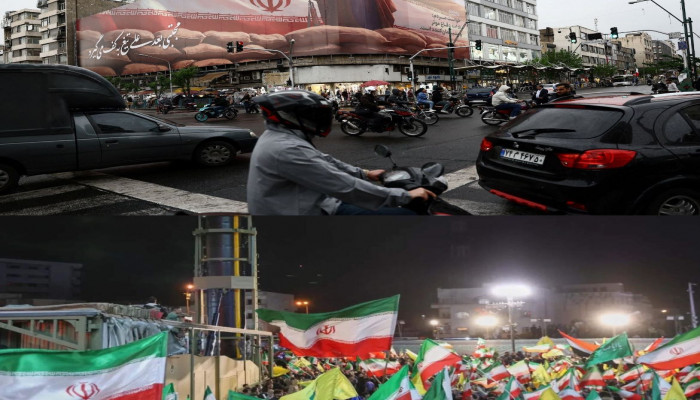
Two months into the war involving the United States and Israel, Iran’s power structure has undergone a major shift. The country no longer has a single, undisputed clerical authority at the top. This marks a sharp break from the system that has defined the Islamic Republic since 1979. The death of Ali Khamenei on the first day of the conflict and the rise of his son Mojtaba Khamenei have reshaped how decisions are made in Tehran.
For decades, Iran’s political system revolved around the supreme leader, who held final authority on all major matters. That structure has now weakened. Although Mojtaba Khamenei sits at the top, his role appears limited. According to three individuals familiar with internal discussions, he mainly approves decisions taken by senior military leaders rather than issuing independent directives.
The ongoing war has pushed power into the hands of a smaller and more rigid inner circle. This group is rooted in the Supreme National Security Council, the Supreme Leader’s office, and most importantly, the Islamic Revolutionary Guard Corps. Officials and analysts say the Guards now dominate both military planning and key political decisions.
“The Iranians are painfully slow in their response,” said a senior Pakistani government official briefed on peace talks between Iran and the United States that Islamabad has been mediating. “There is apparently no one decision-making command structure. At times, it takes them 2 to 3 days to respond."
Despite this, analysts do not see internal divisions as the main barrier to a deal with Washington. Instead, the gap lies in what the United States is willing to offer and what Iran’s hardline Guards are ready to accept. This difference continues to slow progress in negotiations.
Iran’s diplomatic efforts are being led by Foreign Minister Abbas Araqchi. He has recently been joined by parliament speaker Mohammed Baqer Qalibaf, a former Guards commander and a key political figure. Qalibaf has emerged as an important link between Iran’s political leadership, security institutions, and clerical establishment during the conflict.
On the ground, however, the most influential figure appears to be Ahmad Vahidi. According to Pakistani and Iranian sources, he has played a central role in shaping Iran’s actions, including during the night a ceasefire was announced. His position reflects the growing importance of military leadership in decision-making.
Mojtaba Khamenei has remained largely out of public view since he was seriously injured in the initial strikes by the United States and Israel. These attacks killed his father and other family members. He suffered severe leg injuries and has been unable to appear publicly. Due to security concerns, he communicates through IRGC aides or limited audio connections, according to people close to his circle.
Iran’s foreign ministry has not responded to requests for comment on these developments. In the past, officials have denied any divisions within the leadership regarding negotiations with the United States.
Iran recently submitted a new proposal to Washington that suggests a phased approach to talks. According to senior Iranian sources, the plan proposes setting aside the nuclear issue at the beginning until the war ends and disputes over Gulf shipping are resolved. The United States, however, insists that nuclear discussions must be included from the start.
“Neither side wants to negotiate,” said Alan Eyre, an Iran expert and former U.S. diplomat, adding that both believed time would weaken the other -- Iran through leverage over Hormuz and Washington through economic pressure and a blockade.
Eyre also pointed out that both sides face pressure not to show flexibility. “For either, flexibility would be seen as weakness,” he said. Iran’s Guards are cautious about appearing weak in front of Washington, while U.S. President Donald Trump faces political pressure at home, especially with midterm elections approaching.
This cautious approach reflects how power is now exercised inside Iran. While Mojtaba remains the formal authority, insiders say he acts more as a figure who approves decisions rather than shaping them. Real control lies with a wartime leadership built around the Supreme National Security Council.
“Important deals probably pass through him,” Iranian analyst Arash Azizi said, “but I can’t see him overruling the National Security Council. How could he go against those running the war effort?”
Some hardline figures, including former nuclear negotiator Saeed Jalili, have become more visible during the war. They have used strong rhetoric to raise their profile. However, they do not have enough institutional power to influence final decisions or change outcomes.
Mojtaba’s rise to power was supported by the Guards, who pushed aside more moderate figures. They backed him as someone who would protect their hardline approach. The growing influence of the Guards suggests that Iran may adopt a more aggressive foreign policy and stricter control at home.
The ideology of the Guards is shaped by revolutionary Islamism and a focus on security. Their goal is to protect the Islamic Republic internally while maintaining strength abroad. This thinking aligns with other hardline elements in Iran’s judiciary and clerical system. It places emphasis on centralised control and resistance to Western pressure, especially on nuclear issues and regional influence.
In practice, the Guards now guide both strategy and decision-making. With the country at war and Ali Khamenei no longer in power, there is no strong figure capable of challenging them. According to sources close to internal discussions, even if some disagree, they lack the authority to oppose the Guards.
The political debate inside Iran has also shifted. The choice is no longer between moderate and hardline approaches. Instead, it is between hardline and even more hardline positions. A small group may argue for stronger actions, but even these views are controlled by the Guards.
This transformation marks a major shift in Iran’s power structure. Authority has moved from religious leadership to security institutions. “We’ve gone from divine power to hard power,” said Aaron David Miller, a former U.S. negotiator. "From the influence of the clerics to the influence of the Revolutionary Guard Corps. This is how Iran is being governed.”
While there are still some differences in opinion, decision-making is now concentrated within security bodies. Mojtaba acts as a central figure who brings groups together rather than making final decisions alone, said Alex Vatanka.
Despite heavy military and economic pressure from the United States and Israel, Iran has shown no signs of internal collapse nearly nine weeks into the war. There is also no clear evidence of major divisions within the leadership or widespread unrest among the public.
This stability suggests that real control lies with the Guards and security forces. They are not just carrying out the war but actively directing it. According to Miller, a shared strategy has emerged. Iran aims to avoid a full-scale war, maintain its leverage, especially over the Strait of Hormuz, and come out of the conflict stronger in political, economic, and military terms.



 Loading...please wait
Comments