



IRGC declares Hormuz closed for US, Israel allies, three vessels turn back
- In Reports
- 06:16 PM, Mar 27, 2026
- Myind Staff
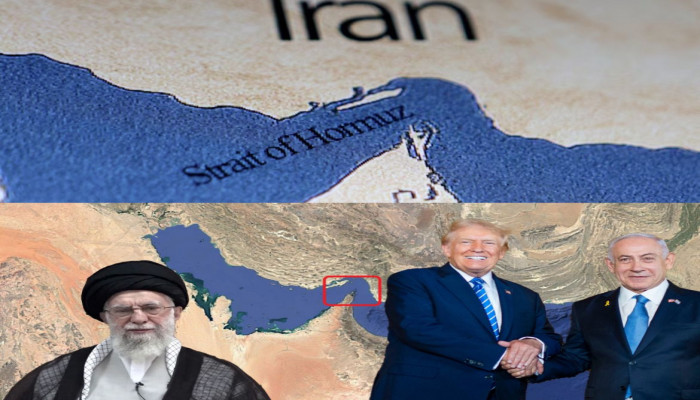
Iran’s Islamic Revolutionary Guard Corps (IRGC) on Friday declared that the Strait of Hormuz was effectively closed to vessels linked to the United States and its allies, stating that three ships attempting to pass through the strategic waterway had been turned back. The announcement comes at a time of rising tensions in the region and ongoing conflict involving Iran, the United States, and Israel.
According to the Guards, the ships were stopped after receiving warnings from the IRGC Navy. “This morning, following the lies of the corrupt US president claiming that the Strait of Hormuz was open, three container ships of different nationalities... were turned back after a warning from the IRGC Navy,” the Guards said on their Sepah News website. The statement underlined Iran’s firm position on restricting maritime movement linked to what it described as hostile nations.
The IRGC further expanded its warning by stating, “The movement of any vessel 'to and from' ports of origin belonging to allies and supporters of the Zionist-American enemies, to any destination and through any corridor, is prohibited.” This declaration signals a significant escalation, as the Strait of Hormuz is one of the most critical global routes for oil and trade.
Supporting this development, energy market intelligence firm Kpler reported that two container ships operated by the Chinese company COSCO had attempted to cross the strait but eventually turned back. The firm noted that these vessels had been stranded in the Gulf since the conflict began, following US and Israeli strikes on Iran on February 28. Rebecca Gerdes, a data analyst at Kpler, stated, “This marks the first such crossing attempt by a major carrier since the beginning of the conflict,” highlighting the seriousness of the situation.
Meanwhile, US President Donald Trump had earlier claimed that Iran allowed 10 oil tankers to pass through the Strait of Hormuz as a gesture of goodwill. He described it as a “present” aimed at showing Iran’s willingness to negotiate and end the war. Trump also extended a deadline for Tehran to reopen the strait, pushing it from Friday to April 6. He said the extension was made at Iran’s request and insisted that the country was seeking a deal to end the ongoing conflict.
Despite these claims, Iran’s actions and statements suggest a different approach. The Iranian leadership has made it clear that it intends to end the conflict on its own terms and has shown no signs of reducing its retaliatory measures against Israel and US-linked targets in the region. The IRGC’s latest announcement reinforces this stance.
In addition to maritime restrictions, the Guards issued a strong warning to civilians across the Middle East. Accusing “cowardly American-Zionist forces” of using “human shields,” they advised people to avoid areas near US military presence. “We recommend that you urgently leave locations where American forces are stationed so that no harm comes to you,” the statement read. This warning came shortly after Iran’s military threatened to target hotels believed to be housing US personnel.
The situation further escalated as Kuwait reported damage to its main commercial port following a drone attack early Friday morning. While details remain limited, the incident adds to the growing instability in the region and raises concerns about the safety of critical infrastructure.
The Strait of Hormuz remains at the centre of this crisis. As a narrow but vital passage for global oil shipments, any disruption has far-reaching economic and political consequences. Iran’s declaration and actions have increased uncertainty, especially for international shipping and energy markets.
While diplomatic efforts appear to be ongoing, with the US indicating possible negotiations, the ground reality reflects continued confrontation. Iran’s recent moves suggest that it is willing to assert control over key strategic points and respond strongly to perceived threats.
The developments highlight the fragile state of the region, where military actions, economic interests, and political strategies are deeply interconnected. As both sides continue to exchange warnings and signals, the situation remains tense, with the possibility of further escalation still looming.



 Loading...please wait
Comments