



Iran’s long range missile targets Diego Garcia base posing threat to US interests
- In Reports
- 01:58 PM, Mar 21, 2026
- Myind Staff
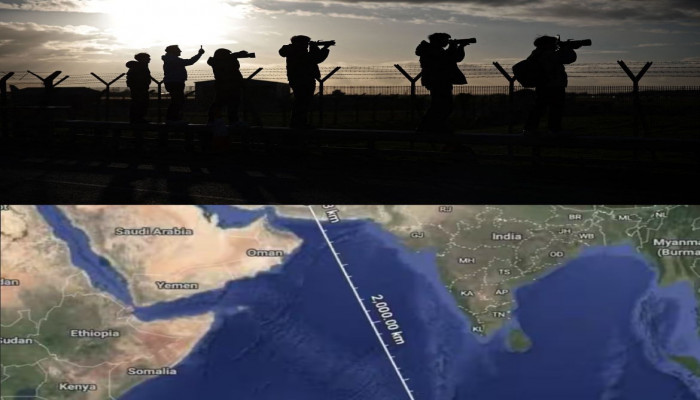
Iran may have demonstrated a stronger missile capability than previously believed, as reports suggest it attempted to target Diego Garcia, a key US-UK military base located nearly 4,000 kilometers away in the Indian Ocean. If confirmed, this would be the first time Iran has operationally used intermediate-range ballistic missiles (IRBMs), signaling a major shift in its military reach beyond the Middle East and posing a direct threat to US interests.
According to a report by the Wall Street Journal, citing multiple US officials, Iran fired two such missiles toward the base. However, neither missile successfully hit the target. One reportedly failed during flight, while the other was intercepted by an SM-3 interceptor launched from a US warship. One of the officials added that it could not be clearly determined whether the interception actually took place.
Diego Garcia, located in the Chagos Islands, is one of the two bases the United Kingdom has allowed the United States to use for what it describes as “defensive” operations involving Iran. The second base is Fairford. Over the years, Diego Garcia has played a crucial role in several US military operations across Asia, including bombing campaigns in Afghanistan and Iraq. It currently houses American bombers and other military equipment, making it a strategically important installation.
The missile attempt comes at a time when tensions between Iran and US-Israeli forces have sharply escalated. The conflict intensified after Israel targeted Iran’s South Pars offshore natural gas field on March 18. In response, Iran carried out retaliatory strikes, including an attack on the world’s largest LNG facility in Qatar. This escalation reportedly pushed US President Donald Trump to reconsider the situation and attempt to reduce tensions.
The ongoing exchange of drones and missiles has also affected global trade routes. Shipping through the Strait of Hormuz has nearly come to a halt. This waterway is one of the most important in the world, as it handles about one-fifth of global oil and key goods. The disruption has raised serious concerns about economic stability and energy supply worldwide.
As the conflict entered its third week, Iran issued a new warning that further raised global fears. On Friday, it threatened to expand its retaliatory actions beyond military targets. Iran’s top military spokesperson, Gen. AbolfazlShekarchi, stated that “parks, recreational areas and tourist destinations” worldwide will not be safe for the country's enemies. This statement has led to concerns that Iran might return to using militant operations outside the Middle East as a form of pressure.
Another senior figure, Gen. Ali Mohammad Naini, spokesperson for Iran’s Revolutionary Guard, said in a state-run newspaper that Iran continues to produce missiles, despite Israel’s claims that its production capabilities had been destroyed. However, Iranian state television later reported that Naini himself was killed in an airstrike, marking yet another major loss for Iran’s leadership.
This development follows a series of recent strikes that have weakened Iran’s top military command. Earlier in the week, US-Israeli attacks reportedly killed several high-ranking officials, including Iranian security chief Ali Larijani and Basij commander Gholamreza Soleimani. These losses highlight the intensity of the ongoing conflict and the pressure on Iran’s military structure.
Overall, the reported missile attempt on Diego Garcia marks a significant moment in the conflict. It suggests that Iran may now have the ability to strike much farther than before. At the same time, the failure of the attack and continued interceptions show that US defenses remain active. The situation remains tense, with risks of further escalation both within and beyond the Middle East.



 Loading...please wait
Comments