




Iran's IRGC unveils new underground missile city
- In Reports
- 05:44 PM, Nov 11, 2026
- Myind Staff
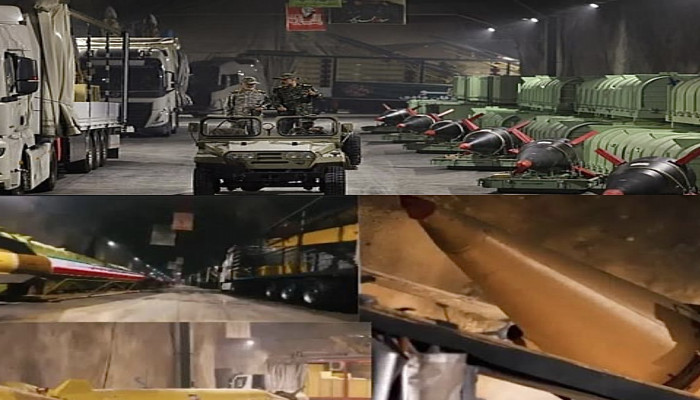
Iran’s Islamic Revolutionary Guard Corps (IRGC) has unveiled what it describes as a “new” underground missile city, displaying ballistic and cruise missiles along with their launch systems. The announcement comes amid rising military tensions and continued pressure from the US and Israel.
The IRGC-linked Tasnim News Agency released images of the facility on Tuesday, November 10, during the force’s Aerospace Week. Iranian Armed Forces Chief of Staff Maj. Gen. Ali Abdollahi and IRGC Aerospace Force commander Brig. Gen. Majid Mousavi attended the unveiling.
Tasnim reported that the facility houses “various ballistic and cruise missiles” and their launchers. However, it did not disclose the location, number or types of weapons stored there. No independent evidence has confirmed the facility’s scale or operational status.
The announcement followed a pledge by IRGC spokesman Brig. Gen. Hossein Mohebbi that the Aerospace Force would showcase a new underground missile city and other military achievements during the week.
Iran’s missile arsenal remains a key part of its military strategy. However, the exact number of missiles still under Tehran’s control or stored in underground bunkers remains unclear.
The US Central Command estimated Iran’s ballistic missile stockpile at more than 3,000 in 2022. More recent assessments suggest the number has fallen below 2,000 following sustained US and Israeli attacks. Earlier this year, the Israeli military estimated that Iran possessed around 2,500 ballistic missiles and was producing "dozens" of new missiles every month.
A Reuters report estimated that Iran had between 1,000 and 1,500 functional missiles, compared with a pre-conflict stockpile of around 2,500. Despite the attacks, up to 90% of Iran’s heavily fortified missile cities and underground tunnel storage sites are believed to remain partially or fully operational.
According to CNN, around 60% of Iran’s missile and drone launchers remain intact or have been recovered from damaged sites. However, the exact figures remain uncertain.
Mohebbi said Iran had moved its missile and drone production lines from surface facilities into underground complexes. He described these facilities as “missile production cities” rather than simple storage depots.
He argued that Iran’s domestic expertise, vast territory and flexible infrastructure would allow weapons production to continue despite heavy bombardment. However, these claims have not been independently verified. The facility’s status as a new site and its actual capabilities also remain unconfirmed.
The unveiling reflects Tehran’s efforts to demonstrate military resilience and strengthen deterrence as the US maintains sanctions and a naval blockade. It also highlights Iran’s strategy of protecting missile production and storage facilities from airstrikes by moving them underground.
During the event, IRGC commander Mousavi warned that Iran could strike enemy assets across and beyond the region if necessary. The IRGC Aerospace Force oversees the country’s missile and drone programmes, while underground facilities remain central to preserving its launch and production capabilities.



 Loading...please wait
Comments