



Iran writes to UN after Ayatollah Khamenei’s assassination in US-Israel joint operation
- In Reports
- 01:24 PM, Mar 02, 2026
- Myind Staff
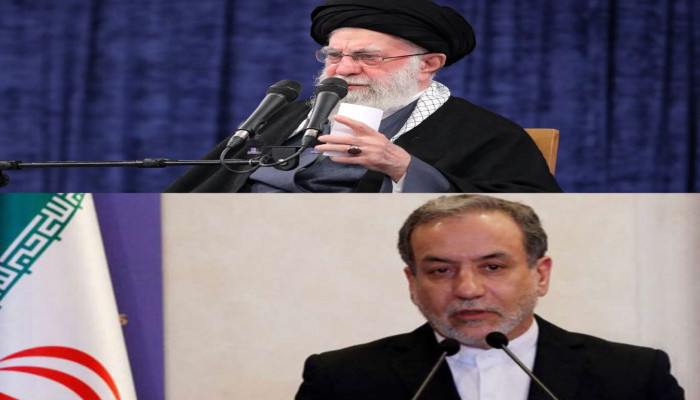
Iran’s Foreign Minister Seyed Abbas Araghchi has formally written to United Nations Secretary-General Antonio Guterres and members of the UN Security Council following what Tehran has described as the “assassination” of Iran’s Supreme Leader Ayatollah Ali Khamenei in a joint military operation carried out by the United States and Israel.
According to Iran’s Tasnim News Agency, Araghchi raised serious concerns in his letter and called on the international community to respond to what Iran termed as an act of aggression. Iran’s state broadcasters and the official Islamic Republic News Agency (IRNA) confirmed on Sunday that Khamenei, who had led the Islamic Republic since 1989, had died on February 28. The reports stated that coordinated air and missile strikes targeted his secure compound in Tehran amid rising regional tensions.
The United States reportedly codenamed the operation “Operation Epic Fury,” while Israeli forces referred to it as “Operation Roaring Lion.” The coordinated strikes hit multiple strategic locations across Tehran and other major Iranian cities. The attacks reportedly caused widespread destruction and resulted in significant casualties. Among those killed were members of Khamenei’s family, according to Iranian sources.
Following the incident, Iran announced 40 days of national mourning. The 40-day mourning period holds deep religious and cultural importance in Shia Islam. The government also declared seven days of public holidays across the country to honour the slain Supreme Leader.
In his letter to Guterres and the UN Security Council, Araghchi accused Washington and Tel Aviv of carrying out blatant aggression. He described the strikes as “illegal acts of force” that threaten global peace and security. He urged the international community to take urgent steps to stop the conflict and work toward a diplomatic resolution. The Iranian foreign minister emphasised that immediate action was needed to prevent further escalation.
The killing of Khamenei has triggered a wider conflict across the Middle East. In response, Iran launched missile and drone attacks targeting US and Israeli assets in the region. The escalation has raised serious concerns among world powers and regional capitals. Many have called for restraint, warning that the situation could spiral further if hostilities are not brought under control.
Meanwhile, US President Donald Trump has publicly addressed the situation. In a post on Truth Social, Trump described Khamenei as “one of the most evil people in History” and said that his death represented “justice for the people of Iran.”
Trump also confirmed the possibility of diplomatic engagement with Iran. Speaking to The Atlantic magazine, he said, “They (Iran) want to talk, and I have agreed to talk, so I will be balancing to them.” However, he criticised Iran for not seeking dialogue earlier. He added, “They should have done it sooner... They waited too long.”
Despite expressing openness to talks, Trump made it clear that military operations would continue. He stated that “pinpoint bombing” would continue uninterrupted in order to achieve “PEACE THROUGHOUT THE MIDDLE EAST.”
The joint offensive, carried out under the names Operation Epic Fury and Operation Roaring Lion, reportedly led not only to the death of Ayatollah Ali Khamenei but also to the deaths of several senior Iranian figures. The strikes marked one of the most significant developments in the ongoing tensions between Iran, the United States, and Israel.
Iran’s government has strongly condemned the operation and described it as an unprecedented act. The country has maintained that the killing of its Supreme Leader was unlawful and a direct threat to international stability. Through his letter to the United Nations, Araghchi has sought to bring the matter before the global body and push for international action.
The situation remains tense as both sides signal different approaches. While Iran has retaliated militarily, it has also called for international intervention to address what it considers aggression. At the same time, the United States has indicated that military actions will persist even as discussions may take place.
World leaders and regional authorities continue to monitor developments closely. Appeals for restraint have been repeated in diplomatic circles, with concerns growing about the potential for a larger regional conflict if the current hostilities are not contained.
The developments following the February 28 strikes have significantly reshaped the political landscape of the Middle East. With Iran observing a prolonged mourning period and public holidays to honour Khamenei, the domestic impact has also been substantial.
As tensions continue, the focus remains on whether diplomatic efforts can prevent further escalation or whether military operations will deepen the crisis in the region.



 Loading...please wait
Comments