



Iran will decide end of war: IRGC rejects Trump’s ‘nonsense’ remarks
- In Reports
- 12:55 PM, Mar 10, 2026
- Myind Staff
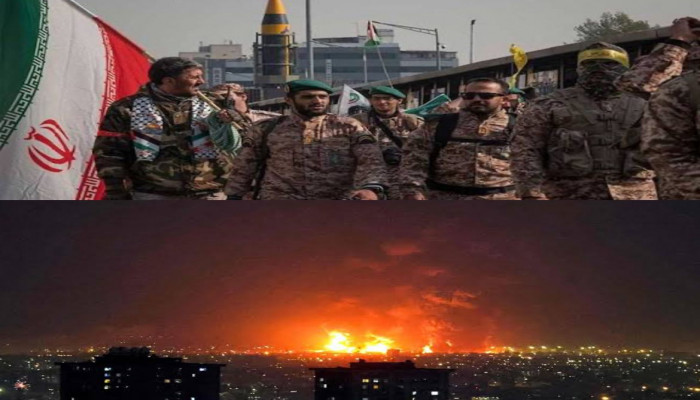
Iran’s Islamic Revolutionary Guard Corps (IRGC) has strongly rejected recent remarks made by United States President Donald Trump regarding the ongoing conflict involving Iran. In a sharp response, the IRGC stated that it is Iran—not the United States—that will determine how and when the war comes to an end. The statement also warned that Iran could take steps that might disrupt oil exports from the region if attacks by the United States and Israel continue.
The response from the IRGC came after a series of statements made by Trump on Monday, which appeared to send mixed signals about the status of the conflict. While speaking to American media earlier in the day, Trump suggested that the war with Iran was almost finished. However, later in the day, he delivered a different message while addressing members of his Republican Party, saying that the conflict was still ongoing and would continue until Iran was completely defeated.
According to CBS News White House reporter Weijia Jiang, Trump spoke to her over the phone and expressed confidence about the progress of the war. During the conversation, he said the conflict was moving quickly in the United States’ favour. Trump told Jiang that the war was “very far ahead of schedule,” and added, “I think the war is very complete, pretty much.”
Trump also claimed that Iran’s military strength had been significantly weakened during the fighting. Describing the situation, he said, “They have no navy, no communications, they’ve got no Air Force.” His comments suggested that he believed Iran’s military capabilities had already been severely damaged during the conflict.
However, only hours later, Trump made another statement that indicated the war was far from over. While addressing the Republican Members' Issues Conference, he suggested that although the United States had achieved certain successes, the overall objective had not yet been accomplished.
Speaking at the event, Trump said, “We've already won in many ways, but we haven't won enough.” He further stated that military operations would continue until Iran faced complete defeat. Trump said the war would go on until Iran was “totally and decisively defeated.”
These remarks quickly drew a strong reaction from Iran’s Islamic Revolutionary Guard Corps. Iranian state media reported that an IRGC spokesperson responded directly to Trump’s statements and rejected them as baseless. The spokesperson said that Tehran would decide the outcome of the war and not Washington.
The spokesperson dismissed Trump’s comments and called them “nonsense.” He stressed that Iran would not allow external powers to dictate the end of the conflict. The IRGC statement made it clear that Iran intends to control the timeline and conditions under which the war concludes.
In addition to rejecting Trump’s remarks, the IRGC also issued a warning related to global oil exports. The spokesperson said that Iran would not allow the export of “one litre of oil” from the region if attacks by the United States and Israel continued. This statement suggested that Iran could take steps that might disrupt the flow of oil through the Gulf, which is a major route for global energy shipments.
The IRGC also warned that security in the region could be affected if the conflict continues to escalate. The spokesperson said that stability in the Gulf would depend on the actions of all countries involved. He stated that regional security would be “for everyone or for no one,” indicating that Iran could respond in ways that might impact the wider region.
The exchange of warnings came shortly after reports of new military strikes on Iranian energy facilities. According to Iranian officials, several oil depots were targeted during attacks carried out by the United States and Israel over the weekend.
Officials said that five oil depots located in Tehran and the neighbouring province of Alborz were hit late on Saturday night. The strikes reportedly caused large fires, sending thick smoke into the sky over the Iranian capital. The smoke remained visible over Tehran through Sunday.
Authorities also reported temporary disruptions to fuel supplies in Tehran province following the strikes. However, officials said that the situation could return to normal within two to three days as fuel distribution systems recover from the damage.
Iranian officials have also indicated that the country is preparing for a long conflict. According to an IRGC spokesperson, Iran has already stockpiled large numbers of ballistic missiles, cruise missiles, drones and attack vessels.
The spokesperson said that these resources would allow Iran to sustain high-intensity combat for at least six months if necessary. He also stated that Iran may soon introduce new military tactics and deploy longer-range and more advanced missile systems.
Meanwhile, humanitarian organisations in Iran have reported significant damage since the conflict began. The Iranian Red Crescent Society said that US and Israeli strikes have resulted in large numbers of casualties and damage to civilian infrastructure across the country.
According to the organisation, 1,332 people have been killed in Iran since the conflict started. It also reported that 9,669 civilian facilities have been damaged. These include thousands of homes and commercial buildings across different areas of the country.
The latest exchange of statements between Washington and Tehran highlights the continuing tensions surrounding the conflict, as both sides maintain firm positions about its outcome and future direction.



 Loading...please wait
Comments