




Iran warns regional allies of strikes on US bases amid rising tensions and protests
- In Reports
- 06:17 PM, Jan 14, 2026
- Myind Staff
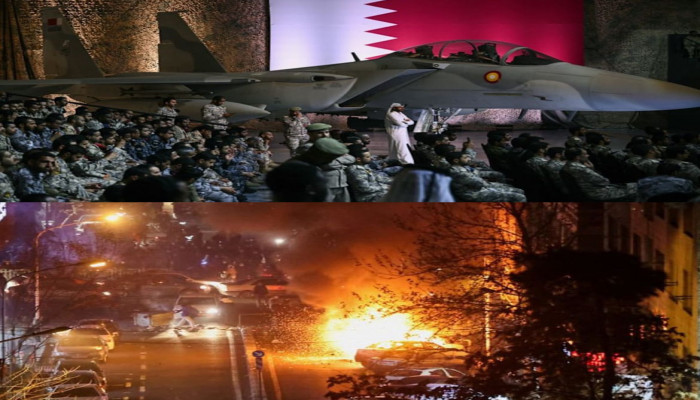
Iran has warned several U.S.-allied countries in the Middle East that it would target American military bases on their soil if the United States attacks Iran, a senior Iranian official told Reuters. The warning comes at a time of escalating tensions following U.S. President Donald Trump’s threats to take action in support of protesters in Iran.
According to the Iranian official, who spoke on condition of anonymity, Tehran has directly conveyed its message to countries including Saudi Arabia, the United Arab Emirates, and Turkey. “Tehran has told regional countries, from Saudi Arabia and the UAE to Turkey, that U.S. bases in those countries will be attacked” if Washington launches strikes against Iran, the official said. Iran has also urged these countries to “prevent Washington from attacking Iran.”
The situation inside Iran has grown increasingly volatile. A US-based human rights group, HRANA, reported that the death toll from the ongoing unrest has climbed to nearly 2,600 people. The protests are being described as one of the most serious challenges to Iran’s clerical leadership since the 1979 Islamic Revolution. HRANA said it has verified the deaths of 2,403 protesters and 147 government-affiliated individuals. An Iranian official, however, told Reuters earlier that about 2,000 people had been killed.
Adding to the uncertainty, an Israeli official said that, according to an Israeli assessment, President Trump has decided to intervene in Iran, although the timing and scale of such action remain unclear. A second Israeli government source said Prime Minister Benjamin Netanyahu’s security cabinet was briefed late on Tuesday about the possibility of U.S. intervention or even a potential collapse of the Iranian regime. Israel and Iran fought a 12-day war last year, further deepening hostilities between the two long-time enemies.
Tensions have also affected diplomatic communication. The Iranian official told Reuters that direct contacts between Iran’s Foreign Minister Abbas Araqchi and U.S. Special Envoy Steve Witkoff had been suspended, reflecting the worsening relationship between the two countries.
President Trump has taken a strong public stance on the situation. In an interview with CBS News on Tuesday, he warned of “very strong action” if Iran executes protesters. “If they hang them, you’re going to see some things,” Trump said. He also urged Iranians to continue protesting and to take control of institutions, stating that “help is on the way,” though he did not provide details. When later asked by reporters what he meant by this statement, Trump said they would “have to figure that out.”
The United States maintains a significant military presence across the Middle East. This includes forces in Bahrain, which hosts the headquarters of the U.S. Navy’s Fifth Fleet, and in Qatar, home to Al Udeid Air Base, the forward headquarters of U.S. Central Command. Iran previously fired missiles at Al Udeid last year in retaliation for U.S. airstrikes on its nuclear facilities.
Despite the sharp rhetoric, Iran has continued diplomatic outreach to some U.S. allies. Iranian state media reported that Ali Larijani, head of Iran’s top security body, spoke with Qatar’s foreign minister, while Araqchi held talks with his counterparts in the UAE and Turkey. Araqchi told UAE Foreign Minister Sheikh Abdullah bin Zayed that “calm has prevailed” and said Iranians were determined to defend their “sovereignty and security from any foreign interference.”
Information from inside Iran has been limited due to an internet blackout, making independent verification difficult. HRANA reported that 18,137 people have been arrested so far in connection with the protests. Meanwhile, Iran’s chief justice, during a visit to a Tehran prison holding detained protesters, stressed the need for swift legal action. He said speed in judging and punishing those “who beheaded or burned people” was essential to prevent such incidents from happening again.
State television announced that a funeral procession would be held in Tehran on Wednesday for more than 100 civilians and security personnel killed during the unrest. Separately, Hengaw, an Iranian Kurdish rights group, reported that a 26-year-old man named Erfan Soltani, arrested during protests in Karaj, was scheduled to be executed on Wednesday. Hengaw said it could not confirm whether the execution had taken place due to communication shutdowns. Reuters was also unable to independently verify the report.
Iranian authorities have blamed the unrest on foreign interference, accusing the United States and Israel of stirring violence. Officials say those responsible are “terrorists” who have attacked security forces, mosques, and public property. Pro-government rallies were held across Iran on Monday, showing continued support for the clerical establishment. So far, there have been no visible signs of division within the security forces.
On the international front, Trump announced a 25% import tariff on goods from any country doing business with Iran. The U.S. State Department has also urged American citizens to leave Iran immediately, advising them to exit by land through Turkey or Armenia.



 Loading...please wait
Comments