




Iran warns of military action as Trump launches ‘Project Freedom’ in Hormuz
- In Reports
- 07:22 PM, May 04, 2026
- Myind Staff
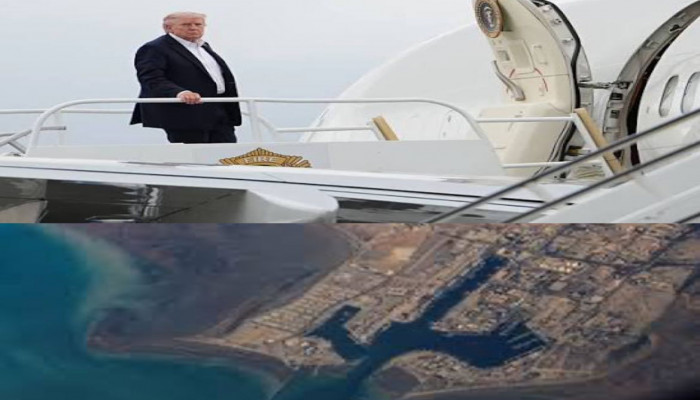
Tensions have escalated in the Strait of Hormuz after Iran issued a strong warning in response to a new US naval mission announced by Donald Trump. The Iranian military stated that control over the vital waterway lies solely with its armed forces and made it clear that any movement through the Strait must be coordinated with them. According to reports by Al Jazeera, this statement directly challenges the growing US naval presence in the region.
The warning comes after Trump announced a naval operation named “Project Freedom,” which aims to assist commercial vessels currently stuck in the Strait. The mission is expected to begin within hours and is designed to escort these ships safely out of the area. The announcement was made through Trump’s post on Truth Social, where he explained that multiple countries had reached out to the United States for help.
Trump said that “Countries from all over the World, almost all of which are not involved in the Middle Eastern dispute going on so visibly, and violently, for all to see.” He added that these nations had asked whether the US could “help free up their Ships, which are locked up in the Strait of Hormuz, on something which they have absolutely nothing to do with.” He presented the mission as a move to ensure safe passage for ships that are not part of the ongoing conflict.
He further stated that the United States would step in to guide these vessels out safely, calling the effort beneficial for all sides. According to him, the move is “For the good of Iran, the Middle East, and the United States.” He also said that US forces “will guide their Ships safely out of these restricted Waterways, so that they can freely and ably get on with their business.” The mission is set to start on Monday morning, based on Middle Eastern time.
However, Iran has strongly opposed this move and issued a strict warning to global shipping companies. The Iranian army declared, “We will maintain and manage the security of the Strait of Hormuz with all our might and we announce to all commercial ships and tankers to refrain from any action to transit without the coordination of the armed forces stationed in the Strait of Hormuz so that their security is not jeopardised.” This statement highlights Iran’s stance that it remains the only authority responsible for the safety of the Strait.
The situation has become more serious as Iran warned of direct military action against any foreign forces entering the area without permission. The military stated, “We warn that any foreign armed force, especially the aggressive US army, will be attacked if they attempt to approach and enter the Strait of Hormuz.” Reports suggest that Iran views any such move as a violation of its control over the region and is prepared to respond forcefully.
Despite these warnings, Trump continued to defend the mission. He said that “Project Freedom” is focused only on ships from countries that are not involved in the Middle East conflict. He confirmed that US officials have been instructed to ensure that these vessels and their crews are escorted out safely. He also mentioned that once these ships leave the Strait, they will avoid returning until the situation improves.
Trump described the mission as a humanitarian effort. He said it aims to “free up people, companies, and Countries that have done absolutely nothing wrong,” and referred to the crews as “victims of circumstance.” He also pointed out the difficult conditions on these ships, stating that “Many of these Ships are running low on food, and everything else necessary for large-scale crews to stay on board in a healthy and sanitary manner.”
At the same time, he issued a warning that any interference with the mission would be dealt with strictly. He said that if the process is “interfered with, that interference will, unfortunately, have to be dealt with forcefully.” This indicates that the US is prepared to take action if its operation faces resistance.
Alongside the rising tension, Trump also mentioned that US officials are engaged in “very positive discussions” with Iran. He suggested that these talks “could lead to something very positive for all,” even though he rejected Iran’s latest proposal to resolve the conflict, calling it “not acceptable.”
In response, Iran’s Foreign Ministry spokesperson Esmaeil Baghaei confirmed that Tehran is reviewing the US response. Reports from Tasnim News Agency indicate that Iran’s proposal includes ending hostilities in several regions, including Lebanon. It also demands the withdrawal of US forces, the release of frozen assets, and the removal of sanctions.
There are also differences in approach regarding a ceasefire. While the US has proposed a two-month ceasefire, Iran is reportedly pushing for a shorter 30-day window, prioritising a permanent resolution instead of a temporary pause.
The situation remains tense as both sides continue to deploy military assets in the region. Reports by Al Jazeera suggest that the ongoing rhetoric and actions from both Iran and the US highlight the fragile and volatile nature of the standoff in the Gulf.



 Loading...please wait
Comments