




Iran-UAE disagreements stall finalisation of joint statement at BRICS Foreign Ministers meeting
- In Reports
- 12:55 PM, May 15, 2026
- Myind Staff
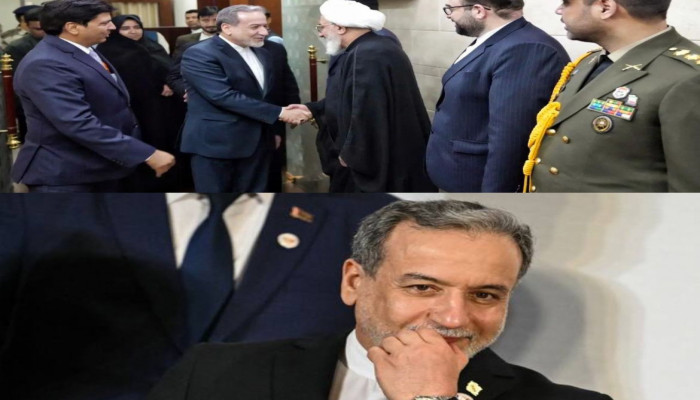
The first day of the BRICS foreign ministers’ meeting in New Delhi witnessed tense exchanges between Iran and the United Arab Emirates (UAE) over the ongoing conflict in West Asia. The sharp disagreement between the two countries raised doubts about whether the grouping would be able to release a joint statement after the meeting.
Differences between the two countries had already surfaced before the meeting officially began on Thursday. Representatives from the 10 BRICS member states attended the two-day gathering, including Iranian Foreign Minister, Seyed Abbas Araghchi and UAE Deputy Foreign Minister, Khalifa Shaheen Al Marar. Iran’s foreign ministry later released Araghchi’s national statement to the media. In his remarks, he urged BRICS members and the international community to condemn the “illegal aggression against Iran” by the US and Israel. However, he did not directly mention the UAE while referring to the conflict in West Asia.
Tensions increased when the UAE minister referred specifically to Iran during his own national statement and sought condemnation of Iranian actions. According to people familiar with the closed-door discussions, Araghchi requested permission from the chair to respond after all member states had delivered their statements. During his intervention, he accused the UAE of allowing the US to use its territory to carry out strikes against Iran.
The UAE side responded soon after. The heated exchange then led South African Foreign Minister Ronald Lamola to step in. He argued that the war in West Asia benefits no one and stressed that the conflict must end.
Araghchi replied once again and claimed that the UAE had violated international law by allowing the US to use military bases on its soil to launch strikes against Iran. According to Iran’s state-run media, he told the gathering that the UAE was “directly involved in the aggression against my country” by providing military bases, airspace and intelligence facilities to the US and Israel.
“Yesterday [Wednesday] it was revealed that UAE fighter jets participated in attacks against us and even took direct action against us. Therefore, the UAE is an active partner in this aggression,” he was quoted as saying by IRNA news agency.
Araghchi also said he had deliberately avoided mentioning the UAE in his national statement “for the sake of maintaining unity”. He further accused the Emirates of failing to condemn what he described as a “brutal attack” on a school in Iran’s Minab city during the first day of the conflict. According to him, around 170 students were killed in the attack. He also maintained that Iran had not attacked the UAE directly and had “only targeted US military bases” located on Emirati territory.
The UAE minister again responded to Iran’s accusations. He repeated his country’s demand for condemnation of Iran’s attacks on energy infrastructure and other facilities. The disagreements between the two sides continued to dominate discussions during the session.
Russian Foreign Minister Sergey Lavrov also intervened during the meeting. According to people aware of the discussions, Lavrov blamed the US and Israel for the situation in West Asia. He also stressed that diplomacy and dialogue remain the only path towards resolving the crisis.
The divisions between Iran and the UAE are not new for BRICS meetings. Competing demands by both countries for condemnation of each other’s actions have previously delayed consensus during earlier discussions within the bloc. Officials said the same issue could once again create hurdles in finalising a joint statement at the end of the foreign ministers’ meeting on Friday.
One person familiar with the deliberations said, “However, there was an understanding that BRICS is not the platform for mediation in the West Asia conflict.”
Since BRICS works on the basis of consensus, the Indian side has been trying to guide discussions towards a common position on the conflict. The aim is to ensure that member states can agree on a final joint statement despite their differences.
This approach was reflected in the opening remarks made by India’s external affairs minister S. Jaishankar during the meeting. Speaking about the expansion of BRICS, Jaishankar highlighted the importance of unity among both older and newer members. Iran and the UAE joined the grouping in 2024 during the first major expansion of BRICS.
“It is essential for the smooth advancement of BRICS that later members fully appreciate and subscribe to the BRICS’ consensus on various important issues,” Jaishankar said.
The tense exchanges between Iran and the UAE have now placed the focus on whether BRICS can maintain internal unity while dealing with deeply divided positions on major international conflicts. The outcome of the meeting and the possibility of a joint statement will likely depend on whether member states can find common ground despite the growing disagreements over West Asia.



 Loading...please wait
Comments