




Iran signals willingness to move part of enriched uranium to a third country
- In Reports
- 08:39 PM, Jun 05, 2026
- Myind Staff
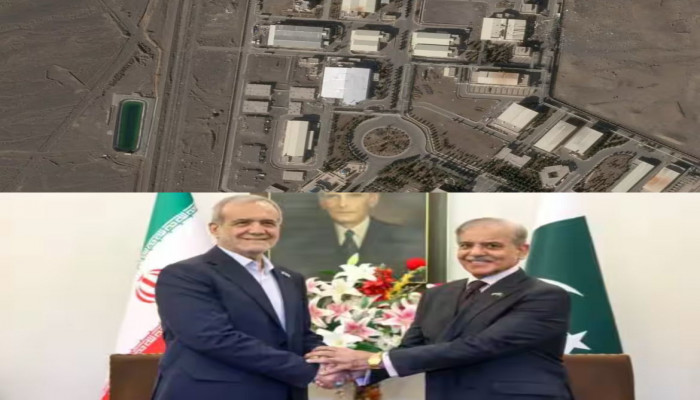
Iran has informed Pakistan that it is willing to transfer a portion of its enriched uranium stockpile to a third country, according to a report by Al Arabiya. The development comes after a meeting between Pakistan's Interior Minister Mohsin Naqvi and his Iranian counterpart Eskandar Momeni. The two leaders met in Bishkek, the capital of Kyrgyzstan, on the sidelines of the Shanghai Cooperation Organisation (SCO) meeting of interior ministers.
The move is being seen as an important development at a time when efforts to improve relations between Iran and the United States remain stalled. Discussions between Washington and Tehran have made little progress despite attempts to achieve a breakthrough. One of the biggest issues in the negotiations continues to be Iran's stockpile of enriched uranium.
The United States has repeatedly demanded that Iran hand over its enriched uranium reserves. Former US President Donald Trump had claimed on several occasions that Tehran had agreed to transfer the material to the United States. However, Iranian authorities rejected those claims and denied that any such agreement had been reached.
Reports have also suggested that Iran is seeking the release of its frozen financial assets as part of any potential agreement. While Tehran wants access to these funds, the United States is believed to support a phased release of the assets. Under such an arrangement, the funds would be released gradually based on steps taken by Iran to address Washington's concerns and meet its demands.
At the same time, Iran has continued to reject US proposals regarding negotiations on some of the most sensitive aspects of its nuclear programme. Tehran has maintained its position on these issues despite ongoing international pressure and repeated calls for greater transparency.
Meanwhile, concerns over Iran's nuclear activities have been raised by the International Atomic Energy Agency (IAEA), the United Nations' nuclear watchdog. The agency has acknowledged that it no longer has a clear picture of key parts of Iran's nuclear programme. According to the IAEA, it is currently unable to verify the exact size, composition, or location of Iran's stockpile of highly enriched uranium.
The warning was included in a confidential report circulated to member states by the agency. The report stated that inspectors have not been able to properly access Iranian nuclear facilities that were affected by the regional conflict that began last year. As a result, the agency's ability to monitor and assess Iran's nuclear activities has been significantly limited.
According to the IAEA's latest estimates, Iran currently possesses around 440.9 kilograms of uranium enriched to 60 per cent purity. Although this level remains below the roughly 90 per cent enrichment generally associated with nuclear weapons, experts believe the gap is relatively small from a technical perspective. They say that uranium enriched to 60 per cent can be further processed to weapons-grade levels more quickly than uranium enriched at lower levels.
The latest development involving the possible transfer of part of Iran's enriched uranium stockpile is likely to attract international attention. It comes at a time when questions remain over the future of Iran's nuclear programme, the status of its negotiations with the United States, and the ability of international inspectors to monitor its nuclear activities. With major differences still unresolved, the issue continues to remain at the centre of global diplomatic efforts.



 Loading...please wait
Comments