



Iran shuts Strait of Hormuz again, accuses US of violating deal to reopen it
- In Reports
- 07:30 PM, Apr 18, 2026
- Myind Staff
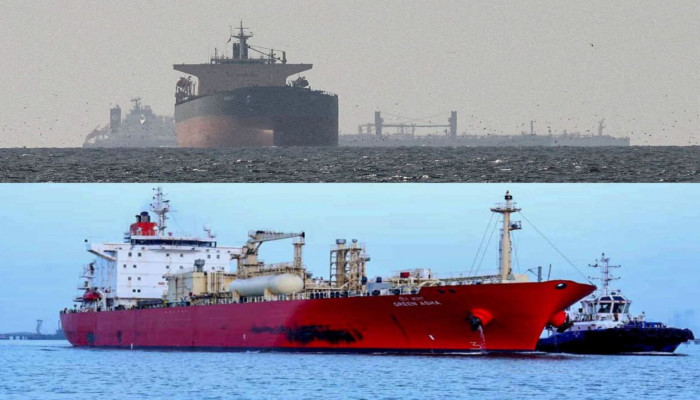
Iran has once again tightened its control over the Strait of Hormuz, reversing its earlier decision to reopen the crucial passage. This move comes shortly after Donald Trump stated that the United States would continue its naval blockade at full strength. The renewed restrictions highlight the ongoing tension between Tehran and Washington over maritime access and broader geopolitical issues.
In an official statement, Iran’s military command accused the United States of failing to honour its commitment. According to Iranian authorities, Washington continued its naval blockade even after assurances were made regarding the movement of ships. The military made its position clear, stating, "Until the United States restores freedom of movement for all vessels visiting Iran, the situation in the Strait of Hormuz will remain strictly controlled." This indicates that Iran’s decision is directly linked to what it sees as a violation by the US.
The reversal came just a day after Iran had announced that the Strait was open. That earlier decision followed a ceasefire in Lebanon, which had brought a pause to Israel’s conflict with Hezbollah. At the time, Tehran signalled a willingness to ease tensions and restore normal shipping activity in the region. However, the situation changed quickly. By Saturday morning, Iranian state television reported that control over the strait had returned to strict military management, blaming the continued US blockade for the shift.
The statement from Iranian authorities emphasised that the armed forces are now fully overseeing the waterway. The phrase "control of the Strait of Hormuz has returned to its previous status" reflects a return to tighter restrictions that had been in place during the peak of the conflict. This suggests that any hope for immediate de-escalation has been put on hold due to the lack of agreement between the two sides.
The United States, on the other hand, has maintained a firm stance. President Trump stated that the blockade would continue until Iran agrees to a broader deal with Washington. This includes negotiations related to Iran’s nuclear programme. Despite Iran’s temporary reopening of the strait, the US has not relaxed its position, which has contributed to the renewed restrictions.
The Strait of Hormuz remains one of the most critical maritime routes in the world. It handles nearly one-fifth of global oil shipments. Any disruption in this area has a direct impact on global energy markets. The recent closure, which lasted for almost two months, had already caused fluctuations in crude oil prices and affected supply chains across several countries. The reimposition of controls raises concerns about further instability in global oil distribution.
Alongside maritime developments, Iran has taken a partial step towards normalcy in another area. The country announced that it has reopened part of its airspace. According to Iran’s Civil Aviation Authority, international flights are now allowed to pass through the eastern section of its airspace. The authority also confirmed that some airports resumed operations starting at 7:00 am (0330 GMT). This move suggests an attempt to ease restrictions in aviation even as tensions continue at sea.
The broader conflict has taken a heavy toll across multiple regions. The war began with US and Israeli strikes on February 28 and has since resulted in significant casualties. Reports indicate that at least 3,000 people have been killed in Iran. Lebanon has seen over 2,290 deaths, while Israel has reported 23 fatalities. In addition, more than a dozen people have died in Gulf Arab states. The United States has also suffered losses, with thirteen service members killed during the conflict.
The situation remains uncertain as both Iran and the United States continue to hold firm positions. The Strait of Hormuz has once again become a focal point of global attention. Any further escalation could have wide-reaching consequences, not only for the region but also for international trade and energy security.



 Loading...please wait
Comments