



Iran rules out talks with US as Middle East tensions escalate
- In Reports
- 01:30 PM, Mar 02, 2026
- Myind Staff
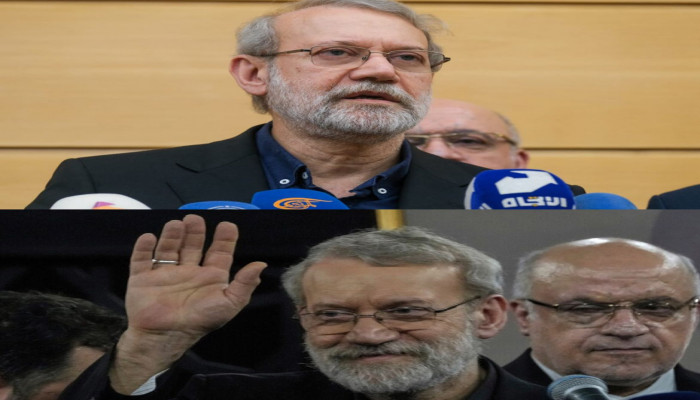
Ali Larijani, Secretary of Iran's Supreme National Security Council, has clearly said that Iran will not negotiate with the United States at a time when tensions in the Middle East are rising sharply.
On Monday, Larijani dismissed reports that Tehran was trying to start talks with Washington. Taking to X, he made his position clear and wrote, “We will not negotiate with the United States.”
His statement came after a report by The Wall Street Journal claimed that Larijani was seeking to restart diplomatic engagement with the US. According to the report, this effort was said to be through intermediaries from Oman. However, Larijani directly rejected such claims and firmly denied that Iran was pursuing dialogue with Washington.
The situation between Iran and the United States has worsened in recent days. On Sunday, Iran's Foreign Minister Abbas Araghchi strongly condemned the US strikes that killed Iran’s Supreme Leader, Ayatollah Ali Khamenei. He described the US action as unlawful aggression and made it clear that Tehran would respond without compromise.
Speaking to ABC News, Araghchi rejected the justification given by Washington. He said, “What the United States is doing is an act of aggression. What we are doing is the act of self-defence.” His remarks showed that Iran considers its actions as defensive and views the US strikes as aggression.
The United States and Israel carried out joint airstrikes on Iran on February 28. These strikes happened while nuclear talks between Washington and Tehran were ongoing and said to be progressing. During this military operation, Iran’s Supreme Leader Ayatollah Ali Khamenei was killed.
Following the airstrikes, Iran launched a series of missile attacks across Middle Eastern nations. These attacks targeted US military bases in the region. The strikes marked a major escalation in the conflict.
In response, the United States and six Gulf nations strongly condemned Iran’s actions. They described the missile and drone attacks as “indiscriminate and reckless” and called them a “dangerous escalation” that threatens regional stability.
A joint statement was released by the US State Department. The governments of the United States, Bahrain, Jordan, Kuwait, Qatar, the Kingdom of Saudi Arabia, and the United Arab Emirates denounced Iran’s attacks on multiple sovereign territories.
The statement said, “The United States, Bahrain, Jordan, Kuwait, Qatar, the Kingdom of Saudi Arabia, and the United Arab Emirates strongly condemn the Islamic Republic of Iran's indiscriminate and reckless missile and drone attacks against sovereign territories across the region.” The countries expressed serious concern over the impact of these attacks on peace and stability in the Middle East.
Meanwhile, US President Donald Trump described the large-scale American military assault on Iran as “one of the largest, most complex, most overwhelming military offensives the world has ever seen.” He declared that Ayatollah Ali Khamenei is dead and said that combat operations would continue “until all of our objectives are achieved.”
His remarks underlined that the United States plans to continue its military campaign. The strong statements from both sides show that the situation remains highly tense, with no immediate signs of dialogue or de-escalation.
With Iran firmly rejecting negotiations and the United States vowing to continue military operations, the conflict has deepened further. The exchange of strikes, official condemnations, and strong public statements reflect a serious crisis in the region.



 Loading...please wait
Comments