




Iran releases list of eight major bridges after US strikes destroy B1 bridge
- In Reports
- 06:41 PM, Apr 03, 2026
- Myind Staff
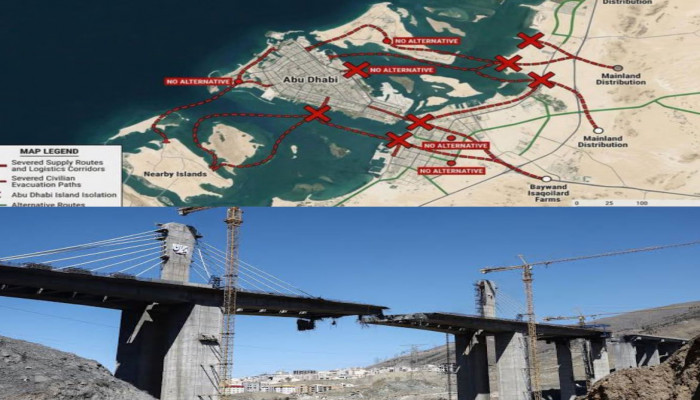
Iran has escalated tensions in the region by releasing a list of eight major bridges across the Gulf and Jordan that it suggests could become targets if the conflict continues. This move came shortly after a deadly airstrike destroyed a key bridge near Karaj, marking a sharp escalation in the ongoing war. The list was published by Fars News Agency, a semi-official outlet linked to the Islamic Revolutionary Guard Corps, indicating a serious warning rather than a routine statement.
The development followed a powerful strike on the B1 bridge in Iran’s Alborz province. This bridge connects Tehran to Karaj and is considered an important route for daily movement. It was one of the tallest bridges in the region and had only recently opened, with some parts still under construction. According to officials, the bridge was hit twice within about an hour. The impact caused a section of the structure to collapse, leading to heavy damage.
The attack resulted in the deaths of at least eight people. Those killed included local residents, travellers, and families who had gathered in the area for Nature Day celebrations. Nearly 95 others were injured in the incident. Early reports had suggested that only two people had died, but as rescue teams continued their work and more information became available, the number was revised. Images and videos circulating online showed severe destruction, with large sections of the bridge missing.
This strike is significant because it is the first time during the ongoing conflict that a civilian structure has been directly targeted. Until now, most attacks had focused on military installations. The shift has raised concerns about the widening scope of the war and the risks to civilian life and infrastructure.
US President Donald Trump reacted strongly to the strike and its aftermath. He shared footage of the destruction on social media and issued a warning to Iran. He said “the biggest bridge in Iran” had been destroyed and warned that there was “much more to follow.” He also urged Iran to “make a deal before it is too late.” His remarks suggest that further military action could be expected if tensions do not ease.
In response, Iranian media released a list of key bridges that could be targeted in retaliation. These bridges are located in several countries across the Gulf and in Jordan. One of the most prominent structures mentioned is the Sheikh Jaber Al Ahmad Al Sabah Bridge in Kuwait. This 36-kilometre sea bridge is a crucial link in the country’s infrastructure and serves as an important route with no easy alternative.
Another major structure named on the list is the King Fahd Causeway, which connects Saudi Arabia and Bahrain. This causeway is the only fixed road link between the two countries and plays a vital role in trade and daily travel. It is also strategically important because it supports logistics for the US Fifth Fleet based in Bahrain.
In the United Arab Emirates, three important bridges in Abu Dhabi were included in the list. These are the Sheikh Zayed Bridge, Al Maqta Bridge, and Sheikh Khalifa Bridge. All three connect the island city of Abu Dhabi to the mainland and are essential for transportation and daily commuting. Any disruption to these bridges could have a major impact on movement within the city.
The list also included key bridges in Jordan. Among them is the King Hussein Bridge, also known as the Allenby Bridge. This crossing is important for movement between Jordan and the West Bank. The Damia Bridge and Abdoun Bridge were also mentioned. These structures are significant for both regional connectivity and internal traffic, especially in the capital city of Amman.
Although Iran has not officially announced any immediate plans to attack these bridges, the release of the list itself has increased concerns. It signals that the conflict could expand further and involve critical infrastructure across multiple countries. So far, governments in the Gulf region have not issued specific responses to this list, but they have already condemned earlier Iranian strikes on their territories.
The choice of these bridges highlights their strategic importance. Many of them took years to build and required large investments. In several cases, there are no alternative routes available, making them even more critical. Any damage to these structures could disrupt transport, trade, and daily life on a large scale.
The conflict has now entered its fifth week, with both sides intensifying their actions. The United States and Israel have continued airstrikes across Iran, mainly targeting military sites. However, some attacks have also affected infrastructure used by civilians, raising further concerns about the humanitarian impact.
Iran, on the other hand, has carried out drone and missile strikes targeting Israel and several Gulf countries. These attacks have caused fires and damage to oil facilities. There has also been at least one reported death in the United Arab Emirates linked to these strikes. The situation remains volatile, with both sides showing no clear signs of stepping back.
Overall, the release of this target list marks a new phase in the conflict. It reflects a shift towards targeting infrastructure that is essential for daily life and regional stability. This development has increased fears that the war could spread further and have wider consequences for the entire region.



 Loading...please wait
Comments