




Iran lost track of sea mines, delaying reopening of Strait of Hormuz: Report
- In Reports
- 08:42 PM, Apr 11, 2026
- Myind Staff
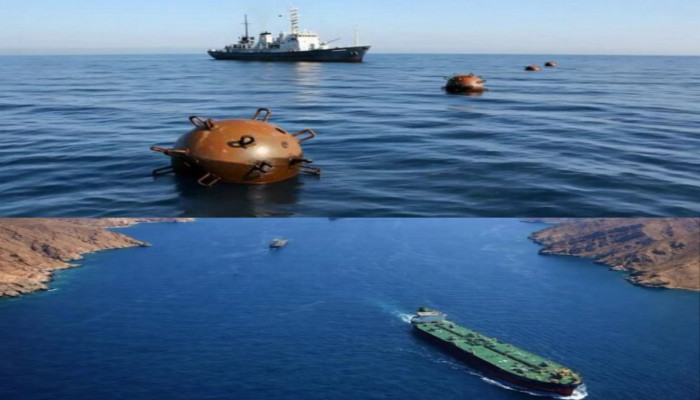
Iran is facing a major challenge in reopening the Strait of Hormuz, as it is unable to locate and remove all the naval mines it deployed during the recent Middle East conflict. According to US officials who spoke to The New York Times, this difficulty is delaying the safe resumption of shipping in one of the world’s most critical oil routes. The issue highlights a serious gap in Iran’s technical capacity, especially when it comes to clearing the very mines it placed.
The situation began escalating last month when Iran started laying naval mines in the strait using small boats. This move followed military action by the United States and Israel against Iran. Even at that time, US officials observed that the mining operation was slow and lacked coordination. The process was not carried out efficiently, which now appears to have added to the current complications.
Tensions had already disrupted shipping before the mines were deployed. On March 2, a senior official from Iran’s Islamic Revolutionary Guards Corps announced that the strait was closed. The official warned that any vessel entering the area could be set “ablaze”, as reported by state media. This statement immediately created fear among shipping companies. Oil markets reacted quickly, with prices rising due to concerns over supply disruptions.
Once the mines were in place, the situation worsened. The movement of oil tankers dropped significantly. The threat was not limited to mines alone. Ships also faced the risk of drone and missile attacks from Iran. This combination of dangers increased uncertainty and gave Tehran a strong position during the conflict. The disruption allowed Iran to exert pressure on global trade routes and energy markets.
However, the same strategy is now working against Iran. US officials said the mines were laid in a scattered and unplanned way. It is unclear whether Iran kept accurate records of where each mine was placed. Even in cases where records may exist, some mines could have drifted from their original locations. This has made the task of finding and removing them much more difficult.
Despite the risks, Iran did allow limited movement through the strait. A narrow passage was kept open for ships willing to pay a toll. The Revolutionary Guards issued warnings to vessels about the danger of mines. Semiofficial media outlets also shared maps showing relatively safer routes. However, these routes remain restricted and do not fully restore normal shipping activity.
The delay in clearing the strait has also affected Iran’s response to international pressure. US President Donald Trump has demanded the full reopening of the waterway. In a social media post on Tuesday, he linked a possible two-week ceasefire in the conflict to the “COMPLETE, IMMEDIATE, and SAFE OPENING of the strait”. This demand has added urgency to the situation.
Iran has acknowledged the problem, though indirectly. On Wednesday, Foreign Minister Abbas Araghchi stated that the strait would reopen “with due consideration of technical limitations”. According to US officials, this phrase reflects Iran’s recognition of its difficulties in dealing with the mines. It suggests that the country is aware of its limited ability to resolve the issue quickly.
The matter is expected to be a key topic in ongoing diplomatic efforts. A 70-member Iranian delegation, led by Araghchi, is scheduled to meet US Vice President JD Vance in Islamabad for peace talks. The reopening of the strait is likely to play an important role in these discussions.
Clearing naval mines is a complex task. Even advanced militaries like that of the United States rely on specialised ships for such operations. The US uses littoral combat ships designed specifically for mine-clearing missions. Despite its capabilities, even the US does not have extensive resources for large-scale mine removal. Iran, in comparison, lacks both the technology and the expertise to carry out such operations efficiently.
The situation is further complicated by recent US strikes on Iranian naval bases. Several Iranian ships have been destroyed. However, Iran still has hundreds of small boats that can be used to lay more mines or disrupt vessels. These boats are difficult to track, which adds another layer of uncertainty.
Because these small boats were not closely monitored during the mining operation, US officials do not have a clear estimate of how many mines were deployed. The exact locations of these mines also remain unknown. This lack of clarity continues to pose a serious risk to ships passing through the region and is delaying the return to normal maritime activity.



 Loading...please wait
Comments