




Iran launches retaliatory strikes on US bases in Kuwait, Jordan, Bahrain
- In Reports
- 01:37 PM, Jun 11, 2026
- Myind Staff
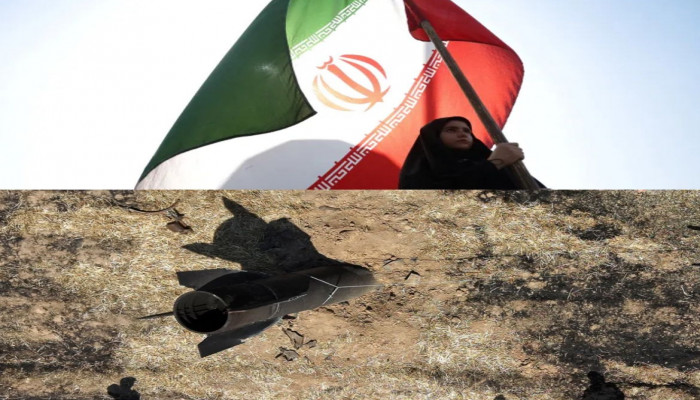
Iran launched attacks on US military targets in Bahrain, Kuwait and Jordan after American forces carried out strikes on Iranian ports and islands in the Strait of Hormuz. The latest escalation has further increased tensions in the region and raised concerns about the possibility of a wider conflict.
US President Donald Trump warned that Iran would “pay the price” after Tehran claimed responsibility for the attacks. Trump accused Iran of delaying efforts to reach an agreement that could have ended the conflict.
According to a statement released by Iran’s state media on Wednesday, the Islamic Revolutionary Guard Corps (IRGC) carried out drone attacks against the US Fifth Fleet in Bahrain and the Ali Al Salem airbase in Kuwait. The IRGC also launched a long-range missile strike targeting an airbase in Azraq, Jordan.
The Iranian military said it attacked 21 US targets and claimed that four of them were destroyed. Among the targets reportedly hit was an F-35 fighter jet hangar at the Jordanian airbase.
However, authorities in Bahrain, Kuwait and Jordan stated that all incoming drones and missiles were intercepted successfully. They reported that there were no casualties or significant damage from the attacks.
The IRGC warned that its forces remain fully prepared to deliver a “crushing and decisive” response to any future US military action. It also said that Washington would bear full responsibility for the consequences of any further escalation.
The Iranian strikes came shortly after the US military targeted Qeshm Island and several ports located along Iran’s coast in the Strait of Hormuz. Washington said the operation was carried out after Iran allegedly shot down a US Apache helicopter on Tuesday.
Following the latest exchange of attacks, Trump posted a message on social media criticising Tehran for delaying negotiations. He wrote, “They’ve taken too long to negotiate a deal that would have been great for them. Now they will have to pay the price.”
The statement marked a sharp change in tone. Just a day earlier, Trump had suggested that both sides were close to reaching an agreement. He had said that negotiations were only two or three days away from producing a deal.
Despite Trump’s comments, Iranian officials appeared unconcerned by the warning. Al Jazeera correspondent Tohid Asadi reported that Tehran viewed its military response as a sign of strength rather than a reason for concern.
“Iranians are dancing to the same old tune,” Asadi said. He explained that Iran believes it has demonstrated its ability to respond directly to American military actions.
Asadi also noted that Iranian leaders remain highly suspicious of long diplomatic processes. “Iranians are saying they are not interested in drawn-out talks while this cloud of mistrust exists,” he said.
Meanwhile, diplomatic efforts continue behind the scenes. Iran’s Foreign Ministry spokesperson Esmaeil Baghaei confirmed to Al Jazeera that a Qatari delegation was in Tehran holding discussions with Iranian officials. The talks are focused on the latest developments in the region and attempts to find a path toward ending the conflict.
Reporting from Doha, Al Jazeera’s Osama Bin Javaid said Qatari mediators are working to encourage a peaceful settlement between the parties involved.
According to Bin Javaid, Gulf nations are deeply concerned by the latest attacks. He said the countries “see these Iranian attacks as attacks on their territorial integrity, their sovereignty”.
He added that many Gulf states feel they have become involved in a conflict they never wanted. “They see this as a war that they’ve been dragged into against their will,” he said.
Bin Javaid also cautioned that the situation remains highly unpredictable. “However, it is very difficult to ascertain where we are right now [as] things could go either way,” he said.
“As we’ve seen in previous conflicts, one side sometimes escalates to show it’s got the upper hand before signing a deal; in other cases, one side escalates with a kinetic operation, causing things to get out of hand.”
Analysts believe Iran’s quick response reflects a shift in its military strategy. Trita Parsi, executive vice president of the Quincy Institute for Responsible Statecraft in the United States, said the attacks indicate a new doctrine in Tehran.
“They believe they have to respond proportionately, but very harshly and swiftly, against any American attack. Because otherwise, a new normal is established, one in which the United States can strike at Iran with more or less impunity,” he said.
Parsi explained that Iran wants to make it clear that any attack against it will receive a response regardless of the scale of the operation.
At the same time, he warned that repeated military exchanges are weakening confidence in diplomatic efforts. “But at the end of the day, every time these different types of events have occurred, the sense I have gotten from both sides is that their confidence and their trust in the ability of reaching a deal is starting to diminish,” he added.
The latest strikes came just one day after Iran and Israel exchanged fire in their most serious confrontation since a ceasefire took effect in April. The conflict began when the United States and Israel launched strikes on Iran on February 28. Since then, the war has disrupted global markets and contributed to rising fuel and food prices around the world.
Efforts to secure a peace agreement remain slow. The situation has become even more complicated because of Israel’s intensified military campaign in Lebanon against the Iran-backed Hezbollah group.
Al Jazeera correspondent Mohamed Vall, reporting from Tehran, said neither Washington nor Tehran appears eager to return to a full-scale war despite the recent escalation.
“Whether the Americans are going to absorb this latest retaliation from the Iranians and end their operation or whether there will be new attacks will become clear in the next few hours,” he said.
“But the understanding is that both sides would like to go back to negotiations, even though the Iranians say they don’t trust any American initiative with regard to peace.”



 Loading...please wait
Comments