



Iran-Israel-US War Day 3: Trump’s grave warning, rising casualties, market turmoil as oil and gold prices soar
- In Reports
- 01:07 PM, Mar 02, 2026
- Myind Staff
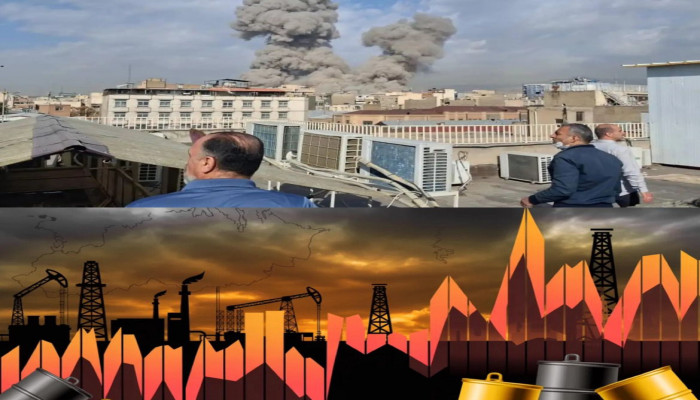
Iran, Israel and the United States continued a major military conflict on the third day on March 2, 2026, with intense air strikes, missile attacks, and rising civilian casualties that have sparked fear of a wider regional war and shaken global markets. The turmoil began after Iran’s Supreme Leader Ayatollah Ali Khamenei was killed during U.S. and Israeli strikes, prompting sharp retaliation by Iran and drawing in multiple actors across the Middle East.
The conflict has brought fresh instability to global energy markets, with crude oil and gold prices jumping to new highs as traders and investors reacted to the fighting and fears of disruptions to shipping through the Strait of Hormuz. Markets in India and around the world experienced heightened volatility amid the ongoing war.
The U.S. and Israel significantly stepped up military action after the death of Ayatollah Khamenei. Massive aerial bombings hit ballistic missile sites and other military targets in Iran. Smoke and explosions were seen over Tehran, and blasts rattled windows across the Iranian capital.
The U.S. military confirmed using B-2 stealth bombers to strike ballistic missile facilities. U.S. President Donald Trump said nine Iranian warships were sunk and Iran’s naval headquarters was “largely destroyed.”
In an address, Trump warned of further conflict, saying it was likely that “there will likely be more, before it ends. That's the way it is. Likely be more.” He added a firm message to Iran on social media: “IF THEY DO, WE WILL HIT THEM WITH A FORCE THAT HAS NEVER BEEN SEEN BEFORE!”
Despite the hard stance, Trump also signalled a willingness to engage in diplomacy, stating, “They want to talk, and I have agreed to talk, so I will be talking to them.”
Iran responded to the strikes by firing missiles at Israel and neighbouring Gulf Arab states. In central Israel, an Iranian missile hit a residential area in Beit Shemesh, killing at least nine people — the highest civilian toll seen in Israel since the conflict began.
Many victims were sheltered in makeshift bunkers or community areas when the missile struck. At least 46 people were injured, and 11 were still missing as rescue teams worked through debris.
Israeli Brigadier General Effie Defrin commented on the effectiveness of Israel’s defences, saying the strike showed the air defences were not completely secure.
Israeli police chief Danny Levy appealed to the public to help by reporting missing persons through a special helpline.
The conflict grew beyond Iran and Israel. After Hezbollah, the Lebanese armed group, launched missiles across the border into Israel, Israel responded with strikes on Beirut, marking an escalation across more fronts.
Hezbollah’s actions were described as retaliation for the killing of Khamenei and “repeated Israeli aggressions.”
In the Persian Gulf, Iranian missiles and drones hit cities and civilian sites, including hotels and airports, in Gulf Arab states. Gulf foreign ministers from Qatar, Saudi Arabia, the UAE, Kuwait, Oman, and Bahrain warned that their countries retained the legal right to self-defence in the face of Iranian retaliation.
Authorities in the United Arab Emirates reported that many missiles and drones were intercepted, but debris still caused death and damage.
The death of Ayatollah Khamenei has left a leadership void in Iran. With streets mostly deserted, many residents in Tehran sheltered as air strikes continued. The paramilitary Basij force has set up shelters as smoke rose over parts of the skyline.
At least 165 people were reported killed in southern Iran when a girls’ school was reportedly hit — a strike the Israeli military said it was not aware of, and U.S. officials said they were looking into.
Iran’s President Masoud Pezeshkian announced the government had begun work on a new leadership council. Iran’s Foreign Minister Abbas Araghchi said in a letter to the United Nations that the attacks “recklessly open a dangerous Pandora’s box, eroding the bedrock of sovereign equality and the stability of the international system.”
The war’s ripple effects were visible in global markets. Oil prices jumped about 7%, with Brent crude reaching $82.37 — a level not seen since January 2025 — as tankers were attacked and concerns grew about the closure of the Strait of Hormuz.
Gold prices also climbed, hitting a four-week high as investors sought safe-haven assets amid geopolitical uncertainty.
In India, the Sensex plunged about 4,000 points in pre-market trading before settling down, while the Nifty index fell below key levels. The Indian rupee weakened past ₹91 against the U.S. dollar for the first time in a month.



 Loading...please wait
Comments