



Iran imposes $2 million transit fee on ships amid Strait of Hormuz crisis
- In Reports
- 12:53 PM, Mar 23, 2026
- Myind Staff
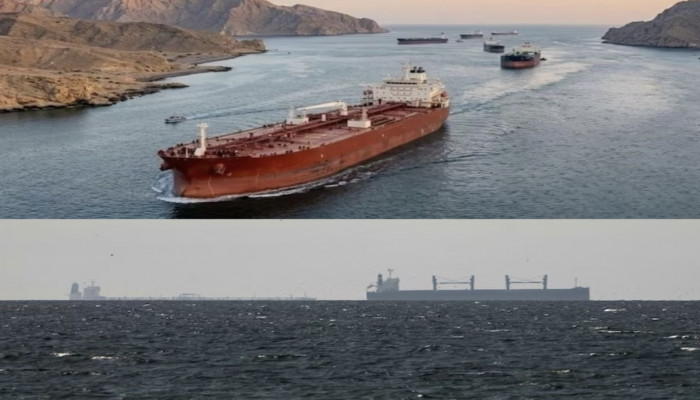
The situation around the Strait of Hormuz has become increasingly tense, with reports suggesting that Iran is charging certain merchant vessels up to USD 2 million to allow them safe passage through the crucial shipping route. This development comes amid the ongoing conflict involving Iran and a joint front of Israel and the United States. The strait, which plays a vital role in global energy transportation, has reportedly remained largely shut since early March due to the intensifying war.
The claim regarding the transit fee was reportedly made by Alaeddin Boroujerdi, a member of Iran’s parliamentary national security committee. According to a report by a London-based news outlet, he justified the move as a demonstration of Iran’s control over the strategic waterway. Speaking on the matter, he said, "Now, because war has costs, naturally we must do this and take transit fees from ships passing through the Strait of Hormuz," highlighting what he described as the country’s assertion of authority. The statement was originally made during a television programme and was later cited by Iranian state media. Boroujerdi further added that the decision reflects Iran’s "strength."
The imposition of such high charges is expected to create serious difficulties for global shipping companies, especially considering that Iran is already under multiple international sanctions. These sanctions complicate financial transactions and could make it challenging for companies to legally comply with such demands. The Strait of Hormuz is one of the most important maritime routes in the world, with nearly 20 per cent of global oil and liquefied natural gas (LNG) passing through it. Any disruption in this region has immediate and widespread effects on global energy markets.
Due to the current situation, the movement of cargo ships through the strait has been severely affected, leading to a sharp increase in fuel prices across many parts of the world. However, reports suggest that Iran is not enforcing the blockade uniformly. Instead, it appears to be selectively allowing certain ships to pass, depending on their origin or affiliations. Iranian officials, including foreign minister Abbas Araghchi, have indicated that restrictions apply mainly to vessels belonging to "enemies and those supporting their aggression."
In a recent interaction with a Japanese news agency, Araghchi reportedly stated that Iran was open to allowing Japan-related vessels to pass through the strait. However, there has been no official confirmation from either side regarding this claim. Prior to this, two Indian-flagged ships carrying liquefied petroleum gas (LPG) were permitted to cross the strait by Iranian authorities. Additionally, as of last Friday, two more Indian vessels were reportedly preparing to navigate the route. Ship-tracking data cited by Reuters also indicated that at least one Pakistani oil tanker managed to secure safe passage through the waterway.
Tensions around the Strait of Hormuz escalated further after Donald Trump issued a strong warning to Iran. On Saturday (IST), he gave Tehran a 48-hour deadline to fully reopen the strait. He cautioned that failure to comply would lead to attacks on Iranian power plants. This statement significantly raised concerns about a possible escalation of the conflict.
Responding to this warning, Iran’s parliamentary speaker, Mohammad Baqer Qalibaf, issued a counter-threat. He stated that if such actions were taken against Iran, the country would retaliate by targeting critical infrastructure and energy facilities across the Middle East. Adding to the tension, Iran’s powerful Revolutionary Guards warned that any attack on Iranian power plants would result in the Strait of Hormuz being "completely closed".
As a result of these escalating threats and warnings, maritime traffic in the region has slowed down significantly, with many ships avoiding the route due to safety concerns. The situation became even more alarming after an alleged Iranian attack involving explosive-laden boats targeted two fuel tankers in Iraqi waters. The attack reportedly set the vessels on fire and led to the death of one crew member, who was an Indian national.
Overall, the crisis surrounding the Strait of Hormuz is having far-reaching consequences for global trade and energy supply. With rising geopolitical tensions, selective enforcement of restrictions, and threats of further escalation, the situation remains highly uncertain. The developments are being closely watched worldwide, as any prolonged disruption in this key shipping lane could have serious economic and strategic implications.



 Loading...please wait
Comments