




Iran expands attacks across Gulf, four cargo ships hit near Strait of Hormuz
- In Reports
- 07:59 PM, Mar 11, 2026
- Myind Staff
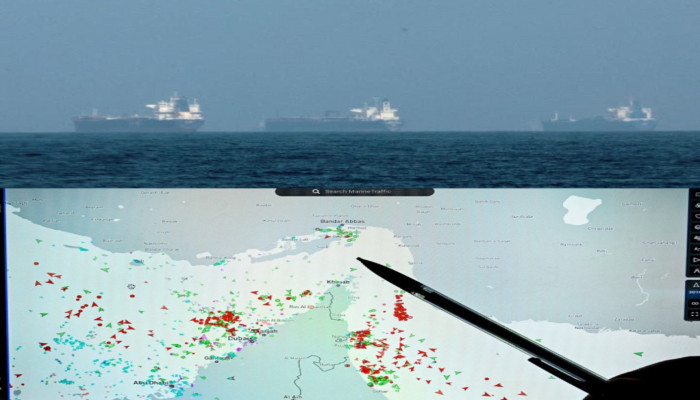
Tensions in the Middle East escalated further on Wednesday after several commercial vessels were attacked near the strategic Strait of Hormuz. According to the United Kingdom Maritime Trade Operations (UKMTO) centre, which is run by the British military, multiple cargo ships were struck by projectiles in the region, forcing crew members to abandon their vessels.
The incidents occurred in one of the world’s most critical shipping routes for energy supplies. Initially, the UKMTO reported that a vessel had been struck off the coast of Oman. Latest updates indicate that unidentified projectiles hit three commercial ships near the Strait of Hormuz.
Overall, four container ships operating close to the narrow waterway were struck and caught fire on Wednesday. The attacks forced their crews to leave the ships for safety as the situation in the Gulf region worsened.
The monitoring centre confirmed that the vessels had been damaged during the incidents. The extent of the damage remains unclear, but investigations are ongoing. According to the centre, the crews on the affected vessels were reported safe.
The attack also involved a Thai cargo ship. The Royal Thai Navy said a Thai-flagged vessel named Mayuree Naree was struck shortly after it departed from the United Arab Emirates.
The ship is a 30,000 deadweight-ton bulk carrier owned by Precious Shipping Pcl. The attack happened while the vessel was passing through the Strait of Hormuz, which connects the Persian Gulf with the Gulf of Oman.
Images released by the Thai navy showed thick smoke rising from the rear section of the ship after it was struck.
Following the attack, the crew evacuated the vessel in a lifeboat. Oman’s navy launched a rescue operation and brought several crew members to safety.
Navy spokesman Paraj Ratanajaipan confirmed the rescue operation and said, “Oman’s navy has rescued 20 crew members, who abandoned ship and evacuated in a lifeboat, and brought them ashore in Khasab.”
He added that rescue teams were still working to locate the remaining crew members. “Efforts [are] underway to recover the remaining three,” he said.
Authorities are continuing to investigate the circumstances surrounding the attack.
The incidents highlight the growing danger faced by commercial shipping vessels operating in the region. The Strait of Hormuz is considered one of the most important energy corridors in the world, as a large share of global oil shipments passes through the narrow route.
Monitoring groups also reported other attacks involving ships across the Gulf region. One container vessel was attacked near the United Arab Emirates and in the Persian Gulf was struck by a projectile.
The UKMTO monitoring centre said, “The extent of the damage is currently unknown but under investigation by the crew.”
Despite the attacks, the crews on the affected ships were reported safe.
The incidents come as Iran has increased its military actions following ongoing airstrikes carried out by the United States and Israel.
On the same day, Iran launched drones toward the United Arab Emirates. According to local authorities, two drones struck areas near Dubai International Airport.
The Dubai Media Office said that four people were injured in the incident. However, flight operations at the airport continued without interruption.
Iran’s joint military command later announced that it would begin targeting financial institutions across the region. The threat raised concerns for several Gulf countries, particularly cities such as Dubai that host many international banks and financial organisations. Saudi Arabia and Bahrain were also mentioned as possible targets.
Several Gulf states reported that they had intercepted Iranian drones and missiles aimed at their territories. Kuwait said its air defence systems shot down eight Iranian drones. Saudi Arabia also reported intercepting five drones that were heading toward the Shaybah oil field, an important energy facility in the country.
Saudi authorities further stated that six ballistic missiles aimed at Prince Sultan Air Base had been destroyed. The base is a key military facility used jointly by Saudi Arabia and the United States. In addition, two drones were intercepted over the eastern Saudi city of Hafar al-Batin.
Officials in the United Arab Emirates said Iranian attacks had already caused casualties. According to authorities, six people have been killed and 122 others injured in the country due to the strikes.
Bahrain also reported incoming Iranian attacks early on Wednesday.
The growing conflict has had a serious impact on maritime traffic in the Strait of Hormuz. Commercial shipping activity through the narrow passage has nearly stopped.
The waterway connects the Persian Gulf to the Gulf of Oman and the Indian Ocean. Around one-fifth of the world’s oil shipments normally pass through this route.
Because of the security threats, very few ships are now passing through the strait.
Security firm Neptune P2P Group reported that only seven ships had passed through the strait since March 8. Under normal conditions, more than 100 vessels usually travel through the route every day.
Among the seven ships that used the waterway during this period, five were connected to Iranian-associated shipping companies.
Some vessels linked to Iran are reportedly conducting “dark transits.” During such voyages, ships switch off their Automatic Identification System (AIS) trackers to hide their location and movements.
Commodity tracking firm Kpler also reported that Iran had resumed crude oil exports through the Jask oil terminal located on the Gulf of Oman.
According to the firm, one tanker loaded around two million barrels of crude oil at the facility on March 7.
At the same time, Israel continued its military operations in response to Iranian attacks.
Israeli strikes again targeted Tehran on Wednesday. Residents described hearing explosions in the city that were among the heaviest since the conflict began. Explosions were also reported in Beirut and in southern Lebanon. Israel said the strikes were aimed at sites linked to Hezbollah, a group backed by Iran.
In Beirut, an Israeli attack set a building on fire in the densely populated Aicha Bakkar district in the central part of the city. The top two floors of the building were engulfed in flames. There were no immediate reports of casualties from that particular incident.
However, in southern Lebanon, Israeli strikes killed seven people. A Red Cross worker also died after suffering injuries from an earlier Israeli strike that had targeted a rescue team responding to another attack.
According to reports, nearly 500 people have been killed in Lebanon since Hezbollah joined the conflict following attacks by the United States and Israel on Iran. Diplomatic efforts are also underway to address the crisis.
The United Nations Security Council is preparing to vote on a resolution proposed by the Gulf Cooperation Council. The draft resolution calls on Iran to stop attacks on neighbouring Arab countries. It condemns Iranian strikes on Bahrain, Kuwait, Oman, Qatar, Saudi Arabia, the United Arab Emirates and Jordan. The resolution also demands an immediate end to attacks and threats against neighbouring states, including those carried out through proxy groups.
If approved, it would be the first United Nations Security Council resolution considered since the conflict began on February 28.
Meanwhile, global energy markets have been affected by the escalating situation.
Oil prices remain high despite easing slightly from earlier peaks during the week. Brent crude prices are still about 20 per cent higher than when the conflict first began.
The increase in energy prices has unsettled financial markets worldwide, as traders worry about long-term disruptions to oil and natural gas supplies.
The United States military said it had destroyed 16 Iranian minelayers operating near the Strait of Hormuz. However, US President Donald Trump said there were still no confirmed reports that Iran had placed mines in the waterway.
Experts warn that if naval mines are deployed in the strait, clearing them could take weeks even after hostilities stop.
There are also concerns surrounding Iran’s new Supreme Leader, Ayatollah Mojtaba Khamenei, who assumed power earlier this week after the death of his father.
The 56-year-old leader has not appeared in public since taking office. Reports suggest that he may have been injured, causing concerns about his health.
As the conflict continues to expand, foreign nationals have begun leaving the Gulf region. The British Foreign Office said that more than 45,000 British citizens have already departed from the area. The United States State Department also reported that around 40,000 American citizens have returned home since the fighting began.
With attacks on shipping, growing military strikes, and increasing economic concerns, the situation in the Middle East continues to develop, raising fears that the conflict could widen further and impact global energy supplies and international trade.



 Loading...please wait
Comments