




Iran criticises EU for designating IRGC a terrorist organisation
- In Reports
- 06:01 PM, Jan 30, 2026
- Myind Staff
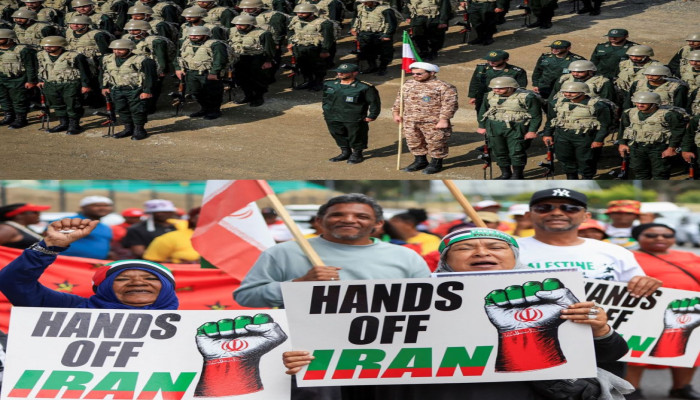
Iran has strongly criticised the European Union after the bloc officially labelled Iran’s Islamic Revolutionary Guard Corps (IRGC) as a terrorist organisation. Iranian authorities called the move illogical, irresponsible, and politically motivated, while the EU defended its decision as a response to the violent crackdown on anti-government protests in Iran.
The European Union announced the designation after what it described as a deadly suppression of protests inside Iran. EU foreign policy chief Kaja Kallas said the decision was a major step taken by the bloc’s foreign ministers. She said they had taken a “decisive step” by listing the IRGC as a terrorist group.
Kallas also shared her views on social media, writing, “Repression cannot go unanswered.” She added, “Any regime that kills thousands of its own people is working toward its own demise.”
Iran reacted sharply to the decision. The Iranian Foreign Ministry condemned the move, calling it “illegal, political and contrary to international law.” It also said the EU’s action was an interference in Iran’s internal affairs. The ministry further stated that Tehran “reserves the right to take appropriate measures within the framework of international law to defend its sovereignty, national security, and the interests of the Iranian nation, and holds the European Union and its member states responsible for the consequences of this action”.
The IRGC was established after Iran’s 1979 Islamic Revolution. It is an elite military force that answers directly to Supreme Leader Ayatollah Ali Khamenei and oversees Iran’s missile and nuclear programmes.
Alongside the designation of the IRGC, the European Council announced new sanctions. These sanctions target 15 individuals and six entities accused of being responsible for serious human rights violations in Iran during the protest crackdown. Among those targeted are Iran’s Interior Minister Eskandar Momeni and Prosecutor General Mohammad Movahedi-Azad.
Iran has faced widespread international criticism for its use of force against protesters. The protests began late last month and were driven by public anger over rising inflation and socioeconomic problems. Iranian authorities have confirmed 3,117 deaths, including 2,427 civilians and members of the country’s security forces. They have also accused Israel and the United States of fuelling the unrest.
Meanwhile, the US-based Human Rights Activists News Agency reported that at least 6,373 people have been killed since the protests began, including 5,993 protesters. Al Jazeera noted that it has been unable to independently verify these figures.
Reporting from Brussels, Al Jazeera’s Hashem Ahelbarra said the EU’s decision to blacklist the IRGC and impose sanctions was meant to send “a strong political message” to Iran. He explained that the decision was not easy, especially regarding the IRGC’s designation as a terrorist organisation. He noted that France, in particular, had wanted to maintain communication with Iran. However, he said that when Europeans saw the crackdown on protesters, they decided they needed to send a strong message.
Iranian officials strongly rejected the EU’s move. Foreign Minister Abbas Araghchi accused the EU of increasing tensions in the region. He said the bloc was “fanning the flames” amid rising regional tensions. Araghchi also criticised what he described as Europe’s selective reaction to human rights issues. He wrote on social media, “Putting aside the blatant hypocrisy of its selective outrage – taking zero action in response to Israel’s Genocide in Gaza and yet rushing to ‘defend human rights’ in Iran – Europe’s PR stunt mainly seeks to cloak that it is an actor in severe decline.”
He further warned that Europe could be affected by a wider conflict in the region. He said that an all-out war would have serious consequences, including rising energy prices, and argued that the EU’s current stance was damaging its own interests. He said, “Moreover, as the continent is certain to be massively impacted by an all-out war in our region – including the knock-on effects of surging energy prices – the EU’s current posture is deeply damaging to its own interests.”
Iran’s General Staff of the armed forces also criticised the EU’s decision. It described the IRGC designation as “illogical and irresponsible” and said it showed “a clear sign of hostility towards the Iranian nation and the country’s independence”.
Al Jazeera’s Tohid Asadi, reporting from Tehran, said the escalating tensions between Iran and the EU are unprecedented and are happening at a time when the United States is increasing its military presence in the Middle East. This has raised concerns about a possible confrontation.
US President Donald Trump has repeatedly threatened to attack Iran in recent weeks. He has cited the protest crackdown and Iran’s nuclear programme as reasons for his warnings. On Wednesday, Trump said a “massive” US armada was heading towards Iran and would be ready to use “violence” if Tehran did not agree to nuclear talks with Washington.
Senior Iranian officials rejected Trump’s comments. They said they would not agree to negotiations under threat and stated that Iran’s armed forces were ready to respond “immediately and powerfully” to any possible US attack.
The Trump administration had previously joined Israel in a 12-day military assault on Iran in June last year. During that operation, the US struck three Iranian nuclear facilities. Trump had earlier claimed that these attacks had “obliterated” Iran’s nuclear programme.
The latest developments highlight growing tensions between Iran, the European Union, and the United States, as disagreements over protests, human rights, and regional security continue to intensify.



 Loading...please wait
Comments