




Iran claims major strikes on US military bases, says F-35 hangars destroyed
- In Reports
- 12:38 PM, Jun 10, 2026
- Myind Staff
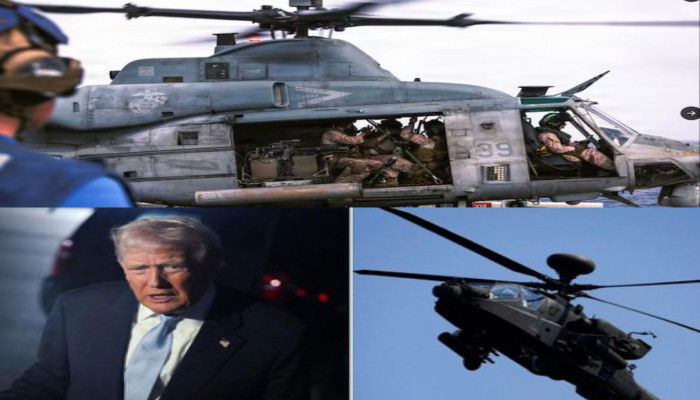
Iran's Islamic Revolutionary Guard Corps (IRGC) has claimed that it carried out major attacks on American military assets across West Asia, including the destruction of hangars housing F-35 fighter jets and strikes on around 21 US air and naval bases. The claims were reported by the Iranian news agency ISNA on Wednesday amid rapidly rising tensions in the region.
According to the IRGC, four key military locations were targeted during the operation. Among them was the US Army's command and control centre at the Al-Azraq base in Jordan. Iranian authorities claimed that the facility was destroyed in the attack. The IRGC also stated that a total of 21 American air and naval bases across the region were struck as part of the operation.
ISNA reported that Iran also targeted the Muwaffaq Salti Air Base in Jordan with missile strikes. The reported attacks come as tensions between Tehran and Washington continue to intensify following recent military exchanges in the Persian Gulf.
As the situation developed, Iran's state broadcaster Press TV reported fresh explosions in Kuwait and Bahrain. Citing local sources, the broadcaster claimed that American military bases in both countries were once again targeted. Local sources say, the US bases in Bahrain and Kuwait have once again been targeted.
The IRGC further claimed responsibility for a drone strike on a US naval facility in Bahrain. Iranian officials said the attack was carried out by the naval wing of the Revolutionary Guard. The development marks a significant escalation in the confrontation between Iran and the United States and raises concerns about regional stability.
In an official statement carried by Iranian media, the IRGC announced that its naval forces launched a drone attack on the headquarters of the US Fifth Fleet in Bahrain at around 2:30 a.m. local time. Iranian officials said the strike was a response to US military action against targets in southern Iran earlier in the day.
The latest round of hostilities follows the reported downing of a US Army Apache helicopter over the Strait of Hormuz. The incident has become a major flashpoint between the two countries. US President Donald Trump blamed Iran for bringing down the helicopter, further increasing tensions in the region.
On Tuesday, the US Central Command (CENTCOM) confirmed that American forces had launched military action against Iran. In a statement posted on X, CENTCOM said, "US Central Command forces began launching self-defence strikes against Iran at 5 p.m. ET today at the Commander in Chief's direction, in response to yesterday's downing of a US Army Apache helicopter," characterising the operation as a "proportional response to unjustified Iranian aggression."
President Trump had earlier confirmed that the Apache helicopter was shot down during patrol operations over the Strait of Hormuz. He stated that both pilots survived the incident and did not suffer any injuries.
Iranian Foreign Minister Abbas Araghchi also issued a strong warning to Washington regarding its military presence in the Gulf region. He said Iran would respond firmly to any threat directed at the country.
In a post on X, Araghchi stated, "Despite its defeats on the battlefield, the US opted to test our determination."
He further warned, "Our Powerful Armed Forces will leave no attack or threat unanswered. Leave our region if you want to be safe. The history of the Persian Gulf has many chapters on the dire fates of intruding outsiders."
The direct confrontation between Iran and the United States is unfolding against the backdrop of a wider regional conflict involving Iran and Israel. Recent weeks have seen strikes on Iranian infrastructure as well as reported attacks on Israeli military facilities. The latest exchange of military action between Tehran and Washington has added a new dimension to an already volatile situation.
With both sides exchanging accusations and military strikes, concerns are growing about the possibility of a broader conflict in the Persian Gulf and the wider West Asian region. The situation remains fluid, with developments continuing to emerge from multiple countries involved in the escalating crisis.



 Loading...please wait
Comments