




Iran broadens Strait of Hormuz definition ahead of high-stakes Trump-Xi meeting
- In Reports
- 06:46 PM, May 13, 2026
- Myind Staff
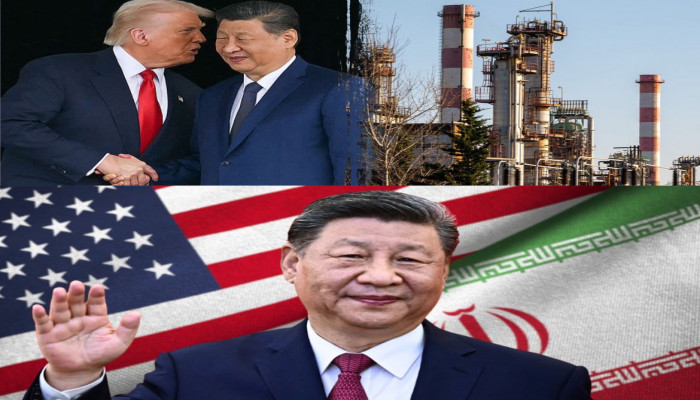
Iran made a major announcement on how it defines the Strait of Hormuz, the crucial waterway through which nearly one-fifth of the world’s traded oil passes. The move came just hours before US President Donald Trump was set to travel to Beijing for a summit with Chinese President Xi Jinping. The timing of Tehran’s statement has added fresh pressure to an already tense geopolitical situation involving the United States, Israel, China, and the wider Middle East.
The announcement was made by Mohammad Akbarzadeh, an official linked to the naval forces of Iran’s Islamic Revolutionary Guard Corps (IRGC). According to Iranian state broadcaster Press TV, Akbarzadeh said Iran no longer sees the Strait of Hormuz as a narrow maritime passage near a few islands. “In the past, the Strait of Hormuz was defined as a limited area around islands such as Hormuz and Hengam, but today this has changed," Akbarzadeh said. He further added, “The Strait of Hormuz has grown larger and has turned into a vast operational area."
Iran now claims that the strait stretches from the Iranian coastal city of Jask to the Greater Tunb island. This is a major shift from the internationally accepted understanding of the waterway. Jask is located on the Gulf of Oman, outside the Persian Gulf itself. By including that region within its definition of the Strait of Hormuz, Tehran has effectively expanded the area it considers strategically and militarily important.
The Strait of Hormuz has long been one of the world’s most sensitive trade routes because massive amounts of oil and gas shipments pass through it every day. At its narrowest point, the strait is only about 21 miles wide. Any disruption in the region quickly affects global energy prices and international shipping. Iran’s latest position suggests that it wants greater control over a much wider maritime corridor than before.
Akbarzadeh also warned that Tehran would firmly protect its interests in the region. “The Strait of Hormuz has grown larger and has turned into a vast operational area," he said while stressing that Iran would “not allow any kind of encroachment upon its waters and interests."
The announcement comes during an ongoing conflict involving Iran, the United States, and Israel. Shipping activity in the Strait has already been heavily affected after Iranian attacks earlier in the conflict. Global trade routes through the region were disrupted, forcing many oil tankers to avoid the area and instead take longer routes around the Arabian Peninsula. Those detours increased transportation costs and pushed energy prices higher across markets in Asia and Europe.
China has been among the countries directly impacted by the disruption. Beijing imports around 12 per cent of its crude oil from Iran and also relies heavily on other Persian Gulf countries for energy supplies. The instability in the Strait of Hormuz has therefore created economic challenges for China at a difficult time.
The issue is expected to be a major topic during the upcoming Trump-Xi summit in Beijing. It will be Trump’s first visit to China since 2017, and tensions in the Middle East are already high on the diplomatic agenda. The conflict involving Iran has also become part of China’s messaging to the international community. Chinese state narratives aimed at other countries have portrayed Washington as a source of global instability while presenting Beijing as a more stable and predictable power.
At the same time, the disruption in Iranian oil supplies has become a domestic concern for the Chinese government. Rising energy pressures are creating additional economic strain while China is also preparing for sensitive discussions with the United States. Analysts believe this could eventually push Beijing into taking a more active diplomatic role in the Middle East, even though China has traditionally tried to avoid becoming deeply involved in regional conflicts there.
An analysis by David Finkelstein in the Financial Times suggested that continued instability could force China to engage more directly in efforts to reduce tensions and protect energy supplies. Beijing’s dependence on Gulf oil means that prolonged disruption in the Strait of Hormuz would carry serious economic risks.
Iran’s latest statement has also complicated any future negotiations aimed at easing the conflict. Any diplomatic effort involving the United States, China, or regional powers will now likely have to address Tehran’s expanded claims over the Strait of Hormuz. By redefining the operational boundaries of the strait, Iran appears to be entering future talks from a stronger and broader negotiating position.
It remains unclear whether Iran’s move is mainly political messaging or a signal of future military strategy. Some observers believe the statement could be intended to give the IRGC greater justification for future operations in the wider maritime area. Others see it as a direct warning to both Washington and Beijing that Iran will aggressively defend what it now considers its strategic waters.
Regardless of the intention, the timing of the announcement has drawn global attention. By making the declaration just before the Trump-Xi meeting, Tehran has ensured that the issue of the Strait of Hormuz remains at the centre of international diplomacy and global energy discussions.



 Loading...please wait
Comments