




Iran blames US of blockade, broken promises as talks stall despite ceasefire extension
- In Reports
- 11:28 AM, Apr 23, 2026
- Myind Staff
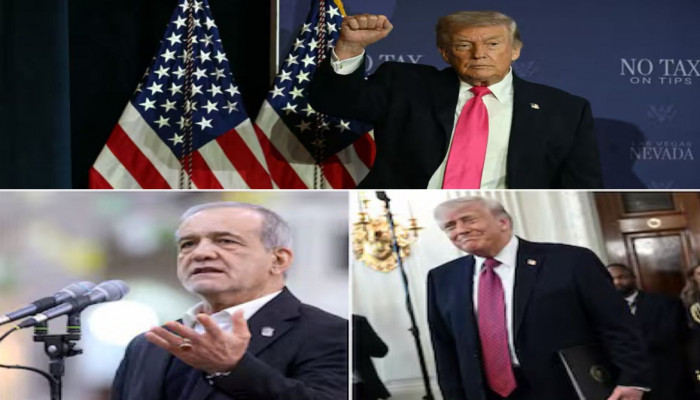
Iran has outlined key reasons for the continued failure of its negotiations with the United States, even after a recent ceasefire extension announced by US President Donald Trump. Iran’s President Masoud Pezeshkian, in a post on X, stated that the global community can clearly see the gap between what the US claims and what it actually does. He emphasised that Iran has not opposed dialogue or agreements, but certain US actions have created serious obstacles.
According to Pezeshkian, three main issues are preventing progress in the negotiations. These include breach of commitments, the ongoing blockade, and continued threats. He directly criticised the US stance by writing, “World sees your endless hypocritical rhetoric and contradiction between claims and actions,” making it clear that Iran views American actions as inconsistent and damaging to trust.
The negotiations, which were expected to take place in Pakistan this week, have now been put on hold. This delay came after President Trump announced an extension of the ceasefire that was due to expire on Wednesday. Trump stated that the extension was intended to give Iran more time to present a unified proposal. This decision reportedly followed a request from Pakistan, which has been acting as the lead negotiator in the discussions.
Despite the ceasefire extension, tensions between the two sides remain high. Iran has taken strong action by seizing three ships identified as the MSC Francesca, Epaminondas, and Euphoria. This move came shortly after the ceasefire announcement and signals that the situation remains volatile. At the same time, the United States has continued its naval blockade of Iranian ports, which remains a major point of conflict between the two nations.
The blockade, especially near the Strait of Hormuz, has become one of the most critical issues in the stalled negotiations. While Trump agreed to extend the ceasefire, he has not shown any willingness to lift the blockade. In a statement posted on Truth Social, he said, “I have therefore directed our Military to continue the Blockade and, in all other respects, remain ready and able,” reinforcing the US position on maintaining pressure.
Further clarity on the US stance was provided by White House Press Secretary Karoline Leavitt. She addressed reports suggesting that a deadline had been set for Iran to submit its proposal. Denying these claims, she said, “I know there’s been some anonymous-sourced reporting that there was maybe a three- to five-day deadline,” she said. “That is not true. The president has not set a deadline himself. Ultimately, he will dictate the timetable.” This indicates that the timeline for further negotiations remains uncertain and under the direct control of the US President.
Meanwhile, there are slight indications that progress could still be possible. Iran’s envoy to the United Nations, Amir-Saeid Iravani, suggested that there have been some positive signals from the US side regarding the blockade. He stated that Iran had “received some sign” that the United States might be open to lifting it. According to him, the removal of the blockade could immediately pave the way for the next round of talks. “As soon as they break this blockade, I think that the next round of the negotiations will take place in Islamabad,” Iravani said, as reported by Iran’s semi-official Tasnim news agency.
The situation reflects a complex mix of diplomacy and conflict, where both sides continue to make strategic moves while keeping communication channels partially open. Iran’s position highlights frustration over what it sees as repeated violations of trust by the US, particularly through continued military and economic pressure. On the other hand, the US appears to be maintaining its stance of leverage through the blockade while waiting for Iran to take the next step in negotiations.
With no clear deadline and ongoing tensions, the future of these talks remains uncertain. The blockade remains the central issue, and its resolution could determine whether negotiations resume or continue to remain stalled. For now, both sides appear to be holding their ground, with limited signs of compromise.



 Loading...please wait
Comments