



Iran accuses US of ground invasion amid blackouts and relentless Israel strikes
- In Reports
- 01:07 PM, Mar 30, 2026
- Myind Staff
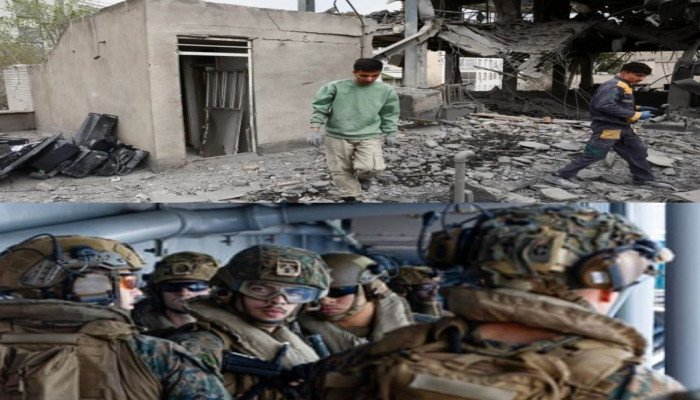
Tensions in the Middle East continue to rise as Iran accuses the United States of preparing for a possible ground attack, even as Washington publicly supports a negotiated settlement. The situation comes alongside intensified Israeli air strikes and widespread power outages reported in Tehran and nearby regions. Iran’s Ministry of Energy confirmed disruptions in electricity supply across the capital and the neighbouring Alborz province after attacks targeted key infrastructure. Later reports suggested that efforts were underway to restore power.
Iran’s parliament speaker, Mohammad Bagher Ghalibaf, issued a strong warning about the country’s readiness to respond to any ground invasion. “Our men are waiting for the arrival of the American soldiers on the ground to set them on fire and punish their regional allies once and for all,” he said, according to state media. His statement reflects growing concern within Iran over the increasing US military presence in the region.
Uncertainty remains over whether the recent strikes on energy facilities are linked to threats made by US President Donald Trump, who had warned of targeting Iran’s power and energy sectors if a deal to end the conflict was not reached. Trump has extended his deadline for negotiations by ten days, now set to expire on April 6. The US has also presented a 15-point peace proposal, which critics have described as too demanding.
Reports suggest that the Pentagon is preparing for limited ground operations that could last several weeks. These plans may include targeted raids on strategic locations such as Kharg Island, a key oil export hub, and coastal areas near the Strait of Hormuz, a critical global shipping route. At the same time, the US is increasing its military footprint. Around 3,500 troops have already arrived in the region aboard the USS Tripoli, with more forces, including units from the 82nd Airborne Division, expected to follow.
The conflict has taken a heavy human toll. Iran’s Ministry of Health reported that 2,076 people have been killed since the fighting began, including 216 children. In one incident, six civilians were killed in a strike on a residential area in the village of Osmavandan, where several homes were destroyed or badly damaged. Educational institutions have also been affected. A university in Isfahan was hit for the second time, injuring four staff members. Earlier, Iran’s University of Science and Technology had also been targeted.
Following these attacks, Iran’s Islamic Revolutionary Guard Corps (IRGC) threatened retaliation, warning it could strike two US or Israeli universities in response. According to officials, at least 250 students and teachers have died, and around 600 educational facilities have been impacted since the war began. In another incident, a commercial building in Tehran housing Al-Araby TV was struck. A camera operator described the situation, saying, “It was a real miracle we survived. There was no military target here”.
Iran has also put forward a five-point proposal demanding compensation from the United States. The plan calls for an end to attacks on Iranian officials, a halt to hostilities, guarantees to prevent further conflict, and recognition of Iran’s control over the Strait of Hormuz.
Meanwhile, the military situation remains tense. Israel reported multiple missile launches from Iran, with seven separate barrages detected in a single day. These attacks were accompanied by rocket fire from Hezbollah targeting northern Israel, triggering sirens in more than 100 towns. In southern Israel, an industrial facility operated by ADAMA in the Neot Hovav zone was hit, though no casualties or hazardous leaks were reported. Another missile struck near residential areas in Beersheba, injuring 11 people.
Missile fragments were also reported in the northern port city of Haifa after interception attempts. Concerns have grown over the safety of industrial zones, especially those housing chemical and pharmaceutical plants. The risk of escalation has increased as more regions become involved.
Diplomatic efforts to ease tensions are ongoing. Foreign ministers from Pakistan, Turkiye, Egypt, and Saudi Arabia met in Islamabad to discuss ways to reduce hostilities. However, the conflict has already spread beyond the immediate region. The United Arab Emirates reported intercepting 16 ballistic missiles and 42 drones launched from Iran, while Saudi Arabia said it had shot down 10 drones. Air raid sirens were also heard in Kuwait and Bahrain.
Iran has also expanded its military actions by targeting US forces stationed in Jordan. Drones launched at the Muwaffaq Salti airbase targeted living quarters and equipment facilities. At sea, Iranian officials claim to have full control over waters near the Strait of Hormuz, warning that US forces entering the area could be targeted by coastal missile systems.
The situation has become even more complex with the involvement of Yemen’s Houthi forces, who have launched strikes on Israel. Their participation raises concerns about potential disruptions in the Bab al-Mandeb Strait, a key maritime route. Previous Houthi attacks in the Red Sea had already affected global trade worth nearly $1 trillion annually.
As oil prices rise and economic uncertainty spreads, the conflict continues to have global consequences. The risk of a wider regional war remains high as military actions intensify and diplomatic solutions struggle to gain traction.



 Loading...please wait
Comments